Quranic Answer
Forgiving oneself is an essential psychological process that leads to inner peace and personal improvement. It is a dynamic journey that encompasses the ability to let go of guilt and shame, thereby allowing individuals to move forward in their lives with a renewed sense of purpose. Self-forgiveness is not simply about erasing past mistakes; instead, it involves acknowledging those mistakes, understanding their impact, and then learning from them. This process is supported by various religious and spiritual teachings, among which the Quran provides significant insights into the importance of forgiveness, particularly self-forgiveness. In the Quran, the concept of forgiveness is deeply emphasized, highlighting the benevolent nature of Allah and the importance of maintaining a forgiving heart. Particularly, Allah’s readiness to forgive serves as a powerful motivator for individuals to embrace self-forgiveness. For instance, in Surah Az-Zumar, verse 53, Allah commands: 'Say, O My servants who have believed, do not despair of the mercy of Allah. Indeed, Allah forgives all sins.' This verse serves as a reminder of the boundless mercy that Allah extends to mankind, emphasizing that if Allah, the most compassionate, can forgive all sins, we too are capable of forgiving ourselves for our shortcomings and failings. This message is profound, especially for those suffering from guilt and self-reproach; it encourages individuals to rise above their mistakes with the assurance that they are not beyond redemption. Self-forgiveness involves several key components that contribute to an individual’s holistic growth. One critical aspect is the acceptance of one’s mistakes and learning from them. It is vital to understand that errors are natural parts of life and contribute to our growth as humans. Taking ownership of our actions and acknowledging the consequences allows us to engage in meaningful reflection, which can lead to positive changes in behavior moving forward. In Surah Al-Ma'idah, verse 13, a relevant verse states the importance of returning to Allah after committing mistakes: 'And if it had not been for the favor of Allah upon you and His mercy, you would have been among the losers.' This highlights the importance of seeking forgiveness actively when one has erred. When one learns to accept their fallibility, self-forgiveness becomes not only possible but essential. Furthermore, self-forgiveness also implies taking responsibility for one’s actions. This responsibility is often misinterpreted as self-blame or harsh judgment, but it merely signifies acknowledgment of our humanness and understanding that we are continually evolving. Accepting our errors opens the door to personal growth. It provides an opportunity to learn crucial life lessons in empathy, compassion, and resilience. An effective way to practice self-forgiveness is by apologizing to others when our actions have impacted them negatively. This process enhances our emotional well-being by fostering a sense of accountability. Apologizing not only acknowledges the effect our actions have had on others, but it also promotes healing within ourselves. Apologizing may feel uncomfortable at first; however, it is an essential part of repairing relationships and moving forward. Moreover, allowing ourselves the opportunity to cope with our emotions is also pivotal in the journey of self-forgiveness. We must give ourselves permission to feel sadness, anger, or regret without judgment. These emotions are natural responses to our mistakes, and suppressing them can hinder our ability to forgive ourselves. Engaging in practices such as journaling or talking to a trusted friend may provide a safe outlet to express these feelings, ultimately leading to a clearer path toward self-forgiveness. Connecting with Allah through prayer and supplication is another powerful way to aid in the process of self-forgiveness. Engaging in prayer allows individuals to express their remorse and seek divine guidance. It reinforces the understanding that they are not alone in their struggles, and it invites an opportunity for spiritual growth. Allah’s mercy is limitless, and through prayer, individuals can experience healing that furthers their ability to forgive themselves. Examples of prayers that focus on seeking forgiveness can center on the perfection of Allah's attributes and the need for human humility and growth. By embedding spiritual practices in the journey of self-forgiveness, individuals can cultivate a stronger sense of peace within themselves. While the journey toward self-forgiveness requires conscious effort, it is an attainable goal. Accepting our flaws, taking responsibility, and learning from our experiences leads to not only personal growth but also a more profound sense of compassion towards others. The teachings in the Quran reiterate the importance of forgiveness and illustrate how crucial this practice is to the cultivation of inner peace. Through repeated self-reflection, sincere remorse, and seeking Allah’s mercy, we can nurture a spirit of forgiveness within ourselves. Ultimately, by learning to forgive ourselves, we develop resilience and empathy that allow us to navigate life’s challenges more gracefully. In conclusion, self-forgiveness is not merely an act; it is a lifelong process that contributes significantly to our psychological health and spiritual fulfillment, fostering a life enriched with peace, purpose, and connection to both ourselves and those around us. Seeking forgiveness – from Allah, from others, and from ourselves – can lead to profound transformations and a more fulfilling life.
Related Verses
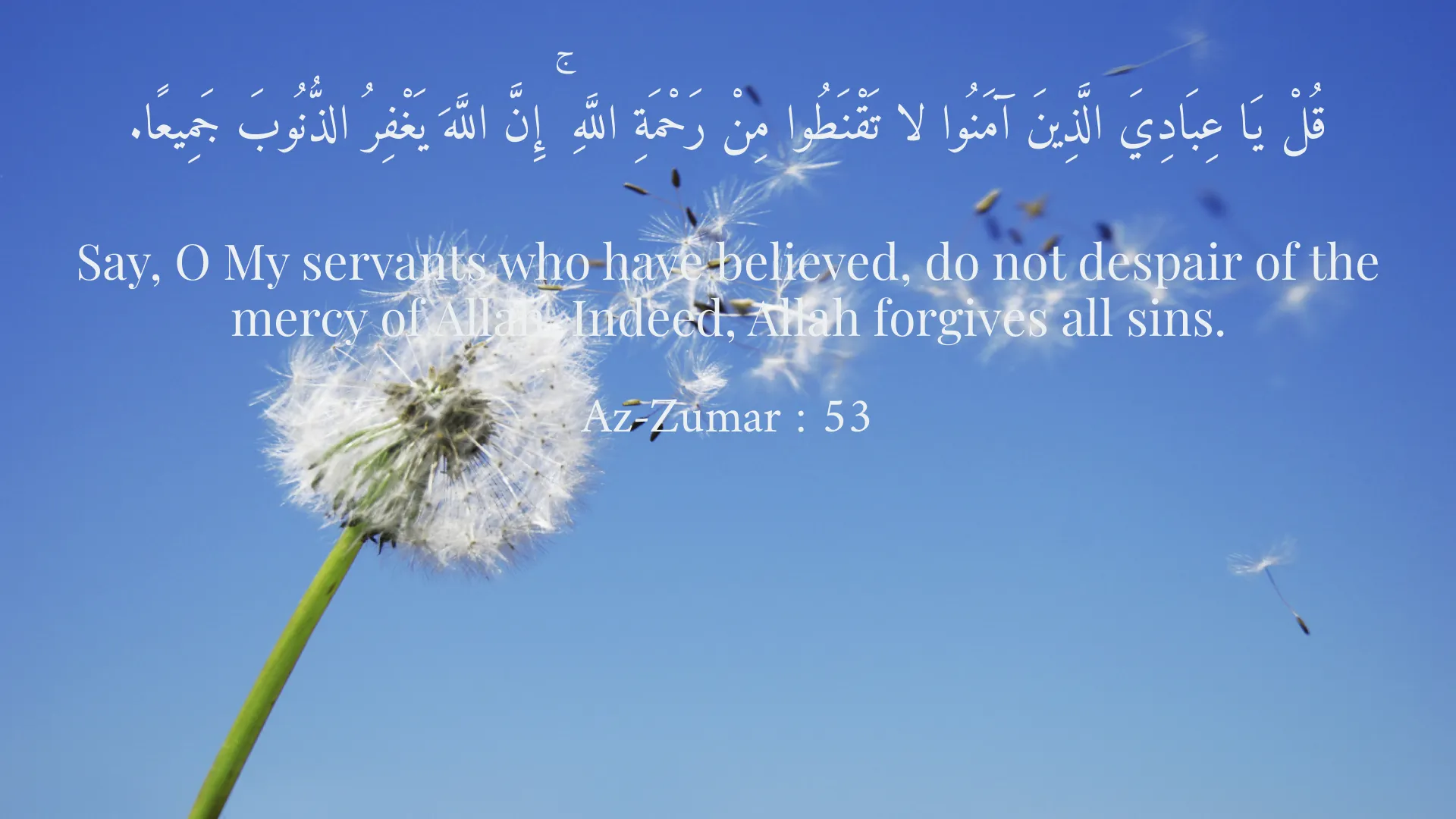
قُلْ يَا عِبَادِيَ الَّذِينَ آمَنُوا لا تَقْنَطُوا مِنْ رَحْمَةِ اللَّهِ ۚ إِنَّ اللَّهَ يَغْفِرُ الذُّنُوبَ جَمِيعًا.
Say, O My servants who have believed, do not despair of the mercy of Allah. Indeed, Allah forgives all sins.
Az-Zumar : 53
إِنَّمَا جَزَاءُ الَّذِينَ يُحَارِبُونَ اللَّهَ وَرَسُولَهُ وَيَسْعَوْنَ فِي الْأَرْضِ فَسَادًا أَنْ يُقَتَّلُوا أَوْ يُصَلَّبُوا أَوْ تُقَتَّلُوا أَوْ يُهَجَّرُوا مِنَ الْأَرْض.
The penalty of those who wage war against Allah and His Messenger and strive to spread corruption in the land is none but that they be killed or crucified or have their hands and feet cut off from opposite sides or be exiled from the land.
Al-Ma'idah : 13
Short Story
One day, a man named Ali accidentally did something that hurt a close friend. He felt very bad and didn’t know what to do. From the Quran, he learned that he should apologize for his mistake and then allow himself to forgive. Ali called his friend and asked for forgiveness. His friend lovingly forgave him, and Ali felt a sense of lightness and was able to learn lessons from this experience.