Quranic Answer
In the Holy Quran, Allah provides us with invaluable guidance on making important and correct decisions, a theme that resonates deeply throughout the text. Understanding the essence of decision-making is pivotal, not only in our personal lives but also in social and communal interactions. The Quran serves as a comprehensive manual that outlines the principles necessary for sound decision-making, significantly emphasizing the importance of consultation and empathy as fundamental factors in this process. One fundamental principle in decision-making, as elaborated in the Holy Quran, is the significance of consulting others. The profound words found in Surah Al-Imran (3:159) state: 'And by the mercy of Allah, you were lenient with them.' This verse encapsulates the essence of interpersonal relationships and highlights how communication forms the backbone of constructive decision-making. The guidance encourages individuals to seek the counsel of others, thus fostering a community of shared thoughts and ideas that contribute to collaborative ventures. The act of seeking advice is not merely a form of due diligence; it is an acknowledgment of the interconnectedness of humanity. By consulting others, we invite diverse perspectives into our decision-making processes. This not only provides us with a more comprehensive understanding of various issues but also mitigates bias that can emerge from singular viewpoints. The Quran's emphasis on this principle highlights its importance in building trust among individuals and enhancing cooperation, which are paramount for achieving common goals. Further emphasizing this, the Quran teaches us to approach consultations with kindness and gentleness. This approach is vital because building a trusting and reliable source of advice can only thrive in an environment where people feel safe to express their thoughts and opinions. A gentle tone and an open mind make consultations fruitful, fostering an atmosphere of collaboration rather than competition. The ability to listen and learn from others enriches our decision-making process and promotes a sense of unity. Moreover, the Quran reminds us that the relationship we have with Allah plays a critical role in guiding our decisions. In Surah Al-Mu'minun (23:118), it states: 'And say, 'My Lord, admit them to a good entrance and extract them to a good exit.' This humble supplication serves as a reminder that, beyond our consultations with fellow human beings, seeking divine guidance through prayer is an essential aspect of decision-making in Islam. Prayer is not merely a ritual, but a powerful tool that connects us to Allah and invokes His blessings and guidance. When faced with significant decisions, taking the time to pray allows individuals to seek clarity and wisdom beyond their understanding. It fosters a sense of peace amidst the chaos that decision-making can sometimes entail. Through prayer, individuals may find the strength to navigate difficult choices with a mindset grounded in faith. Additionally, spiritual reflection through prayer encourages individuals to remain steadfast in their faith and provides resilience in the face of adversity. This spiritual grounding is crucial in achieving a balanced perspective on various issues and enhancing the quality of our decision-making processes. Furthermore, through prayer, individuals can express their anxieties and uncertainties about decision-making to Allah, allowing for emotional release and clarity. Equally important in decision-making are the emotional and social circumstances surrounding our choices. The Quran encourages us to be attentive to these aspects. Recognizing the emotional landscape of our own feelings, as well as those of others involved, can shape our approach to decision-making. Understanding the impact of our decisions on our relationships can lead us to make choices that are more harmonious and beneficial for all parties involved. In the broader sense, a just and considerate decision should consider the welfare of the community. When individuals prioritize the collective benefit, their decisions become a source of encouragement and inspiration for others, aligning with the Islamic principle of serving humanity. This is another dimension of decision-making that the Quran brings to the forefront, as it reminds us that our choices echo beyond ourselves, affecting families, communities, and society at large. In summary, the guidance provided in the Holy Quran regarding decision-making encompasses several vital aspects: the importance of consulting others, the practice of prayer, and attentiveness to emotional and social dynamics. By embracing these principles, individuals can navigate their choices more effectively. Moreover, these teachings not only elevate our personal decision-making processes but also establish a framework for fostering cooperation and understanding within communities. Ultimately, when we incorporate divine guidance, seek counsel, and prioritize our emotional and social responsibilities, we are better equipped to make decisions that are thoughtful, inclusive, and aligned with the greater good of all. The richness of the Quranic perspective on decision-making continues to resonate with believers today, serving as a reminder that we are never alone in our journeys. The teachings are timeless, encouraging individuals to rely on both divine wisdom and community support as integral components of making informed and compassionate decisions.
Related Verses
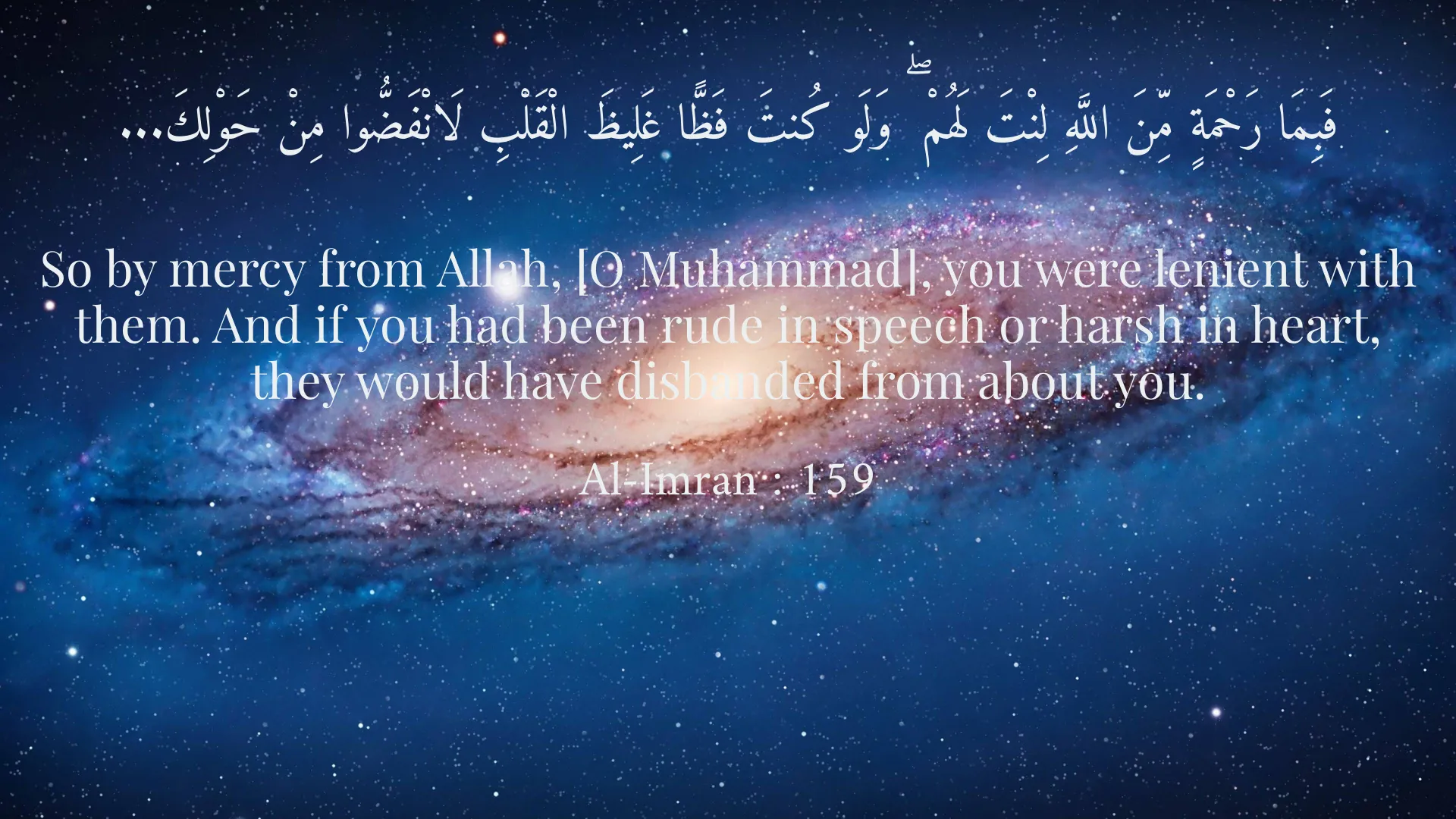
فَبِمَا رَحْمَةٍ مِّنَ اللَّهِ لِنْتَ لَهُمْ ۖ وَلَو كُنتَ فَظًّا غَلِيظَ الْقَلْبِ لَانْفَضُّوا مِنْ حَوْلِكَ...
So by mercy from Allah, [O Muhammad], you were lenient with them. And if you had been rude in speech or harsh in heart, they would have disbanded from about you.
Al-Imran : 159
وَقُل رَّبِّ أَدْخِلْهُمْ مَدْخَلَ صِدْقٍ وَأَخْرِجْهُمْ مَخْرَجَ صِدْقٍ
And say, 'My Lord, admit them to a good entrance and extract them to a good exit.'
Al-Mu'minun : 118
Short Story
One day, Mahdi faced a significant decision-making challenge. He sought advice from his friends, and during their conversation, a brilliant idea suddenly struck him. He also prayed for guidance from Allah and confidently made a decision that not only changed his life but also helped his friends.