Quranic Answer
Forgiveness and self-forgiveness are profound concepts explored within the Holy Quran, serving as fundamental principles in the life of a Muslim. The idea of repentance and returning to Allah is deeply ingrained in Islamic teachings. This article seeks to delve into the Quranic verses associated with forgiveness and self-forgiveness, examining the significance of these themes in fostering a spiritual and moral framework for believers. The essence of repentance is beautifully encapsulated in Surah At-Tawbah, verse 18, where Allah states: 'Indeed, repentance is to Allah for those who do evil in ignorance and then repent soon after. It is they whom Allah will forgive, and Allah is Knowing and Wise.' This verse signifies the mercy of Allah and His readiness to forgive sins, particularly for those who recognize their misdeeds and turn back towards Him with sincerity. The idea that repentance is a form of returning to Allah implies a deep relationship between the Creator and His creations, encouraging believers to seek Him in times of moral failure. Moreover, the verse affirms that Allah's knowledge encompasses all, including the intentions behind one's actions. This emphasizes the notion that while humans may conceal their wrongs, Allah, in His omniscience, comprehends the context of every sin and the sincerity required for genuine repentance. It encourages individuals to be conscious of their actions and motivates them to seek forgiveness while acknowledging their shortcomings and vulnerabilities. Another significant verse relevant to self-forgiveness is found in Surah Al-Imran, verse 135: 'And those who, when they commit an evil or wrong themselves, remember Allah and seek forgiveness for their sins; and who can forgive sins except Allah?' This verse highlights a dual process: the act of recognizing one's wrongdoings and the essential call to seek forgiveness from the Almighty. Here, we realize that no one else can absolve us of our sins but Allah, underscoring our dependence on Divine grace and mercy. This verse also emphasizes the necessity of self-awareness in the journey toward forgiveness. It is crucial that one acknowledges their mistakes and remembers Allah's mercy when seeking forgiveness. This remembrance not only instills hope and draws one closer to Allah, but it also nurtures a sense of accountability over the individual's actions. The concept of self-forgiveness, therefore, stems from an understanding of human fallibility, the longing to correct wrongs, and a commitment to personal growth. At the heart of self-forgiveness lies the acknowledgment of our mistakes and the desire to avoid repeating them. In order to truly forgive oneself, one must engage in a reflective process—recognizing the error, feeling remorse for the hardship that it caused, whether to oneself or others, and ultimately using those lessons as a means of fostering improvement. As illustrated in the teachings of Islam, this process is deeply intertwined with faith in Allah's mercy. By seeking forgiveness from Allah, individuals not only confess their sins but also express their commitment to move forward, striving to be better individuals in their personal and communal responsibilities. The importance of self-forgiveness resonates within the Islamic notion of continuous improvement and striving for excellence. For believers, the journey towards personal growth is viewed as lifelong, involving constant reflection, assessment, and a commitment to better oneself spiritually and morally. Acknowledging mistakes is not a sign of weakness but rather an essential step in personal development. Furthermore, the process of self-forgiveness nurtures emotional well-being. Many people struggle with feelings of guilt, shame, and unworthiness after committing sins or wronging others. However, the Quran assures us that forgiveness is available and encourages individuals to let go of the burden of guilt. By embracing God's forgiveness, believers can liberate themselves from regrets of the past and work towards a more fulfilling and spiritually rewarding future. Moreover, the journey of self-forgiveness and seeking Allah's mercy fosters a deeper connection with the Divine. When individuals turn to Allah for forgiveness, they not only seek pardon for their sins but also reaffirm their relationship with Him. This connection brings about a sense of inner peace and tranquility, knowing that Allah is always ready to accept the repentant. In addition to individual impacts, the concepts of forgiveness and self-forgiveness contribute to harmonious communities. When people practice forgiveness—both towards themselves and others—they foster an environment of compassion and understanding. This communal atmosphere encourages individuals to support and uplift each other in their journeys of faith, creating bonds that strengthen the fabric of society. As Muslims share their experiences of seeking forgiveness and self-forgiveness, they inspire others to do the same, promoting a cycle of empathy and kindness. In conclusion, the themes of forgiveness and self-forgiveness are essential components of the Islamic faith, encouraging believers to actively engage in personal reflection, acknowledge their faults, and seek the mercy of Allah. The verses from the Holy Quran underline a profound truth: that Allah's forgiveness is abundant for those who repent sincerely. By cultivating self-forgiveness, individuals reaffirm their connection to the Divine while working towards moral and spiritual betterment. Ultimately, the journey of forgiveness—both from Allah and oneself—serves as a cornerstone for fostering personal development, emotional health, and communal harmony. In embracing these principles, believers can navigate the complexities of life with hope, resilience, and a steadfast commitment to personal and spiritual growth.
Related Verses
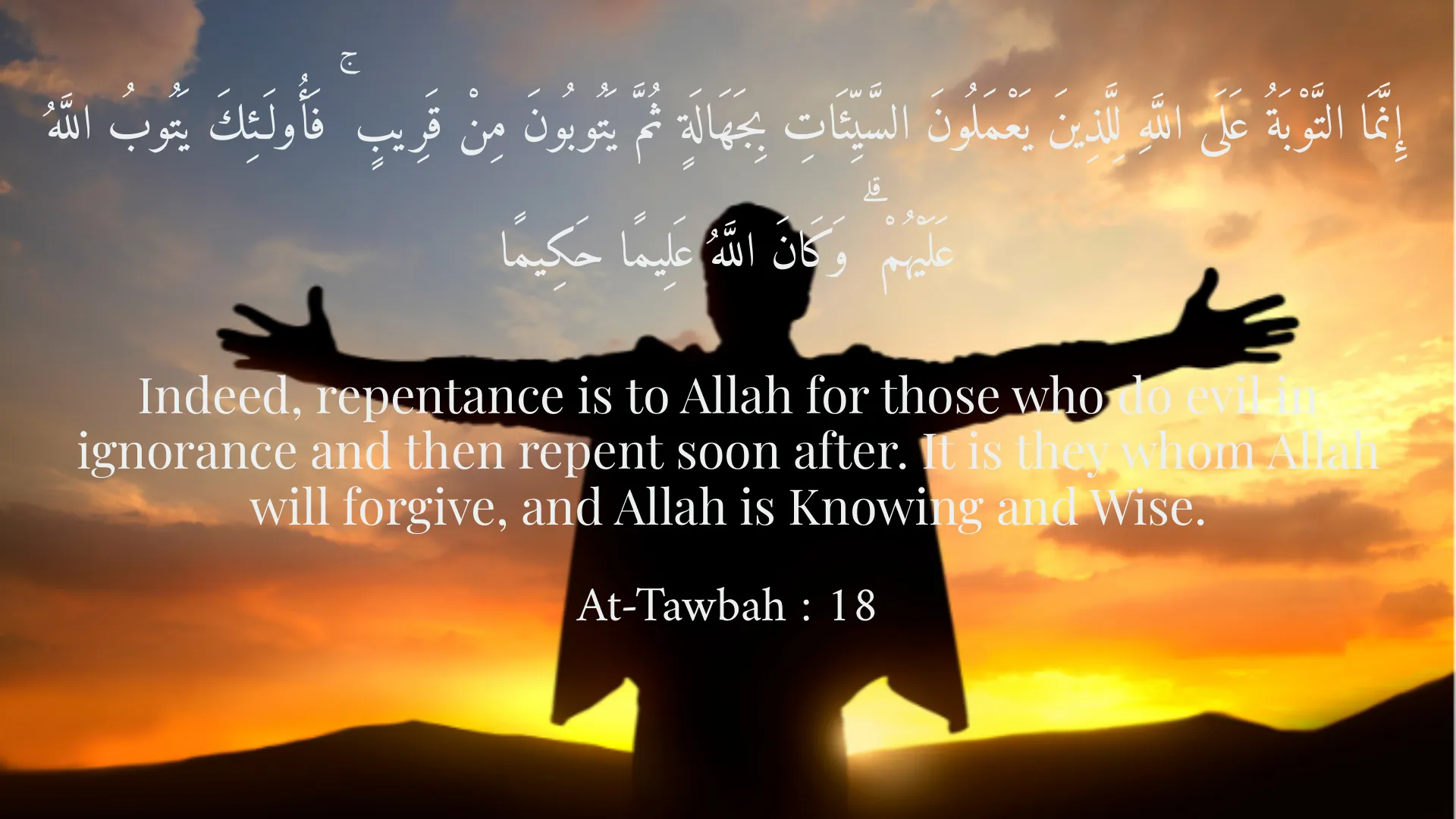
إِنَّمَا التَّوْبَةُ عَلَى اللَّهِ لِلَّذِينَ يَعْمَلُونَ السَّيِّئَاتِ بِجَهَالَةٍ ثُمَّ يَتُوبُونَ مِنْ قَرِيبٍ ۚ فَأُولَـئِكَ يَتُوبُ اللَّهُ عَلَيْهُمْ ۗ وَكَانَ اللَّهُ عَلِيمًا حَكِيمًا
Indeed, repentance is to Allah for those who do evil in ignorance and then repent soon after. It is they whom Allah will forgive, and Allah is Knowing and Wise.
At-Tawbah : 18
وَالَّذِينَ إِذَا فَعَلُوا فَاحِشَةً أَوْ ظَلَمُوا أَنْفُسَهُمْ ذَكَرُوا اللَّهَ فَاسْتَغْفَرُوا لِذُنُوبِهِمْ ۖ وَمَن يَغْفِرُ الذُّنُوبَ إِلَّا اللَّهُ
And those who, when they commit an evil or wrong themselves, remember Allah and seek forgiveness for their sins; and who can forgive sins except Allah?
Al-Imran : 135
Short Story
One day, a man came to the doorstep of Allah, saddened by the mistakes and sins he had committed. He prayed and asked Allah to forgive him. Suddenly, a voice said: 'Be kind to yourself as well; I have forgiven you, now forgive yourself.' He realized that forgiveness is essential not only from Allah but also from himself.