Quranic Answer
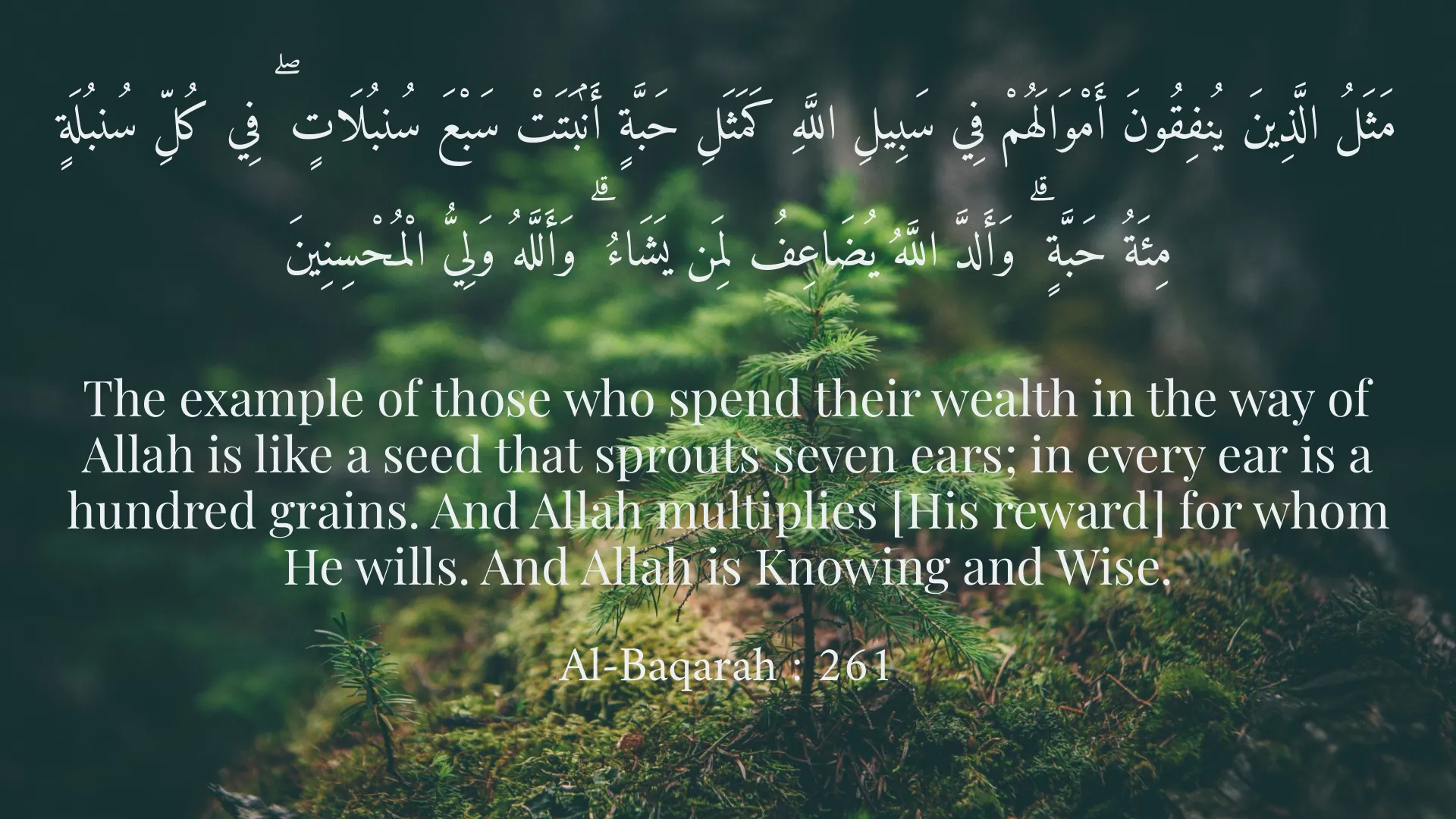
Charity holds a pivotal role in the teachings of the Holy Quran, transcending mere act of kindness to encapsulate a profound spiritual significance. It stands as a bridge connecting the giver to those in need, while also fostering a deeper relationship between humans and the Divine. Not only is charity a means of alleviating the struggles of the underprivileged, but it also acts as a channel through which believers can attract God’s mercy and protection from potential calamities. The Quran elucidates the value of charity through powerful imagery. In Surah Al-Baqarah, verse 261, Allah draws a compelling comparison between charitable acts and a seed that yields seven ears, with every ear holding a hundred grains. This metaphor is a profound reminder of the potential growth and reward that comes from a single act of charity. The implication of this verse is twofold: it not only emphasizes the exponential rewards that come from giving but also suggests the lasting impact such deeds can have on the community and society at large. When a believer engages in charitable acts, they are not merely alleviating immediate suffering but sowing the seeds for long-term communal well-being. The act of giving in the manner prescribed by Islamic teachings encompasses both the tangible benefits it brings to the recipients and the intangible return blessings for the givers. It highlights a reciprocal relationship between humanity and the Divine, where acts of kindness are met with divine providence. Furthermore, this gives rise to a mutual sense of trust, reinforcing the idea that engaging in charitable acts is a demonstration of faith in God's wisdom and mercy. In the light of the teachings of the Prophet Muhammad (peace be upon him), this faith is further embodied in the belief that charity acts as a buffer against misfortunes. One such hadith illustrates that charity not only benefits those who receive but also safeguards the givers from calamities, granting them peace and security in their lives. This is echoed in the experiences of many who have witnessed how their acts of kindness have brought stability to their own lives amidst adversity. The dimensions of charity extend beyond the material realm to encompass emotional and spiritual aspects. When an individual gives without expectation of anything in return, they cultivate a sense of empathy and compassion, thus enriching their own character. Charity, therefore, becomes an intrinsic part of personal growth and development. It engenders virtues such as humility, gratitude, and a heightened sense of social responsibility. In a world often marred by selfishness and indifference, the practice of charity cultivates a communal spirit, urging individuals to remain connected and considerate of one another’s struggles. Further elaborating the significance of charity in protecting against potential threats, Surah Al-Anfal, verse 60 states: "And prepare against them whatever you are able of power and of steeds of war by which you may terrify the enemy of Allah and your enemy." While this verse broadly addresses physical preparation for adversity, it subtly reinforces the notion that charity, as a form of preparedness, equips individuals and communities to face life's uncertainties. It instills a sense of resilience rooted in faith and mutual support. Biblical and secular texts alike affirm the value of altruism, emphasizing a universal human principle: the act of giving strengthens communities and enhances social bonds. The Quran’s perspective on charity reinforces this intrinsic idea within a spiritual framework, compelling believers to embrace giving as a core practice of their faith. Charity is thus portrayed not just as an act of compassion, but as a serious obligation, a duty that every believer must fulfill. The necessity of charity also becomes evident when viewed in the context of social justice. The wealthy and privileged are called to fulfill their responsibilities towards those less fortunate, creating a balance in the societal fabric and mitigating disparities. It serves not only as a method of assisting the needy but also as an antidote to greed and avarice. The Quran often emphasizes this point, highlighting the interconnectedness of humanity and urging believers to be mindful of the needs of others. As societies evolve and face diverse challenges, the call for charity transcends time and cultural boundaries. The modern world presents a spectrum of issues, from poverty to natural disasters, elucidating the continuous need for charitable actions. Initiatives ranging from food drives to disaster relief efforts echo this eternal and spiritual principle, embodying the essence of what it means to be a compassionate human being. In summary, charity in Islam is intricately woven into the fabric of faith, establishing a profound relationship between individuals, society, and the Divine. It serves as a reminder of our collective responsibility towards one another and the importance of uplifting those in need. In giving, believers cultivate a reciprocal bond with God, earning mercy and protection in times of hardship. The principles derived from the Quran and Hadith provide a comprehensive guide that informs the practice of charity, ensuring that acts of kindness extend beyond the immediate moment, fostering a culture of empathy and resilience across generations. By embracing charity, individuals not only transform the lives of others but also pave the way for their spiritual growth and a deeper understanding of their faith.
Related Verses
مَثَلُ الَّذِينَ يُنفِقُونَ أَمْوَالَهُمْ فِي سَبِيلِ اللَّهِ كَمَثَلِ حَبَّةٍ أَنۢبَتَتْ سَبْعَ سُنبُلَاتٍ ۖ فِي كُلِّ سُنبُلَةٍ مِئَةُ حَبَّةٍ ۗ وَأَلدَّ اللَّهُ يُضَاعِفُ لِمَن يَشَاءُ ۗ وَأَللَّهُ وَلِيُّ الْمُحْسِنِينَ
The example of those who spend their wealth in the way of Allah is like a seed that sprouts seven ears; in every ear is a hundred grains. And Allah multiplies [His reward] for whom He wills. And Allah is Knowing and Wise.
Al-Baqarah : 261
وَأَعِدُّوا لَهُم مَّا اسْتَطَعْتُم مِّن قُوَّةٍ وَمِن رِبَاطِ الْخَيْلِ تُرْهِبُونَ بِهِ عَدُوَّ اللَّهِ وَعَدُوَّكُمْ
And prepare against them whatever you are able of power and of steeds of war by which you may terrify the enemy of Allah and your enemy.
Al-Anfal : 60
Short Story
One day, a man named Hasan stood by the sea, pondering the waves. He gave charity to someone in need and felt an incredible sense of happiness. The next day, he encountered good news about his job. He felt that this positive outcome was a result of the good deeds he had done and that God's blessings were flowing into his life.