Quranic Answer
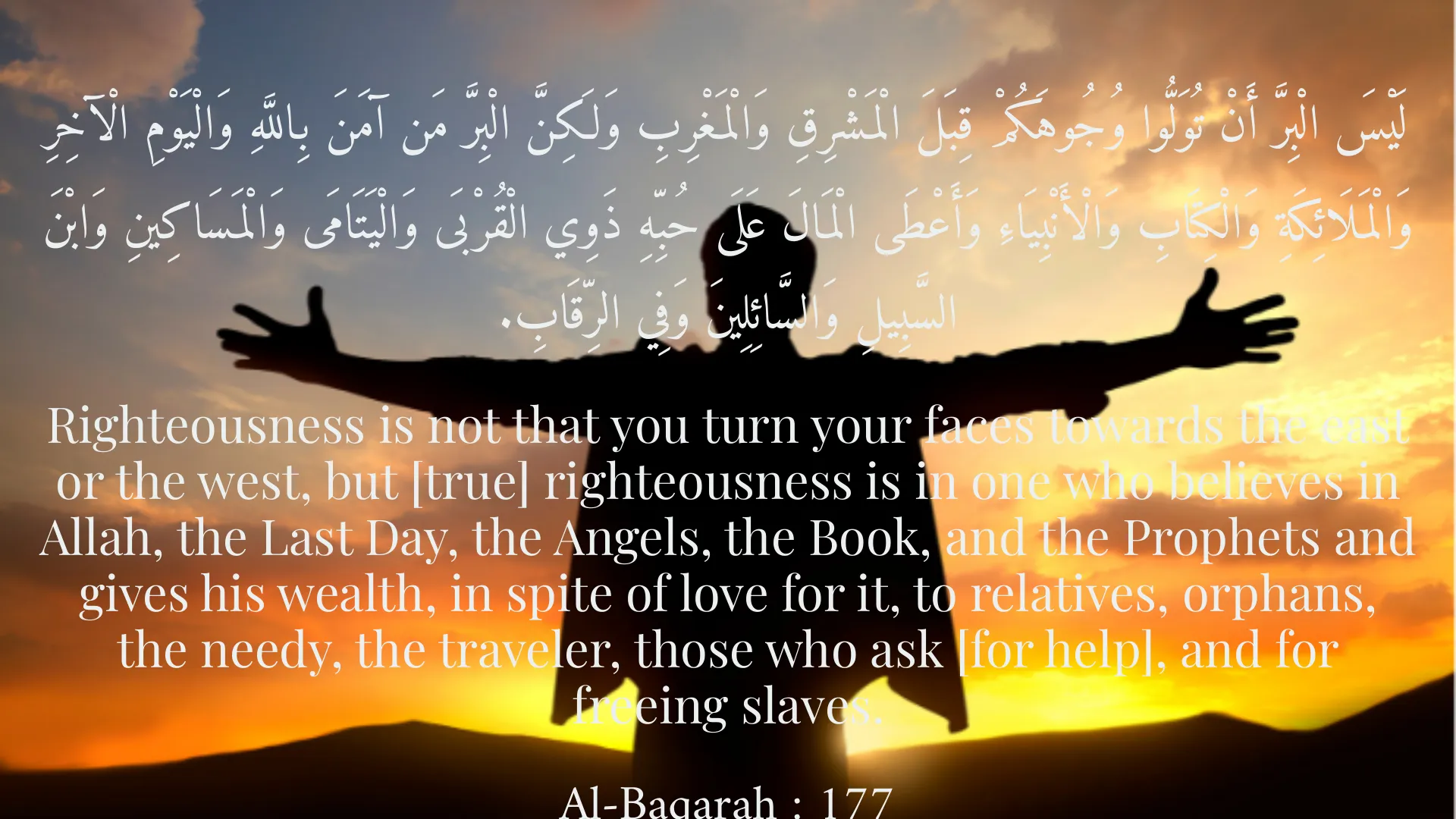
In the Holy Quran, pure intention, known in Arabic as "Niyyah," is profoundly illustrated as one of the essential pillars underpinning the performance of actions. Pure intention signifies a person's commitment to acting with sincerity and authenticity for the sake of Allah. Integrating this concept into the broader context of Islamic teachings involves understanding how pure intention influences the depth of one's acts, shaping them not only into rituals or obligations but into genuine expressions of faith and devotion. In Surah Al-Baqarah, verse 177, Allah (SWT) provides a comprehensive definition of righteousness, expanding it beyond merely a physical act or the direction one faces in prayer. Allah states, "Righteousness is not that you turn your faces towards the east or the west, but [true] righteousness is in one who believes in Allah, the Last Day, the Angels, the Book, and the Prophets and gives his wealth, in spite of love for it, to relatives, orphans, the needy, the traveler, those who ask [for help], and for freeing slaves." This verse presents a significant premise that intention and faith in Allah must be intrinsic when performing good deeds. Pure intention serves as a catalyst for elevating our actions, imbuing them with deeper meaning and purpose. It is through this lens that righteous deeds become illuminated with divine approval, ultimately leading to more positive effects in both our lives in this world and in the hereafter. When a person commits acts of kindness, charity, or any form of worship while consciously harboring a pure intention, these acts transcend mere charitable behavior; they evolve into an expression of a person's connection to Allah and an embodiment of their faith. Moreover, the Quran emphasizes that pure intention is not merely a one-time commitment but rather a continuous self-assessment. In Surah Al-Mu’minun, verse 60, Allah proclaims, "And those who spend of what We have provided them, secretly and publicly." The significance of this verse lies in its emphasis on the varying modes of charitable acts—both in secret and in public—and how the integrity of the intention behind these acts affects their value. The notion of sincerity in giving, regardless of the visibility of the action, amplifies the trustworthiness of wealth and reinforces the commitment to assist others in need. In essence, the way one navigates through life's challenges is heavily influenced by the purity of intention. Living in a world teeming with distractions and material pursuits can divert a person from their spiritual path; however, possessing a clear intention keeps individuals anchored, discerning between actions that genuinely reflect their faith and those that do not. It aids in overcoming obstacles, as one who acts with a pure heart is more likely to derive strength from their faith even in challenging circumstances. The Quran contains numerous references that delineate the transformative impact of intention on one’s deeds. In Surah Al-An’am, verse 162 states: "Say, indeed, my prayer, my rites of sacrifice, my living and my dying are for Allah, Lord of the worlds." This proclamation reinforces the notion that all actions—whether they are moments of worship, expressions of gratitude, or daily activities—must be undertaken with an unwavering intention directed towards Allah alone. The embedding of the spirit of faith within these actions marks the act as not just a duty fulfilled but as a life lived in dedication to the divine. The significance of pure intention extends beyond individual deeds; it radiates through communities, fostering environments of altruism and support. When each member of a society acts with pure intention in their dealings—whether in charity, justice, or compassion—the collective impact can cultivate a sense of solidarity and mutual support. Those actions, when performed with sincerity, not only benefit the immediate recipients but can also inspire others to act similarly, creating a ripple effect of goodness and generosity. Islam teaches that intention is a matter of the heart, which emphasizes the internal state of a person rather than the external appearance of their deeds. A person may perform a seemingly righteous act, but if their intention is self-serving, the essence of that action is diminished. Therefore, continual introspection and a sincere effort to align one’s intentions with their faith are paramount. Furthermore, on a spiritual level, the practice of reflecting on one's intention prior to the undertaking of any action acts as a form of spiritual discipline. This discipline allows individuals the opportunity to renew their purpose regularly, fostering a deeper connection with Allah and enhancing their overall spiritual journey. In conclusion, pure intention serves as the foundation upon which all righteous actions rest. Defining actions through the lens of intention leads to a more profound engagement with one’s faith and spirituality. By recognizing that true righteousness is grounded in a sincere belief in Allah, the significance of the Last Day, and being in service to others, individuals can truly embody the principles of Islam in every aspect of their lives. The rich teachings of the Holy Quran remind us of the transformative power of intention and inspire us to live a life filled with purity, righteousness, and dedication to the Creator.
Related Verses
لَيْسَ الْبِرَّ أَنْ تُوَلُّوا وُجُوهَكُمْ قِبَلَ الْمَشْرِقِ وَالْمَغْرِبِ وَلَكِنَّ الْبِرَّ مَن آمَنَ بِاللَّهِ وَالْيَوْمِ الْآخِرِ وَالْمَلَائِكَةِ وَالْكِتَابِ وَالْأَنْبِيَاءِ وَأَعْطَى الْمَالَ عَلَى حُبِّهِ ذَوِي الْقُرْبَى وَالْيَتَامَى وَالْمَسَاكِينِ وَابْنَ السَّبِيلِ وَالسَّائِلِينَ وَفِي الرِّقَابِ.
Righteousness is not that you turn your faces towards the east or the west, but [true] righteousness is in one who believes in Allah, the Last Day, the Angels, the Book, and the Prophets and gives his wealth, in spite of love for it, to relatives, orphans, the needy, the traveler, those who ask [for help], and for freeing slaves.
Al-Baqarah : 177
وَالَّذِينَ يُنفِقُونَ مَا آتَيْنَاهُمْ سِرًّا وَعَلَانِيَةً.
And those who spend of what We have provided them, secretly and publicly.
Al-Mu'minun : 60
قُلْ إِنَّ صَلَاتِي وَنُسُكِي وَمَحْيَايَ وَمَمَاتِي لِلَّهِ رَبِّ الْعَالَمِينَ.
Say, indeed, my prayer, my rites of sacrifice, my living and my dying are for Allah, Lord of the worlds.
Al-An'am : 162
Short Story
One day, a man named Ahmad decided to make changes in his life. He asked himself how he could perform his actions with a pure intention. He referred to the verses of the Quran and realized that with pure intention, he could bring more happiness and peace into his life. From that day on, everything he did was solely for the pleasure of Allah, which transformed his life and brought him tranquility.