Quranic Answer
The Holy Quran is revered across the world as one of the most significant sources of knowledge and guidance, especially for those seeking moral and ethical direction in their lives. With its profound influence on millions of people, the Quran provides a detailed framework not only encompassing spiritual beliefs but also rich ethical insights that govern human behavior. The Quran engages believers in thoughtful reflection on their actions, encouraging them to elevate their understanding of morality through a deep connection with their Creator. In discussing the Quran's emphasis on moral conscience, we can examine various verses that highlight the significance of ethical conduct in human life. A particularly striking verse linked to this theme is verse 18 of Surah Al-Inshiqaq. The verse states, 'And as for the one who fears the position of their Lord and restrains the soul from [its] desire, then indeed, Paradise will be [his] refuge.' This powerful statement encapsulates the Quranic perspective on the importance of one's moral compass and the inherent fear of divine judgment, which serves to guide individuals towards goodness and righteousness. It vividly illustrates how the fear of God can lead to self-discipline, encouraging individuals to resist their immediate desires in favor of long-term spiritual fulfillment. The moral conscience highlighted in this verse is crucial in shaping the behavior of individuals within society. It signifies an internal struggle that is universal to the human experience — the clash between base desires and ethical responsibility. By acknowledging the desire to do good that resides within every person, the Quran elevates the moral conscience as a guiding force that prompts believers toward a higher purpose. The implication here is clear: adhering to ethical principles and overcoming base desires can lead to divine reward, emphasizing the pivotal role of conscience in exploring the complexities of human actions. The Quran further elaborates on the significance of self-awareness and moral discernment through verse 7 of Surah Ash-Shams, which states, 'And [by] the soul and He who proportioned it and inspired it [with discernment of] its wickedness and its righteousness.' This verse serves as a profound reminder that Allah has equipped every human being with a built-in moral compass — the soul itself — which is capable of discerning right from wrong. The act of recognizing one's own soul and its attributes is integral to the understanding of ethical behavior in Islam. By emphasizing this divine inspiration, the Quran teaches that every individual has the inherent ability to make ethical choices, further reinforcing the importance of conscience as a guiding force. The concept of moral conscience in the Quran extends beyond mere recognition; it also demands active engagement. Believers are not only encouraged to acknowledge their conscience but are also urged to cultivate it actively so that it may flourish and guide them throughout their lives. This nurturing process requires continuous self-reflection, prayer, and seeking forgiveness from Allah, which are fundamental aspects of Islamic faith. Through such practices, individuals can sharpen their ability to discern good from evil, thus developing a more profound sense of moral clarity that guides their thoughts and actions. In addition to moral reflection, the Quran establishes a framework for ethical behavior in everyday life through numerous teachings and stories. For instance, it discusses the importance of honesty, integrity, compassion, and justice — all qualities that resonate deeply with the concept of moral conscience. The Quran encourages believers to live by these traits, reminding them that their actions, no matter how small, have spiritual repercussions. By embodying these virtues, individuals can contribute positively to society while also advancing their spiritual states. Through its myriad teachings, the Quran aims to instill in believers an acute awareness of their actions and their implications. It calls individuals to account for their behaviors, thus engendering a mindset of responsibility and reflection that is paramount in the pursuit of moral excellence. This continuous dialogue with one's conscience, guided by Quranic principles, encourages individuals to align their actions with their beliefs, paving the way toward a more fulfilling and spiritually enriched life. Interestingly, the notion of moral conscience is not limited to individual conduct; it extends into the societal realm as well. The Quran advocates for a just society where individuals support one another in adhering to ethical norms. The sense of collective responsibility enhances the importance of moral conscience, as believers are reminded that their actions influence not just their own lives, but the lives of those around them. This interconnectedness illustrates that the Quran seeks to establish a framework of morality that transcends individual desire and emphasizes community well-being as a vital aspect of ethical living. In conclusion, the Holy Quran stands as a powerful source of moral guidance, emphasizing the crucial role of human moral conscience in shaping actions and behaviors. Through its verses, the Quran not only presents principles of ethics but also encourages individuals to engage in self-reflection and practice discernment in their choices. The teachings related to the understanding of one’s own soul as well as the importance of fearing the consequences of one's actions offer profound insights into what it means to lead a morally responsible life. By internalizing these teachings and aligning their actions with ethical principles, individuals can navigate their spiritual journeys with clarity and purpose, ultimately steering them towards righteousness and the promise of divine reward.
Related Verses
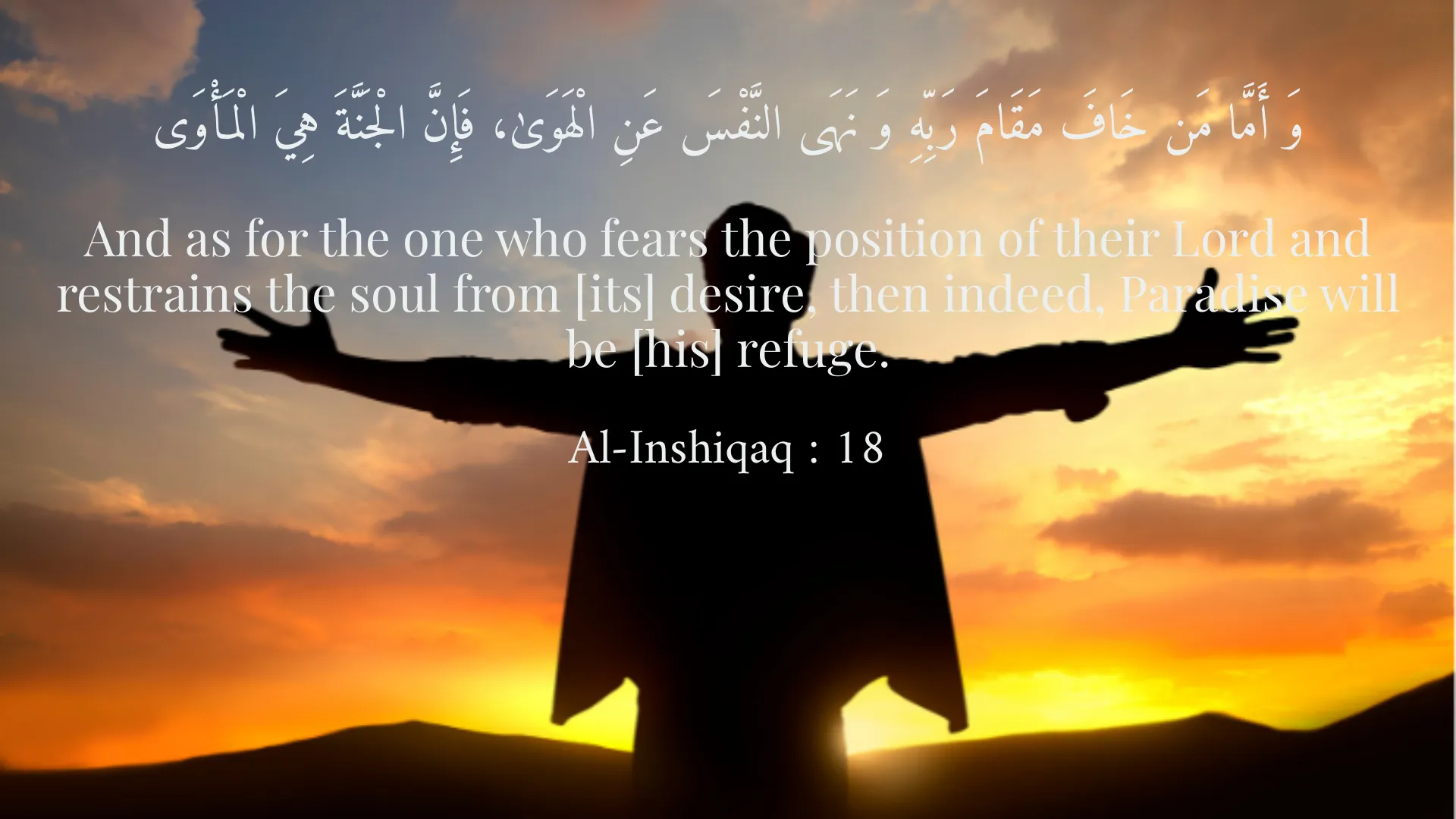
وَ أَمَّا مَن خَافَ مَقَامَ رَبِّهِ وَ نَهَى النَّفْسَ عَنِ الْهَوَىٰ، فَإِنَّ الْجَنَّةَ هِيَ الْمَأْوَى
And as for the one who fears the position of their Lord and restrains the soul from [its] desire, then indeed, Paradise will be [his] refuge.
Al-Inshiqaq : 18
وَ نَفْسٍ وَ مَا سَوَّاهَا، فَأَلْهَمَهَا فُجُورَهَا وَ تَقْوَاهَا
And [by] the soul and He who proportioned it and inspired it [with discernment of] its wickedness and its righteousness.
Ash-Shams : 7
Short Story
One day, a young man named Hassan was lost in his ignorance reflecting on his mistakes. He had faced many moral challenges in life and didn't know how to make the right decisions. One day, he came across a verse in the Quran that said: 'And as for the one who fears the position of their Lord and restrains the soul from desire.' This verse compelled him to think and reminded him that his conscience could guide him. Hassan decided to always listen to his inner feelings and consider morality in his decisions.