Quranic Answer
The Holy Quran, the revered scripture of Islam, serves as a guiding beacon for millions around the globe. Among its many teachings, a recurring theme that resonates throughout its verses is the paramount importance of kindness and mercy, not just towards friends or allies but even towards those who may be considered enemies. This principle, deeply rooted in the essence of Islamic teaching, reflects a higher moral standard and a divine command that transcends personal grievances and animosities. In Surah Fussilat, verse 34, Allah articulates this profound principle clearly: 'And not equal are the good deed and the bad. Repel [evil] by that [good] which is best; then indeed, the one between whom and you is enmity will be like a devoted friend.' This verse lays down an essential guideline for interpersonal relations by emphasizing that good and evil cannot be equated. In a world often dominated by conflict and discord, this verse serves as a powerful reminder that our reactions to adversity and hostility should be characterized by benevolence and goodness. The directive to counter evil with goodness is not merely a moral suggestion but a call to action that can transform enmity into friendship. This suggests a profound understanding of human relationships; often, people harbor animosity due to misunderstandings or past grievances. By responding to hostility with kindness, one can engender a sense of trust and warmth, potentially turning an enemy into an ally. Such transformations underscore the Quran’s vision of a harmonious society, where compassion can bridge seemingly insurmountable divides. Moreover, in Surah Aal-Imran, verse 134, Allah further emphasizes the virtues of restraint and forgiveness: 'And those who spend in the cause of Allah during ease and hardship and who restrain anger and who pardon the people - and Allah loves the doers of good.' This verse encapsulates the essence of self-control, urging believers to remain calm in the face of anger and injustice, and to pardon those who may have wronged them. The act of forgiveness is presented as a noble trait, one that is not only rewarded by Allah but also brings peace and tranquility to the individual who practices it. Together, these verses from the Quran form a guiding framework for how we ought to approach interpersonal conflicts. The spirit of kindness and forgiveness is not just a recommendation; it is an imperative that believers are encouraged to embody in their everyday lives. This call to kindness has profound implications, particularly in today's world, where divisions often seem deep and intractable. In our daily interactions, it is vital to remind ourselves of these divine prescriptions. The Quran teaches us that responding with vengeance or harboring grudges can be detrimental not only to our spiritual well-being but also to the fabric of society. By choosing to respond to hostility with kindness, we create opportunities for reconciliation and understanding. The exercise of compassion can heal wounds and restore relationships that may have been broken by misunderstanding or conflict. Another crucial aspect to consider is the potential for transformative change when we practice kindness toward our perceived enemies. The Quran encourages us to maintain a hopeful outlook; we never truly know when an enemy might become a friend or an ally. This uncertainty suggests that our immediate perceptions can be misleading, and thus we should approach each individual with an open heart and a willingness to forgive. Additionally, divine mercy is a significant theme in Islam, with Allah portrayed as the Most Merciful and Bestower of Mercy; thus, believers are inspired to emulate these qualities. By extending kindness to those who may oppose us, we mirror the divine attributes of forgiveness and compassion. This practice not only enriches our character but also acts as a social glue that binds communities together in peace. The act of showing kindness to enemies can also yield practical benefits. It fosters a more peaceful environment, reduces hostility, and builds a culture of respect and cooperation among individuals and groups. By engaging in acts of kindness, we set off a positive chain reaction that encourages others to follow suit. When acts of kindness become the norm rather than the exception, an atmosphere of trust and collaboration ensues, paving the way for greater societal harmony. Ultimately, showing kindness towards enemies is not just a moral high ground but a pathway that leads to personal and communal spiritual peace. Striving to embody these Quranic principles heralds a new approach to human relationships—one that prioritizes understanding, compassion, and forgiveness over resentment and anger. In conclusion, the guidance provided by the Holy Quran concerning kindness and mercy towards enemies serves as a vital lesson in our increasingly polarized world. It challenges us to rise above our base instincts, whether they be the urges to retaliate or to seek vengeance, and instead, cultivate a spirit of goodwill. As believers, it is our responsibility to not only internalize these teachings but to manifest them in our interactions, paving the way for a more harmonious and forgiving society. Kindness and mercy, then, become not just ideals to aspire to but foundational principles for a life lived in accordance with divine guidance.
Related Verses
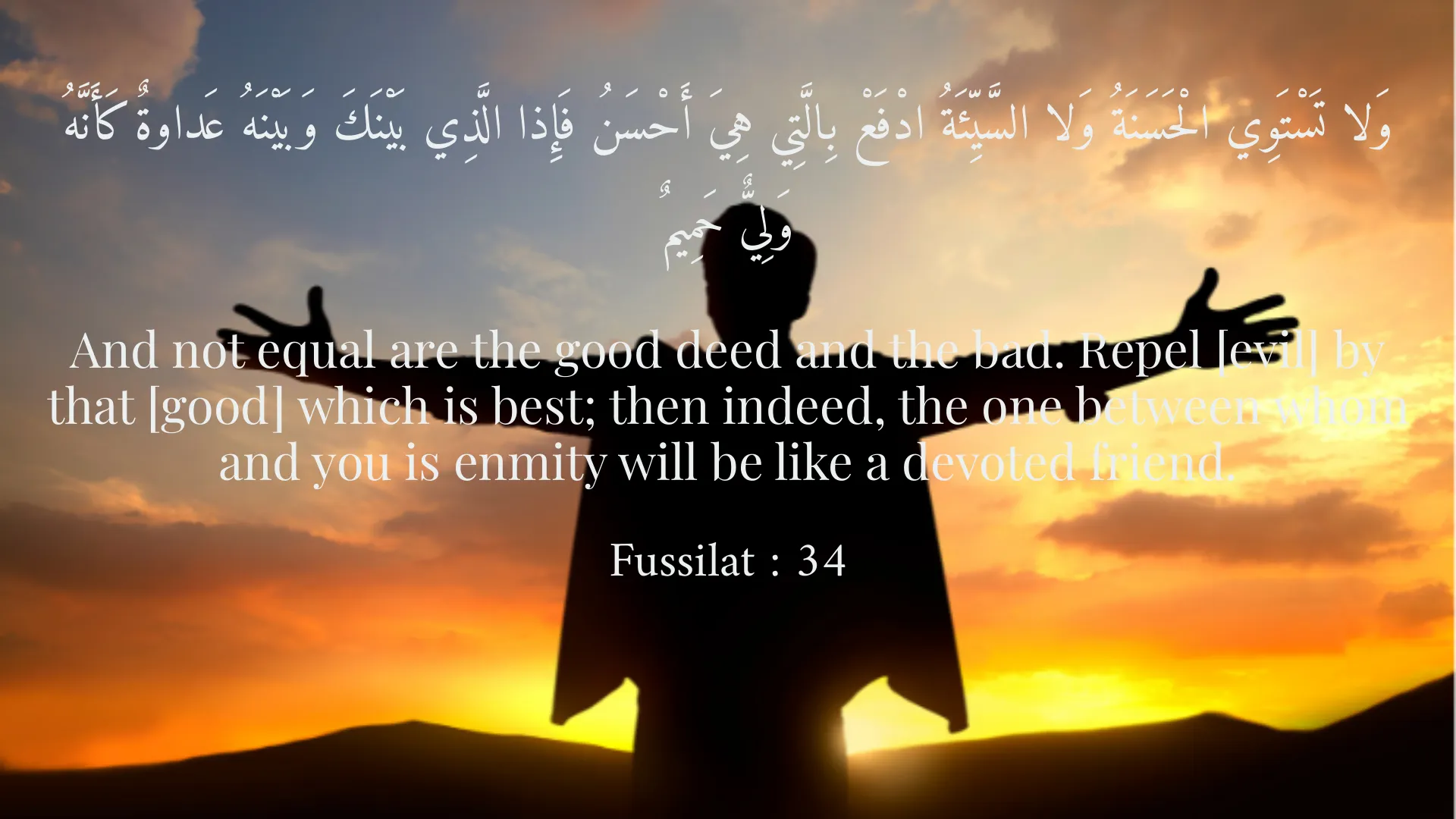
وَلا تَسْتَوِي الْحَسَنَةُ وَلا السَّيِّئَةُ ادْفَعْ بِالَّتِي هِيَ أَحْسَنُ فَإِذا الَّذِي بَيْنَكَ وَبَيْنَهُ عَداوةٌ كَأَنَّهُ وَلِيٌّ حَمِيمٌ
And not equal are the good deed and the bad. Repel [evil] by that [good] which is best; then indeed, the one between whom and you is enmity will be like a devoted friend.
Fussilat : 34
وَالَّذِينَ أَنْفَقُوا فِي السَّرَّاءِ وَالضَّرَّاءَ وَالْكَاظِمِينَ الْغَيْظَ وَالْعَافِينَ عَنِ النَّاسِ ۗ وَاللَّهُ يُحِبُّ الْمُحْسِنِينَ
And those who spend in the cause of Allah during ease and hardship and who restrain anger and who pardon the people - and Allah loves the doers of good.
Aal-Imran : 134
Short Story
One day, a man felt a grudge against his neighbor who always treated him poorly. However, he remembered the Quranic verses teaching him to behave with kindness. He decided to take a dish of food to his neighbor. When the neighbor saw this gesture of kindness, his heart softened, and gradually their relationship turned into a friendship.