Quranic Answer
Peer pressure, whether in social, family, work, or even spiritual environments, has always been one of the greatest challenges humanity faces. The desire to conform, the fear of rejection, or the dread of others' judgment can lead individuals to deviate from their true values and beliefs. However, the Holy Quran, this divine guide, with its profound and fundamental teachings, offers powerful solutions for acquiring courage and steadfastness in the face of such pressures. The Quran not only teaches us how to resist external pressures but also grounds the roots of this courage in reliance on God, individual accountability, and the recognition of truth. One of the most important Quranic principles that strengthens courage in the face of peer pressure is the concept of steadfastness (Istiqaamah) and persistence in truth. The Quran instructs believers to adhere firmly to their principles and beliefs and to remain steadfast on the path of truth, even if everyone else is doing the opposite. This steadfastness is not merely an ethical virtue but a fundamental pillar for preserving one's religious and human identity against misleading societal currents. In Surah Hud, verse 112, Allah commands Prophet Muhammad (PBUH) and, by extension, all believers: "So remain steadfast as you have been commanded, [you] and those who have repented with you, and do not transgress. Indeed, He is Seeing of what you do." This verse explicitly emphasizes the necessity of persistence in divine commands, even when it might entail significant difficulties. This steadfastness acts as an anchor against intellectual, social, and cultural storms that might push individuals towards conformity. A believer understands that the path of truth, even if solitary and with little support, is far more valuable than a false path trodden by a multitude. This perspective instills an inner courage, enabling them not to fear the consequences of standing firm and opposing wrongful norms, and to remain resolute on the path of truth with firm resolve. Another principle is the emphasis on individual accountability. The Quran clearly states that every human being is responsible for their own actions and choices, and no one bears the burden of another's sin. In Surah Fatir, verse 18, we read: "And no bearer of burdens will bear the burden of another." This principle frees individuals from the heavy burden of compromising their authenticity and faith to please others or out of fear of collective judgment. When a person realizes that the ultimate judgment rests with God, and not with public opinion or the pressures of friends and colleagues, they gain immense power to say "no" to what is wrong. Instead of blindly following the crowd, they consult their divine conscience and make decisions based on Quranic values. This individual accountability empowers them to live according to their moral and religious principles, even if these choices place them in the minority and mean distinguishing themselves from the prevailing trend. This is especially crucial in today's world, where media and social network pressures are very strong. Perhaps one of the most powerful strategies in the Quran for dealing with peer pressure is the concept of not fearing the blame of any blamer (La Yakhafuna Lawmata La'im). This Quranic phrase is mentioned in Surah Al-Ma'idah, verse 54: "...and they will not fear the blame of any blamer. That is the favor of Allah; He bestows it upon whom He wills. And Allah is all-Encompassing and all-Knowing." The fear of judgment, mockery, or rejection by the group is one of the primary factors in succumbing to peer pressure. By presenting this concept, the Quran eliminates this fear, assuring believers that Allah's pleasure is more important and enduring than human approval. When individuals are unafraid of reproachful glances or social labeling, they can boldly stand for what they believe and prioritize truth over falsehood. This courage manifests not only in religious matters but in every aspect of life that requires standing against collective errors and immoralities. This verse teaches believers that true value lies in the sight of Allah, not in fleeting and changeable human validations. Furthermore, the Quran repeatedly warns against blind conformity to the majority, especially if the majority is on the path of falsehood. In Surah Al-An'am, verse 116, Allah says: "And if you obey most of those on earth, they will mislead you from the way of Allah. They follow not except assumption, and they are not but fabricating." This verse cautions that simply because something is prevalent and widely accepted does not make it right or true. This message encourages individuals to use their intellect, insight, and divine teachings to seek the truth, even if this truth resides with a minority. This perspective helps individuals escape the trap of "groupthink," which can lead to misguided and sometimes dangerous decisions and behaviors, enabling them to find their way with the light of Quranic guidance. Finally, the Quran provides practical models for courage in the face of peer pressure by offering numerous examples of prophets and righteous individuals. Many stories are recounted of prophets like Noah, Abraham, Moses, and especially Prophet Muhammad (PBUH), who stood alone or with a small group against their corrupt and misguided societies. Despite mockery, threats, and persecution, they remained steadfast in their divine message. The story of the Companions of the Cave (Ashab al-Kahf), who withdrew from society to preserve their faith and sought refuge in a cave, is a shining symbol of this courage and prioritizing belief over external pressures. These stories teach believers how to remain steadfast in the face of group pressure, relying completely on Allah, and knowing that Allah's support is sufficient for standing firm on the truth. Therefore, by strengthening the belief in individual accountability, emphasizing steadfastness and persistence on the path of truth, eliminating the fear of others' blame, and providing practical examples from prophets and righteous individuals, the Holy Quran invites believers to an inner courage that can withstand any form of peer pressure. This courage stems not from arrogance or pride, but from a deep faith in Allah and trust in the truth; a faith that enables individuals to always choose the right path, even if this path differs from that of the majority and is accompanied by difficulties. As a result, the Quran not only invites us to courage but also provides us with the necessary tools and insights to achieve it, so that in today's high-pressure world, we can tread the path of felicity with a confident heart and firm steps.
Related Verses
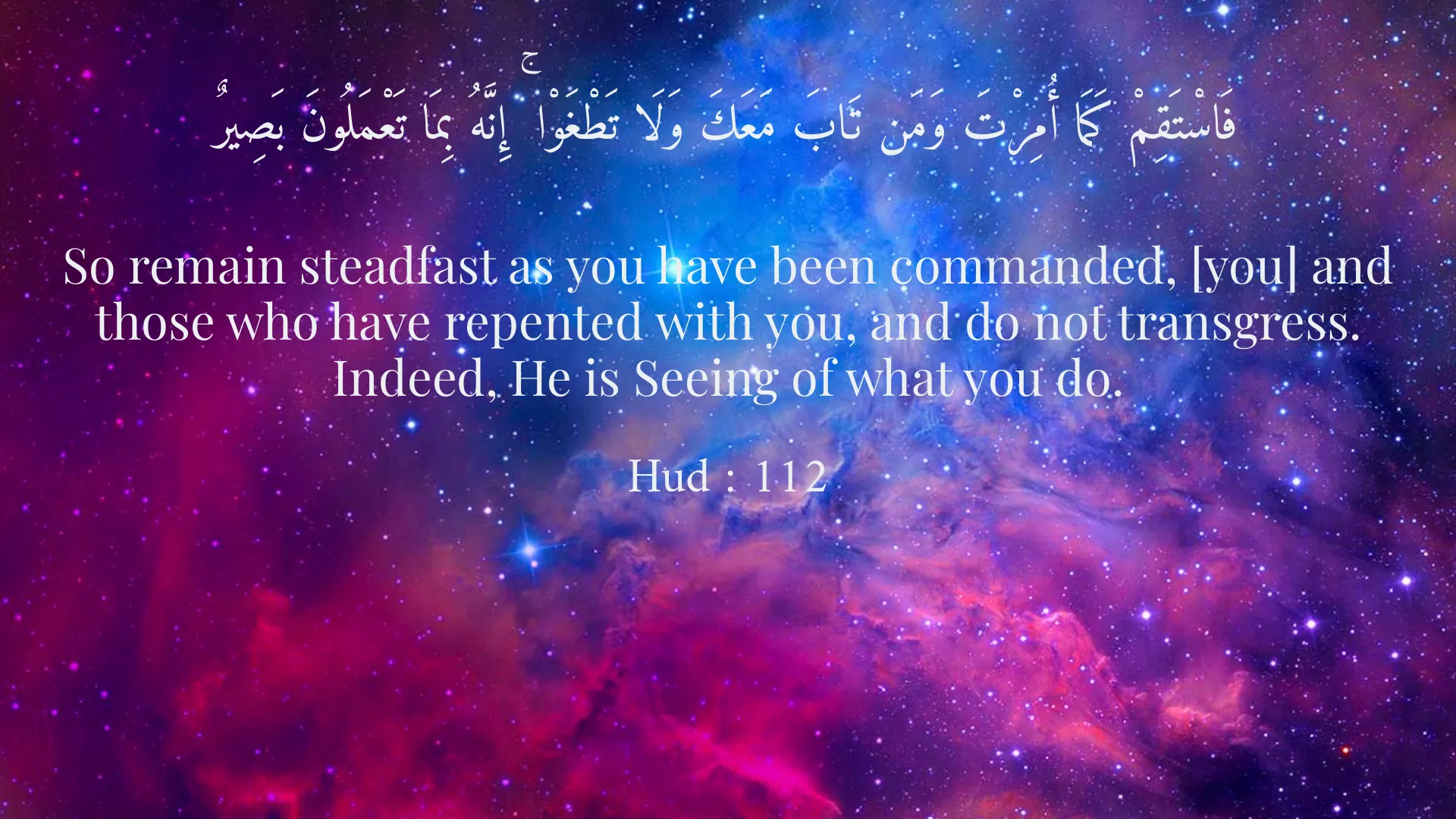
فَاسْتَقِمْ كَمَا أُمِرْتَ وَمَن تَابَ مَعَكَ وَلَا تَطْغَوْا ۚ إِنَّهُ بِمَا تَعْمَلُونَ بَصِيرٌ
So remain steadfast as you have been commanded, [you] and those who have repented with you, and do not transgress. Indeed, He is Seeing of what you do.
Hud : 112
يَا أَيُّهَا الَّذِينَ آمَنُوا مَن يَرْتَدَّ مِنكُمْ عَن دِينِهِ فَسَوْفَ يَأْتِي اللَّهُ بِقَوْمٍ يُحِبُّهُمْ وَيُحِبُّونَهُ أَذِلَّةٍ عَلَى الْمُؤْمِنِينَ أَعِزَّةٍ عَلَى الْكَافِرِينَ يُجَاهِدُونَ فِي سَبِيلِ اللَّهِ وَلَا يَخَافُونَ لَوْمَةَ لَائِمٍ ۚ ذَٰلِكَ فَضْلُ اللَّهِ يُؤْتِيهِ مَن يَشَاءُ ۚ وَاللَّهُ وَاسِعٌ عَلِيمٌ
O you who have believed, whoever of you reverts from his religion - Allah will bring forth [in place of them] a people He loves and who love Him, humble toward the believers, powerful against the disbelievers; they strive in the cause of Allah and do not fear the blame of any blamer. That is the favor of Allah; He bestows it upon whom He wills. And Allah is all-Encompassing and all-Knowing.
Al-Ma'idah : 54
وَإِن تُطِعْ أَكْثَرَ مَن فِي الْأَرْضِ يُضِلُّوكَ عَن سَبِيلِ اللَّهِ ۚ إِن يَتَّبِعُونَ إِلَّا الظَّنَّ وَإِنْ هُمْ إِلَّا يَخْرُصُونَ
And if you obey most of those on earth, they will mislead you from the way of Allah. They follow not except assumption, and they are not but fabricating.
Al-An'am : 116
Short Story
It is recounted in Saadi's Golestan that there once was a king known for his ill temper and tyrannical nature. One day, a dervish, dignified and calm, was present in his court. The king inquired, "What do you know of my disposition? Do you see justice in my rule?" The dervish, with utmost courage and without any hesitation, replied, "O King, I see in you the signs of a good and just ruler, but unfortunately, your temper is terrifying and dreadful for the oppressed." The king, enraged by this frank and unreserved speech, ordered his imprisonment. At that moment, a flattering courtier, always seeking an opportunity for sycophancy, whispered to the monarch, "O Great King, this dervish has been impudent and disrespected your lofty position; he deserves the severest punishment." The dervish, upon hearing these murmurs, calmly smiled and with a strong heart, turned to the king and said, "O King, for me, enduring your wrath and imprisonment is easier than to flatter you and betray my conscience by concealing the truth with lies. For a man of truth, speaking the truth is salvation and deliverance, even if it leads to prison and hardship. But for those who resort to flattery and conceal the truth for worldly gains, their very flattery and lies lead to ruin and humiliation." This beautiful and profound story from Saadi teaches us that true courage lies in standing firm for the truth and preserving one's conscience, even in the face of the most powerful pressures and despite severe consequences; it is this spirit that keeps a person steadfast against peer pressure.