Quranic Answer
The Holy Quran places immense importance on humanity and underscores the prioritization of individual rights within its teachings. The verses of the Quran are rich with guidance related to the treatment of others, emphasizing fairness, justice, and kindness in social, economic, and cultural contexts. These principles are vital for a just society and reflect the essence of teachings in various chapters of the Quran. In Surah Al-Ma'idah, verse 8, Allah instructs believers by stating, "O you who have believed, be persistently standing firm in justice, witnesses in the cause of Allah, even if it be against yourselves or your parents and relatives." This exhortation to stand for justice not only highlights the importance of fairness but also emphasizes an individual's responsibility to uphold the truth even in challenging circumstances. Thus, the Quranic message calls for integrity and courage in justice, regardless of personal affiliations. This verse resonates with the moral fabric of society, as it implores individuals to transcend biases and prejudices that often cloud human judgment. By demanding that believers witness for justice even if it goes against themselves or their loved ones, the Quran emphasizes the significance of human dignity and the universal rights that individuals must uphold. Furthermore, in Surah An-Nisa, verse 135, the Quran further elaborates on the need for justice. It states, "Be persistently standing firm in justice, witnesses in the cause of Allah, even if it be against yourselves or your parents and relatives." The repetition of justice in these verses cannot be overstated, as it edifies the moral compass necessary for a healthy communal life. The verse posits justice as an unwavering pillar that governs human interactions. Moreover, the Quran emphasizes economic rights, which are crucial for promoting dignity and fairness. Surah Al-Baqarah, verse 267 addresses significant issues related to interest, charity, and the support of those in need. The Quran explicitly states that economic transactions should be conducted without exploitative practices, such as usury, which can lead to severe injustice in the distribution of wealth. Instead, the Quran encourages charity and almsgiving as essentials to help those who are disadvantaged, reinforcing the need for economic justice within the community. The importance of economic justice underlines the Quranic approach toward collective responsibility. Every individual has a duty to assist in alleviating the suffering of the less fortunate, thus reestablishing a sense of community where the richness of some does not overshadow the dignity of others. The verses signal to believers the importance of ensuring their financial dealings align with a broader ethical framework that uplifts society as a whole. Beyond the broader societal implications, the Quranic teachings also extend specifically to the rights of women, children, and minorities. For instance, the Quran clarifies the rights of women, emphasizing their dignity and respect within social structures. The societal norms of pre-Islamic Arabia often relegated women to a subordinate status; however, the Quran redefined their roles, granting them rights to inheritance, ownership, and participation in societal matters. This progressive stance is encapsulated in Surah An-Nisa, which outlines gender justice and equality, reinforcing that both men and women have inherent rights bestowed by Allah. Children are also of utmost importance in Quranic teachings. Surah Al-Isra, verse 31 stresses the need to protect children and refrain from killing them out of fear of poverty. The verse reflects profound compassion and emphasizes that every child, regardless of their circumstances, has the right to a dignified life and access to basic needs. This fundamental principle highlights the importance of nurturing the next generation and ensuring their rights are upheld, fostering an environment where their potential can thrive. Minorities, too, find refuge in Islamic teachings. The Quran reiterates the need to respect and safeguard the rights of those who may differ from the majority, promoting a culture of acceptance and coexistence. This inclusivity is crucial for building a cohesive society, where diversity is welcomed rather than feared, and individuals are encouraged to celebrate their unique identities. Examining all these dimensions, we see that the Quran’s message extends well beyond spiritual supplications and beliefs; it integrates the social and economic rights of people as foundational elements of faith. In a compiled fashion, the Quran provides a holistic framework that champions humanity and strives for the overall betterment of society. Islam teaches that a society’s strength is derived from its commitment to uphold justice and the rights of individuals. It calls upon its followers to reject discrimination and injustice in any form. Thus, the overarching principle that resonates from the verses is that the respect for the rights of individuals—be it social, economic, or cultural—is not just a recommendation; it is an integral aspect of being a faithful believer. In conclusion, the Holy Quran not only serves as a spiritual guide but also as a comprehensive manual that details the importance of justice, equity, and the preservation of individual rights. Its teachings promote a harmonious society founded on principles that safeguard dignity and rights for all, thus ensuring a balanced and peaceful coexistence among diverse groups within humanity. As each generation grapples with new challenges, the ageless wisdom of the Quran continues to provide a moral anchor, reminding humanity of respect, justice, and the fundamental rights inherent to all individuals.
Related Verses
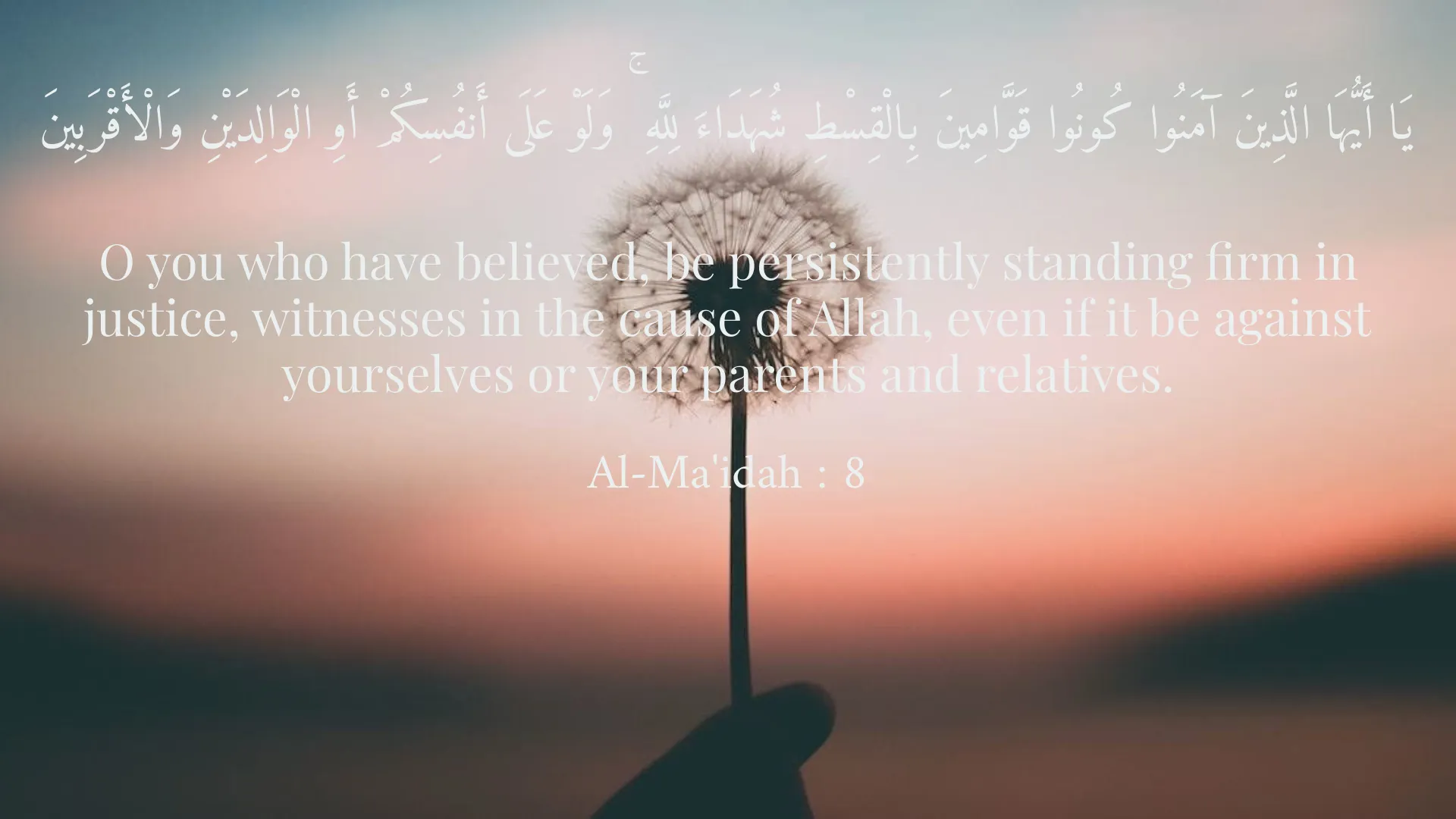
يَا أَيُّهَا الَّذِينَ آمَنُوا كُونُوا قَوَّامِينَ بِالْقِسْطِ شُهَدَاءَ لِلَّهِ ۚ وَلَوْ عَلَى أَنفُسِكُمْ أَوِ الْوَالِدَيْنِ وَالْأَقْرَبِينَ
O you who have believed, be persistently standing firm in justice, witnesses in the cause of Allah, even if it be against yourselves or your parents and relatives.
Al-Ma'idah : 8
يَا أَيُّهَا الَّذِينَ آمَنُوا كُونُوا قَوَّامِينَ بِالْقِسْطِ شُهَدَاءَ لِلَّهِ ۚ وَلَوْ عَلَى أَنفُسِكُمْ أَوِ الْوَالِدَيْنِ وَالْأَقْرَبِينَ
O you who have believed, be persistently standing firm in justice, witnesses in the cause of Allah, even if it be against yourselves or your parents and relatives.
An-Nisa : 135
يَا أَيُّهَا الَّذِينَ آمَنُوا أَنفِقُوا مِمَّا كَسَبْتُمْ وَمِمَّا أَخْرَجْنَا لَكُمْ مِنَ الْأَرْضِ وَلَا تَيَمَّمُوا الْخَبِيثَ مِنهُ تُنفِقُونَ
O you who have believed, spend from that which you have earned and from that which We have produced for you from the earth. And do not aim toward the bad therein.
Al-Baqarah : 267
Short Story
One day, a man named Hasan was at the market, arguing with one of the sellers. During this discussion, he recalled the verses of the Quran emphasizing rights and justice. He remembered that he should respect others' rights and strive to act justly. After this reflection, he treated the seller with respect and ended up not only making a good deal but also forming a new friendship. This experience taught him how respecting people's rights can enhance social relationships.