Quranic Answer
### The Importance of Language in the Holy Quran Language is an intrinsic part of human life, serving as a fundamental way to express thoughts, emotions, and beliefs. It acts as a bridge connecting individuals and communities, allowing for the sharing of ideas and the nurturing of relationships. The Holy Quran recognizes the paramount importance of language and emphasizes its preservation through its teachings. This article delves deeply into the significance of language in the Quran and seeks to explore how it influences understanding, communication, culture, and identity. The Quran begins by highlighting the role of language in human communication through a beautiful verse from Surah Ar-Rahman: "The Most Merciful Taught the Quran Created man * And taught him eloquence" (Surah Ar-Rahman, verses 1 to 4). This verse encapsulates the essence of language as a divine gift. The Allah (God) here signifies the importance of eloquence and articulation, which allows humans to express themselves fully and authentically. The notion that Allah taught language signifies its sacred nature and its role in conveying essential truths. In understanding the significance of language from the Quran's perspective, one must recognize that it serves several functions beyond mere communication. Language has the power to convey moral values and deep-seated beliefs, making it vital for the transmission of religious and spiritual teachings. For believers in Islam, language serves as a medium through which the divine will and associated teachings are introduced and elaborated. This affirms the Quran as not only a religious text but also a linguistic masterpiece—rich in style and depth. Moreover, the importance of language is not limited to its usage in daily conversations or the pursuit of knowledge. It extends to the understanding of profound truths and the essence of our existence. The Quran encourages its believers to engage in kind speech, reflecting on the importance of how one communicates with others. This idea is emphasized in Surah Luqman, verse 19, which states: "And be moderate in your pace and lower your voice. Indeed, the most disagreeable of sounds is the braying of donkeys." This verse teaches Muslims to approach conversations with gentleness, respect, and consideration, reminding them that the manner in which we communicate is nearly as important as the words we choose to use. Additionally, fostering unity and compassion within the community is a key teaching of the Quran. The way one conveys messages can significantly impact social relationships, making it crucial to promote positive forms of dialogue. Through language, communities can express love, understanding, and support for one another. In this regard, the Quran emphasizes that believers should use their language as a tool for creating compatibility and harmony both in personal and communal relationships. Preserving language, as emphasized throughout the Quran, is not only about maintaining communication among people; it also involves safeguarding culture, identity, and social traditions. For instance, languages are intertwined with cultural expressions, historical narratives, and societal values. They carry the essence of a people—their experiences, hopes, and aspirations. When a language is preserved, it allows future generations to access their cultural heritage and maintain a sense of belonging. The Quran celebrates the diversity of languages as a sign of Allah's creativity. This is reflected in Surah Al-Hujurat, verse 13: "O mankind, indeed We have created you from male and female and made you peoples and tribes that you may know one another. Indeed, the most noble of you in the sight of Allah is the most righteous of you. Indeed, Allah is Knowing and Acquainted." The creation of various languages and cultures fosters a rich tapestry of human existence. Such diversity should be embraced and respected instead of being a source of division. The Quran teaches that differences can lead to understanding rather than discord. In today’s globalized world, where interaction across languages and cultures has become commonplace, the lessons drawn from the Quran regarding language are profoundly relevant. The Quran advocates for respectful interactions among individuals of different backgrounds, encouraging the development of mutual understanding and dialogue. Encouragingly, language can serve as a tool for peace and reconciliation as communities engage in discussions, transcending linguistic barriers. Building bridges instead of walls is a vital message that remains pertinent in contemporary society. Moreover, the preservation of language also entails acknowledging and respecting dialects and regional languages. This recognition reinforces the importance of local narratives and serves to enhance a community’s identity, allowing for a more comprehensive understanding of specific cultures and histories. The Quran acknowledges that Allah’s guidance is not limited to one language; divine knowledge transcends any single tongue. This understanding encourages the exploration of multilingualism and promotes a respectful coexistence of various languages. In terms of the individual's perspective, language becomes a means of personal development, self-expression, and self-identity. An individual’s command over their language can have profound impacts on their self-esteem, confidence, and ability to influence others. For instance, the Quran encourages a rich vocabulary and eloquent articulation as methods of showcasing one’s understanding and internalizing moral values. This focus on eloquence also serves as guidance for social interaction and rhetoric, emphasizing that clarity and intention matter in communication. In conclusion, the Holy Quran’s teachings on language underscore its significance as a powerful tool for communication, expression, and cultural preservation. The Quran invites humanity to engage in meaningful interactions and kind speech, reminding us of the profound social connections language can forge. As we navigate the complexities of modern life, the core teachings of the Quran can guide us in appreciating our shared humanity, emphasizing the importance of communication that promotes love, understanding, and respect. The preservation of language is, therefore, not merely about keeping a mode of communication alive; it is fundamentally about preserving the culture, identity, and essence of what it means to be human, as beautifully illustrated by the Quran’s teachings.
Related Verses
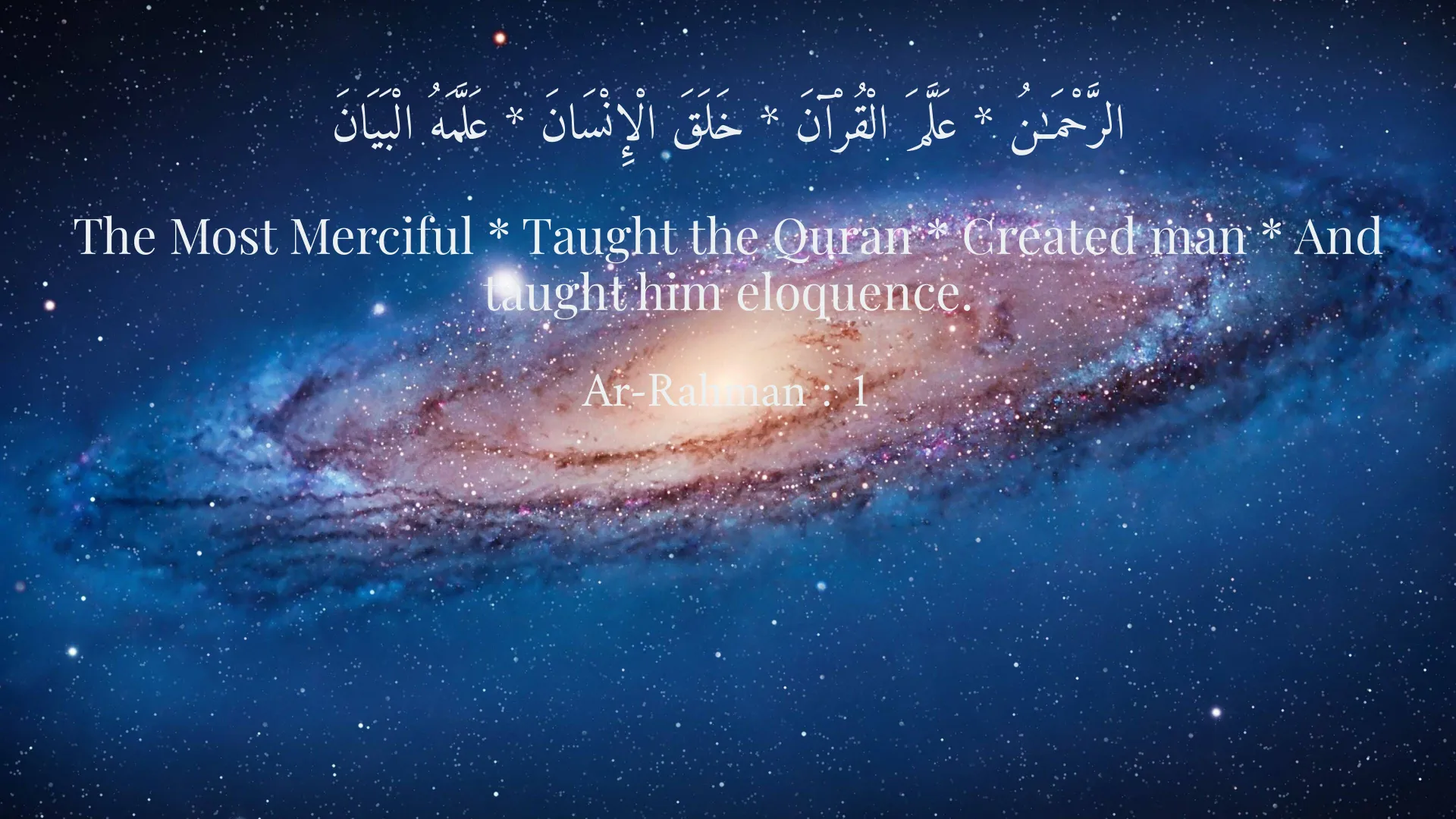
الرَّحْمَٰنُ * عَلَّمَ الْقُرْآنَ * خَلَقَ الْإِنْسَانَ * عَلَّمَهُ الْبَيَانَ
The Most Merciful * Taught the Quran * Created man * And taught him eloquence.
Ar-Rahman : 1
وَاقْصِدْ فِي مَشْيِكَ وَاغْضُضْ مِن صَوْتِكَ ۚ إِنَّ أَنْكَرَ الْأَصْوَاتِ لَصَوْتُ الْحَمِيرِ
And be moderate in your pace and lower your voice. Indeed, the most disagreeable of sounds is the braying of donkeys.
Luqman : 19
Short Story
Once upon a time, there was a young man named Sajjad, who loved the Persian language. He spent hours every day reading poetry and literature. One day, Sajjad decided to tell his teacher how much language mattered to him. He said, "My language is like a bridge. With it, I reach hearts and convey my feelings to others. Therefore, I must preserve this language." His teacher responded with a smile, "Exactly! Language conveys love and affection through sweet words." From that day on, Sajjad decided to speak beautifully with others every day and keep love alive in their hearts.