Quranic Answer
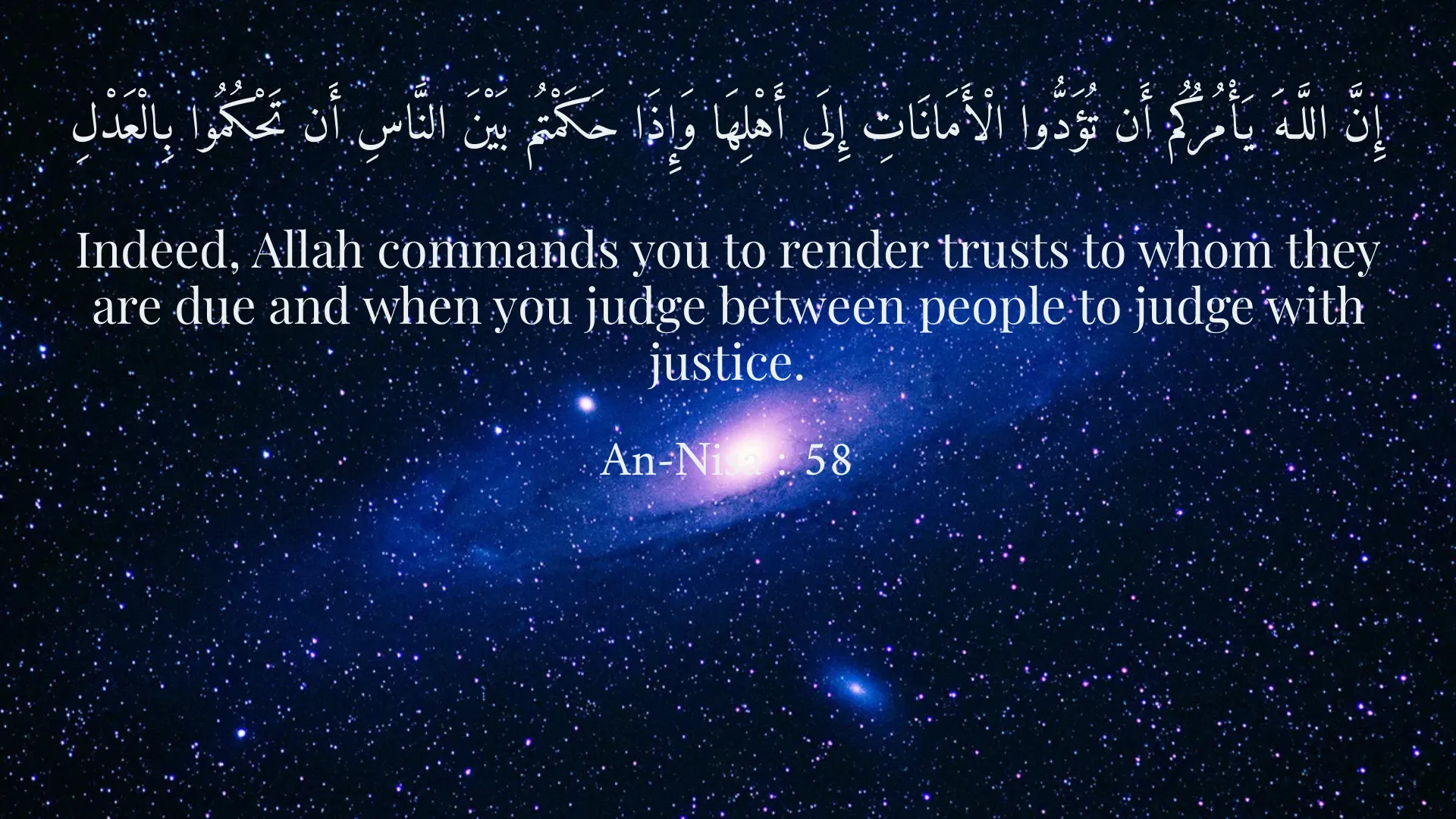
The Holy Quran, revered as the sacred text of Islam, serves as a foundational guide for Muslims worldwide. Its teachings extend beyond mere spiritual inferences and delve deeply into the practical aspects of life, particularly in addressing disputes and social issues. One of the central themes woven throughout the Quran is the concept of justice and fairness, which is paramount in the resolution of conflicts within society. In Surah An-Nisa (The Women), verse 58, the Quran states: "Indeed, Allah commands you to render trusts to whom they are due and when you judge between people to judge with justice." This powerful verse encapsulates the essence of fairness that is required when making decisions. Here, the Divine command emphasizes two critical elements: the responsibility to uphold trusts and the obligation to institute justice. Trust, in this context, refers not only to material possessions but also extends to the ethical and moral responsibilities bestowed upon individuals within a community. In essence, this principle of justice serves as a foundation upon which social harmony is built. The Quran discourages unjust behavior and emphasizes that indiscriminate actions can lead to societal discord. By promoting justice, it urges individuals to act with fairness, thereby fostering an environment where conflicts can be resolved amicably. This resolution is not limited to legal matters but extends to interpersonal relationships, where fairness can bridge divides and heal wounds. Moreover, the Quran advocates for the importance of consultation and dialogue as pivotal tools in resolving conflicts. In Surah Al-Hujurat (The Rooms), verse 10, it mentions: "Indeed, the believers are but brothers, so make settlement between your brothers." The call for brotherhood and reconciliation underscores the necessity of maintaining peace among individuals and communities. Dialogue is not merely a means of communication, but a fundamental process through which understanding, empathy, and solutions can be reached. Conflict resolution, therefore, demands an open exchange of views that respects differing opinions while seeking to harmonize relationships. This principle of dialogue is particularly relevant in contemporary societies where diversity and difference often lead to misunderstandings and conflicts. The Quran provides a framework that encourages believers to engage actively with one another to find common ground, thereby promoting a sense of belonging and unity. Furthermore, the Quran underlines the significance of forgiveness as an integral part of conflict resolution. In Surah An-Nur (The Light), verse 22, it states: "And let not [those of] virtue among you swear not [to give] to their near relatives and the needy and the immigrants in the cause of Allah. And let them pardon and overlook. Would you not like that Allah should forgive you?" This verse speaks volumes about the need for compassion and understanding when resolving disputes. The act of forgiving not only serves to mend relationships but also reflects a higher moral standard that individuals are encouraged to aspire to. Forgiveness can be challenging, especially in the face of deep-seated grievances; however, the Quran inspires believers to view forgiveness as a strength rather than a weakness. By urging individuals to overlook faults and embrace reconciliation, it fosters a community that aspires to live in harmony and peace. This approach evocatively embodies the characteristics of a compassionate society, one where individuals strive to mend, rather than break, relationships. The examples outlined in the Quran about justice, dialogue, and forgiveness offer a detailed manual on how to navigate conflicts and disputes within human interactions. Thus, it is not a mere collection of religious texts but a comprehensive source of guidance that speaks to both individual conduct and community relationships. Additionally, the importance of community in conflict resolution is highlighted throughout the Quran. The teachings do not just focus on the individual but place a great emphasis on collective responsibility. The well-being of the community is as vital as that of the individual. In addressing social issues collectively, the Quran promotes a society where everyone is invested in the welfare of one another. This collective approach fosters an environment where people can seek help, support, and counsel, minimizing the likelihood of disputes escalating into larger social issues. Thus, the Quran’s teachings on conflict resolution serve not only as a personal lesson but extend to the very fabric of society. When individuals adhere to principles of fairness, engage in open dialogue, and practice forgiveness, they construct a foundation essential for peaceful coexistence. The presence of such principles leads to a civilized and cooperative society, one that reflects moral integrity and a commitment to justice. In conclusion, the teachings of the Quran regarding justice, consultation, dialogue, and forgiveness offer comprehensive guidelines for resolving disputes in all aspects of life. As we strive to embody these principles, we can not only enhance personal relationships but also contribute positively to the fabric of our societies. The Holy Quran’s emphasis on these critical values makes it an indispensable resource for Muslims and humanity as a whole in their quest for peace and harmony.
Related Verses
إِنَّ اللَّـهَ يَأْمُرُكُم أَن تُؤَدُّوا الْأَمَانَاتِ إِلَى أَهْلِهَا وَإِذَا حَكَمْتُم بَيْنَ النَّاسِ أَن تَحْكُمُوا بِالْعَدْلِ
Indeed, Allah commands you to render trusts to whom they are due and when you judge between people to judge with justice.
An-Nisa : 58
إنما المؤمنون إخوة، فأصلحوا بين أخويكم
Indeed, the believers are but brothers, so make settlement between your brothers.
Al-Hujurat : 10
وَلَا يَأْتَلِ أُولُو الْفَضْلِ مِنكُمْ وَالسَّعَةِ أَنْ يُؤَتُوا أُولِي الْقُرْبَىٰ وَالْمَسَاكِينِ وَالْمُهَاجِرِينَ فِي سَبِيلِ اللَّهِ وَ لْيَعْفُوا وَلْيَصْفَحُوا أَلَا تُحِبُّونَ أَنْ يَغْفِرَ اللَّهُ لَكُمْ
And let not [those of] virtue among you swear not [to give] to their near relatives and the needy and the immigrants in the cause of Allah. And let them pardon and overlook. Would you not like that Allah should forgive you?
An-Nur : 22
Short Story
One day, two friends had a quarrel over a trivial matter and distanced themselves from each other. Both of them recalled the verses of the Quran and decided to talk and resolve their dispute. They remembered a verse saying: "Indeed, the believers are brothers." Therefore, they sat together, discussed their differences, and restored their friendship.