Quranic Answer
The Holy Quran offers profound guidance that empowers believers to transcend the pitfalls of cultural comparison, fostering a worldview rooted in spiritual principles rather than superficial distinctions. At its core, the Quran redirects our focus from external markers of identity – such as ethnicity, lineage, or cultural practices – to the internal state of one's heart and the quality of one's deeds. This fundamental shift is beautifully articulated in Surah Al-Hujurat (49:13), where Allah declares: "O mankind, indeed We have created you from male and female and made you peoples and tribes that you may know one another. Indeed, the most noble of you in the sight of Allah is the most righteous of you. Indeed, Allah is Knowing and Acquainted." This pivotal verse is a powerful antidote to cultural superiority and comparison. It clarifies that human diversity in terms of "peoples and tribes" is not meant to create hierarchies or foster division, but rather for mutual recognition and understanding (li ta'arafu). The ultimate criterion for honor and nobility in the sight of Allah is not one's cultural background, nationality, or wealth, but rather one's taqwa – God-consciousness, piety, and righteousness. This means that true worth is determined by an individual's inner submission to God, their moral conduct, and their commitment to justice and goodness, regardless of their cultural attire, cuisine, or customs. When this principle is deeply ingrained, the impulse to compare oneself or one's group favorably against others based on cultural differences diminishes significantly. One begins to see the inherent dignity in every human being, recognizing that their spiritual standing, not their cultural affiliation, is what truly matters. This perspective liberates individuals from the constant pressure of societal validation or the need to conform to dominant cultural narratives, allowing them to anchor their self-worth in their relationship with the Divine. Furthermore, the Quran consistently emphasizes the unity of humanity and the universal nature of its message. It teaches that all humankind originated from a single soul, fostering a sense of shared ancestry and inherent brotherhood/sisterhood. This concept of the Ummah, a global community of believers, transcends geographical, ethnic, and cultural boundaries. When believers see themselves as part of this larger family, bound by a common faith and purpose, cultural differences become secondary to shared spiritual values. The Quran encourages believers to focus on what unites them – belief in One God, His messengers, and His divine books – rather than what might superficially divide them. This perspective encourages empathy, solidarity, and mutual respect among diverse peoples, cultivating an environment where cultural exchange and learning are valued over judgment and comparison. Instead of perceiving different cultures as competing entities, the Quran invites us to view them as diverse expressions of human creativity and God's expansive wisdom, all contributing to the rich tapestry of existence. The Quran also liberates individuals from blind adherence to ancestral traditions that may conflict with divine truth. It frequently challenges those who prioritize the ways of their forefathers over revealed guidance. For instance, in Surah Al-Baqarah (2:170), when told to follow what Allah has revealed, some retort, "Rather, we will follow that which we found our fathers doing." The Quran critiques this rigid adherence to tradition when it obstructs the path to truth and spiritual growth. By promoting critical thinking and an unwavering commitment to divine revelation above all else, the Quran empowers individuals to evaluate their own cultural practices and those of others through the lens of universal Islamic principles. This introspection helps dismantle cultural biases and encourages a readiness to adopt truth, even if it comes from a different cultural context, or to discard a cultural practice if it contradicts Islamic ethics. This detachment from cultural chauvinism allows for an objective appreciation of different ways of life, fostering humility and a broader understanding of human experience. Moreover, the Quran shifts the focus from external appearances and material possessions – common grounds for cultural comparison – to inner purity, good deeds, and the development of moral character. Surah Al-Baqarah (2:177) eloquently defines true righteousness: "Righteousness is not that you turn your faces toward the east or the west, but [true] righteousness is [in] one who believes in Allah, the Last Day, the angels, the Book, and the prophets and gives wealth, in spite of love for it, to relatives, orphans, the needy, the traveler, those who ask, and for freeing slaves; [and who] establishes prayer and gives zakah; [and who] fulfill their promise when they promise; and [who] are patient in poverty and hardship and during battle. Those are the ones who have been true, and it is those who are the righteous." This verse moves beyond superficial rituals or cultural expressions to highlight fundamental acts of faith, charity, patience, and adherence to promises as the true measures of a person's worth. When one’s value system is primarily based on these intrinsic qualities, the allure of cultural comparison, often driven by a desire to assert superiority or achieve worldly recognition, naturally recedes. The emphasis shifts to self-improvement and contributing positively to humanity, rather than judging or competing with others based on their cultural norms or perceived advantages. Finally, the Quran instills virtues like humility, gratitude, and contentment. A person who is truly humble understands that all blessings come from Allah and avoids arrogance or looking down upon others, regardless of their background. Gratitude for one's own blessings discourages coveting what others have or comparing one's lot unfavorably. Contentment with what Allah has provided removes the endless cycle of desiring more or feeling inadequate compared to those from seemingly "more advanced" or "richer" cultures. These virtues create an internal state of peace and self-sufficiency that immunizes the believer against the corrosive effects of cultural comparison, allowing them to appreciate the diversity of God's creation without succumbing to judgment or envy. The Quran encourages a journey of self-discovery and spiritual refinement, making outward comparisons irrelevant to one's ultimate success and happiness. This comprehensive framework from the Quran not only distances believers from cultural comparison but also guides them towards a life of profound purpose, respect for all humanity, and unwavering devotion to the Divine.
Related Verses
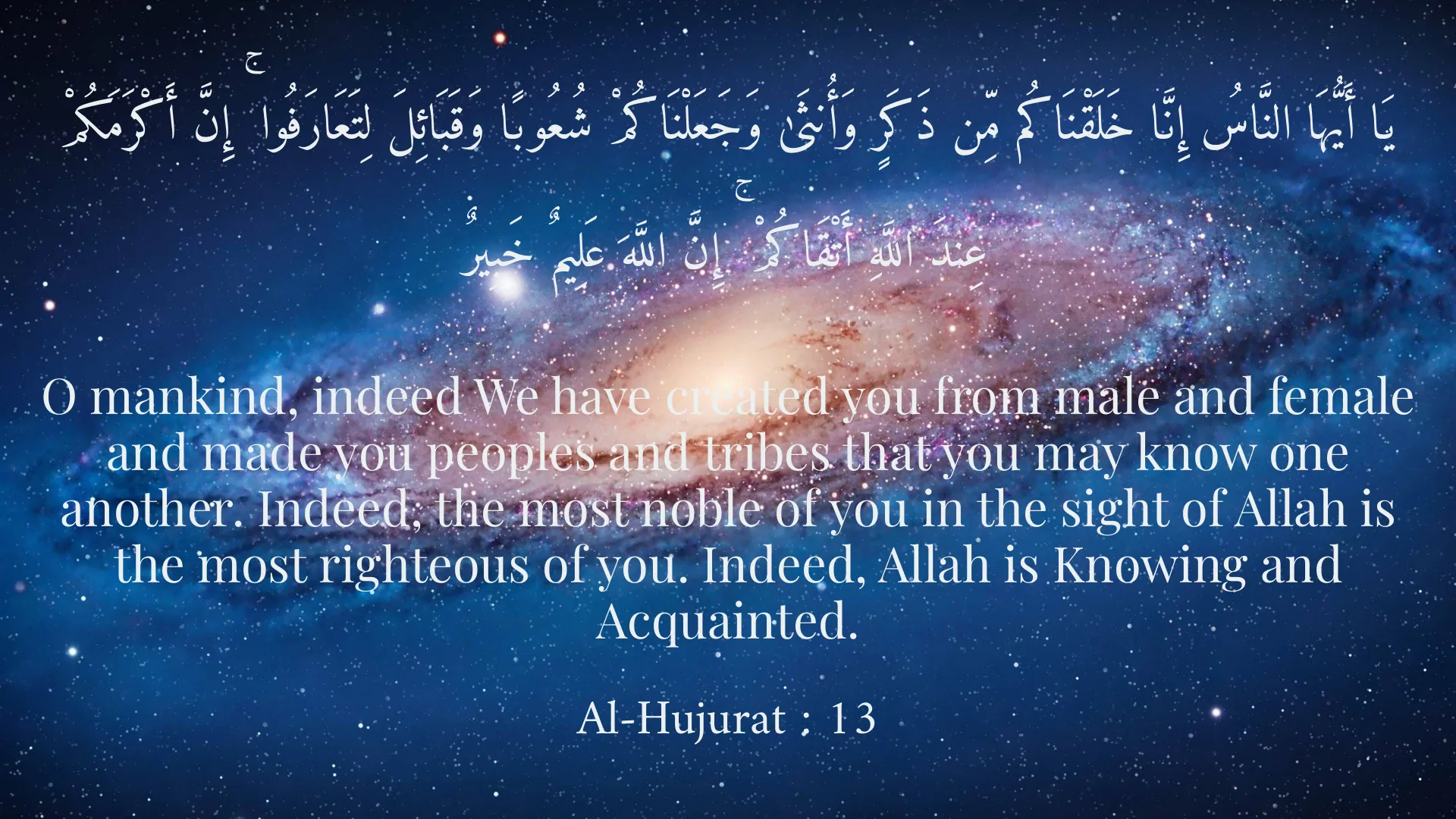
يَا أَيُّهَا النَّاسُ إِنَّا خَلَقْنَاكُم مِّن ذَكَرٍ وَأُنثَىٰ وَجَعَلْنَاكُمْ شُعُوبًا وَقَبَائِلَ لِتَعَارَفُوا ۚ إِنَّ أَكْرَمَكُمْ عِندَ اللَّهِ أَتْقَاكُمْ ۚ إِنَّ اللَّهَ عَلِيمٌ خَبِيرٌ
O mankind, indeed We have created you from male and female and made you peoples and tribes that you may know one another. Indeed, the most noble of you in the sight of Allah is the most righteous of you. Indeed, Allah is Knowing and Acquainted.
Al-Hujurat : 13
لَّيْسَ الْبِرَّ أَن تُوَلُّوا وُجُوهَكُمْ قِبَلَ الْمَشْرِقِ وَالْمَغْرِبِ وَلَٰكِنَّ الْبِرَّ مَنْ آمَنَ بِاللَّهِ وَالْيَوْمِ الْآخِرِ وَالْمَلَائِكَةِ وَالْكِتَابِ وَالنَّبِيِّينَ وَآتَى الْمَالَ عَلَىٰ حُبِّهِ ذَوِي الْقُرْبَىٰ وَالْيَتَامَىٰ وَالْمَسَاكِينَ وَابْنَ السَّبِيلِ وَالسَّائِلِينَ وَفِي الرِّقَابِ وَأَقَامَ الصَّلَاةَ وَآتَى الزَّكَاةَ ۚ وَالْمُوفُونَ بِعَهْدِهِمْ إِذَا عَاهَدُوا ۖ وَالصَّابِرِينَ فِي الْبَأْسَاءِ وَالضَّرَّاءِ وَحِينَ الْبَأْسِ ۗ أُولَٰئِكَ الَّذِينَ صَدَقُوا ۖ وَأُولَٰئِكَ هُمُ الْمُتَّقُونَ
Righteousness is not that you turn your faces toward the east or the west, but [true] righteousness is [in] one who believes in Allah, the Last Day, the angels, the Book, and the prophets and gives wealth, in spite of love for it, to relatives, orphans, the needy, the traveler, those who ask, and for freeing slaves; [and who] establishes prayer and gives zakah; [and who] fulfill their promise when they promise; and [who] are patient in poverty and hardship and during battle. Those are the ones who have been true, and it is those who are the righteous.
Al-Baqarah : 177
وَاعْتَصِمُوا بِحَبْلِ اللَّهِ جَمِيعًا وَلَا تَفَرَّقُوا ۚ وَاذْكُرُوا نِعْمَتَ اللَّهِ عَلَيْكُمْ إِذْ كُنتُمْ أَعْدَاءً فَأَلَّفَ بَيْنَ قُلُوبِكُمْ فَأَصْبَحْتُم بِنِعْمَتِهِ إِخْوَانًا وَكُنتُمْ عَلَىٰ شَفَا حُفْرَةٍ مِّنَ النَّارِ فَأَنقَذَكُم مِّنْهَا ۗ كَذَٰلِكَ يُبَيِّنُ اللَّهُ لَكُمْ آيَاتِهِ لَعَلَّكُمْ تَهْتَدُونَ
And hold firmly to the rope of Allah all together and do not become divided. And remember the favor of Allah upon you when you were enemies and He brought your hearts together in affection, and you became by His favor brothers. And you were on the edge of a pit of the Fire, and He saved you from it. Thus does Allah make clear to you His verses that you may be guided.
Ali 'Imran : 103
Short Story
It is recounted that in ancient times, there was a king who greatly prided himself on his lineage and ancestry. He would judge everyone by their origins and lineage, paying little attention to the essence of their being. One day, in his court, he asked a wise scholar: "O wise one, what bestows honor upon a person? Is it noble ancestors and pure lineage?" The scholar smiled and said, "O King, true honor lies not in the brick and clay from which you are formed, but in the spirit breathed into you. Just as rosewater is fragrant from a rose and a thorn is unpleasant from a thorn bush, so too is the essence of humanity found in good deeds and praiseworthy character. How many beautiful flowers spring from simple earth, and how many ancient trees yield naught but bitter fruit. The measure of greatness is action, not talk; and virtue is piety, not tribe." The king, enlightened by these words, understood that differences in appearance and culture are worthless, and what endures is a pure heart and righteous action. From then on, instead of comparing lineages, he looked to the purity of intentions and saw everyone as a brother.