Quranic Answer
Hypocrisy is an issue that has plagued societies for centuries, and it is particularly highlighted in the Holy Quran as a significant moral failing. Defined as the act of claiming to have moral standards or beliefs to which one's own behavior does not conform, hypocrisy is more than just about the actions—we must delve into the intentions behind those actions. In the context of Islam, the Quran presents hypocrisy as a reprehensible and dangerous action that brings forth a plethora of negative consequences, both in this world and the Hereafter. In Surah Al-Baqarah, verse 264, Allah states: 'O you who have believed, do not invalidate your charities with reminders or injury...' This verse serves as a crucial reminder for believers regarding the importance of intention in their actions. It emphasizes that actions performed merely for the sake of showcasing one's righteousness or for seeking recognition from others can nullify the good that is intended. If one's true intention is not for Allah, then the blessings that should come from charitable acts are lost, rendering those actions meaningless in the sight of God. This profoundly underscores the principle that divine acceptance relies heavily on the purity of one's heart and intention. The Quran does not stop at merely warning against hypocrisy; it delves deeper into the consequences of harboring hypocritical tendencies within one's heart. In Surah Al-Imran, verse 167, Allah says: 'And to test Allah will make trials ... those who have hypocrisy in their hearts, We will punish them.' This portrayal of hypocrites serves as a cautionary tale, illustrating that divine trials serve a purpose: to expose hypocrisy and to bring the truth to light. It signifies that a person may outwardly appear devout and righteous, yet if they possess hypocrisy within, they are subject to divine punishment. Being tested by Allah acts as a purification process, allowing believers the opportunity to reflect on their intentions and amend their ways. Furthermore, the Quran provides explicit guidance to the Prophet Muhammad (peace be upon him) in Surah Al-Ma'idah, verse 41, stating: 'What is upon you, O Prophet, if you take a strong stance against hypocrites?' This verse indicates a heavy responsibility placed on the Prophet to not only recognize hypocrisy but to actively confront it. It empowers leaders within the Islamic community to maintain vigilance against the hypocritical behavior prevalent among individuals. The importance of this is twofold: it secures the integrity of the Muslim community and encourages believers to remain steadfast in their faith and intentions. The character of hypocrisy is also elaborated upon in various other verses and Hadiths, portraying it as a major sin. It is believed that hypocritical behavior stems from a lack of sincerity and a misguided aim of seeking social validation rather than seeking God’s approval. Such actions devastate interpersonal relationships, incite distrust, and contribute to the societal rift, leading to fragmentation among believers. Not only does hypocrisy distance individuals from God, but it also signifies the erosion of moral fabric within the community. Islamic teachings highlight that the foundation upon which believers should operate is one of sincere intention and unwavering faith. Believers are encouraged to approach their actions with the understanding that every deed is to be held accountable under the watchful eye of God. Therefore, the act of maintaining good intentions becomes paramount, aligning one’s actions with the desire to please Allah rather than seeking approval from the masses. Importantly, undergo various trials in attempting to hone one’s faith is also a part of the Islamic experience. The tests that believers face in their lives serve as opportunities for spiritual growth while allowing Allah to examine and elucidate the intentions behind their actions. When faced with challenges, individuals can either revert to hypocrisy or rise to the occasion with sincerity in their hearts. This pivotal choice ultimately shapes their spiritual destiny. The consequences of hypocrisy extend beyond punition; they affect one’s spiritual growth and could potentially lead to the estrangement between the believer and God. Each unrepented hypocritical action also bears the potential to dim the light within one’s heart, which serves as a metaphor for the connection between the individual and the divine. Through habitual hypocrisy, a belief that is once shining with authenticity can become gradually buried under the weight of pretension and deceit. In conclusion, hypocrisy is categorically condemned in Islam, as illustrated through various references in the Holy Quran. The clear message delivered to the believers is that integrity of intention must always prevail. The significance of aligning one’s purpose with divine approval cannot be overstated. Believers must continuously strive to keep their actions sincere and devote themselves solely to Allah, embracing the beauty of genuine faith devoid of hypocrisy. As the Quran teaches, a direct relationship with God, rooted in pure intentions, not only leads to personal fulfillment but also fortifies the bonds within the community, ultimately promoting a society that embodies true faithfulness and devotion.
Related Verses
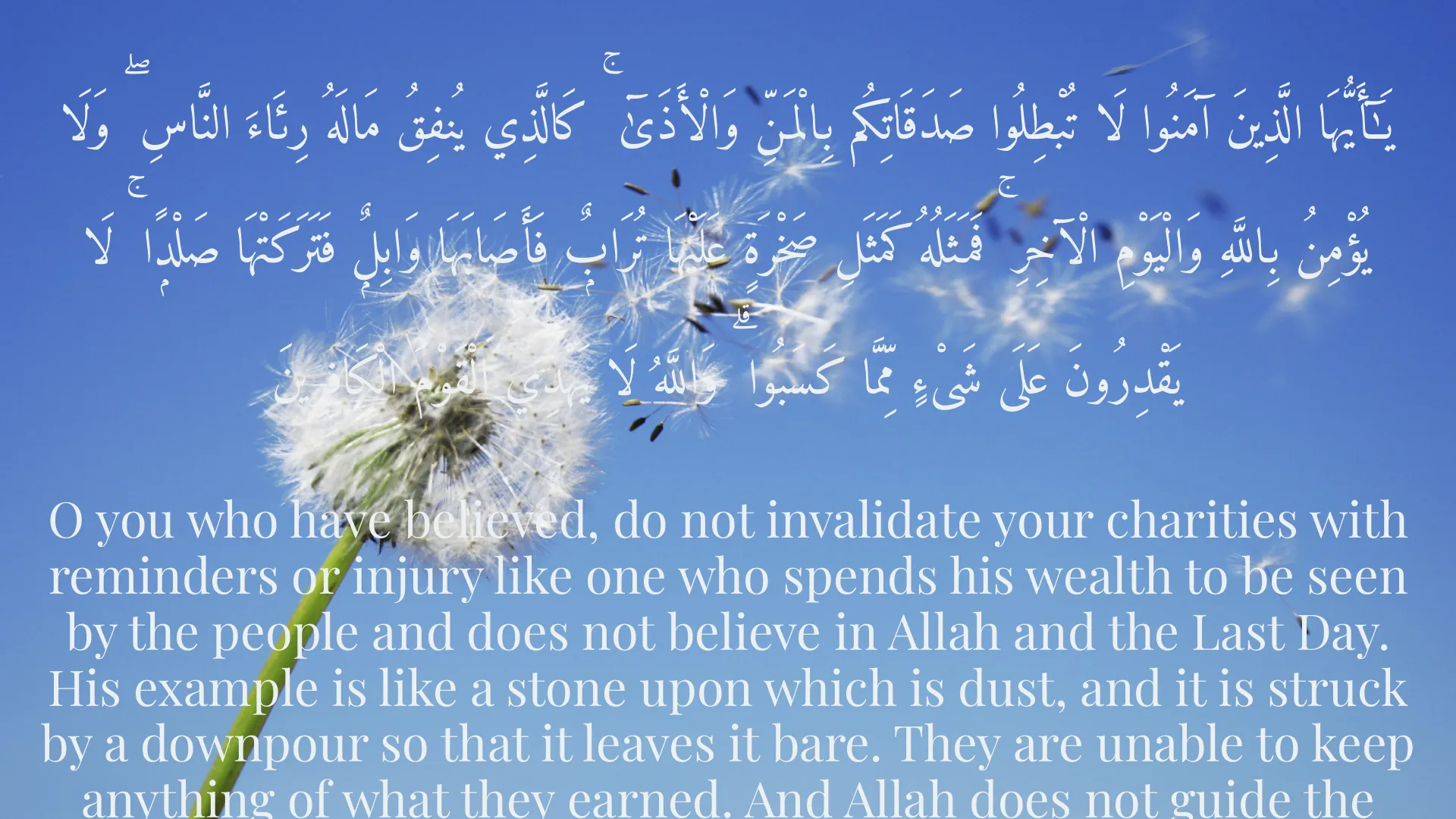
يَٰٓأَيُّهَا الَّذِينَ آمَنُوا لَا تُبْطِلُوا صَدَقَاتِكُم بِالْمَنِّ وَالْأَذَىٰٓ ۚ كَالَّذِي يُنفِقُ مَالَهُ رِئَاءَ النَّاسِ ۖ وَلَا يُؤْمِنُ بِاللَّهِ وَالْيَوْمِ الْآخِرِ ۚ فَمَثَلُهُ كَمَثَلِ صَخْرَةٍ عَلَيْهَا تُرَابٌۭ فَأَصَابَهَا وَابِلٌۭ فَتَرَكَتْهَا صَلْدًۭا ۚ لَا يَقْدِرُونَ عَلَى شَىْءٍ مِّمَّا كَسَبُوا ۗ وَاللَّهُ لَا يَهْدِي الْقَوْمَ الْكَافِرِينَ
O you who have believed, do not invalidate your charities with reminders or injury like one who spends his wealth to be seen by the people and does not believe in Allah and the Last Day. His example is like a stone upon which is dust, and it is struck by a downpour so that it leaves it bare. They are unable to keep anything of what they earned. And Allah does not guide the disbelieving people.
Al-Baqarah : 264
وَلِيَبْتَلِيَ اللَّهُ مَا فِي قُلُوبِهِمْ وَيَسْتَأْنِفَزَى الرَّادِّينَ إِلَى الْخُبُثَاتِ
And Allah will test what is in their hearts and punish the hypocrites.
Al-Imran : 167
يَا أَيُّهَا الرَّسُولُ لَا يَحْزُنكَ الَّذِينَ يُسَارِعُونَ فِي الْكُفْرِ مِنَ الَّذِينَ قَالُوا آمَنَّا بِأَفْوَاهِهِمْ وَلَمْ تُؤْمِن قُلُوبُهُمْ ۖ وَمِنَ الَّذِينَ هَادُوا سَمَّاعُونَ لِلْكَذِبِ سَمَّاعُونَ لِقَوْمٍ آخَرِينَ لَمْ يَأْتُوكَ ۖ يُحَرِّفُونَ الْكَلِمَ مِن بَعْدِ مَوَاضِعِهِ ۖ إِن يَأْتِكَ مُنَافِقُونَ فَلَا تُحَزِّنَّكَ مَظَاهِرُهُمْ.
O Messenger! Let not those grieve you who hasten into disbelief among those who say, 'We have believed' with their mouths but their hearts believe not...
Al-Ma'idah : 41
Short Story
Once upon a time, there was a monk who was worried in his heart whether his deeds were sincere and done with pure intention. He decided that everything he did would be for Allah, regardless of the opinions of others. He prayed with full humility and whenever he gave charity, he did so only for the sake of Allah. Over time, he felt refreshed and at peace, realizing that when his intention was pure, divine blessings flowed abundantly toward him.