Quranic Answer
The Holy Quran, revered as the ultimate guide and source of wisdom for Muslims, frequently invites humanity to reflect on the reality and significance of the Hereafter, a central tenet in Islamic theology. This call to contemplation is not merely a suggestion but a vital imperative that underscores the transient nature of earthly existence. As followers of the Quran, it is essential to engage with its teachings deeply and to grasp the profound messages regarding the afterlife, which offer guidance and motivation for righteous living. One of the core themes that permeates the Quran is the impermanence of worldly life and the inevitability of death. In Surah Al-Imran, verse 185, Allah reminds believers, "Every soul will taste death, and you will be fully compensated on the Day of Resurrection." This verse encapsulates the fundamental truth that while life on earth may be momentary, what follows is eternal. It compels individuals to recognize that earthly pleasures and achievements are fleeting and that their ultimate purpose should be to seek spiritual fulfillment and prepare for the Hereafter. The emphasis on the Hereafter serves as a reminder to prioritize righteous deeds over worldly gains. In Surah Yunus, verse 45, Allah states, "On the Day when We gather them, the vision should be focused on righteous deeds in the world." This powerful message underscores the importance of living a life that aligns with moral and ethical values as dictated by divine guidance. The Quran consistently encourages believers to reflect on their actions, emphasizing that the outcomes of their choices will manifest in the Hereafter. By contemplating their earthly behavior, individuals can better understand their responsibilities and the consequences of their deeds, both good and bad. Moreover, the Quran offers vivid imagery and narratives regarding the fate that awaits disbelievers and the rewards promised to the faithful. In Surah Al-Mu'minun, verses 99 and 100, Allah warns of the fears faced by disbelievers regarding the fire in the Hereafter, stating, "Until when death comes to one of them, he says, 'My Lord send me back so that I might do righteousness in that which I left behind.' No! It is only a word he is saying; and behind them is a barrier until the Day they are resurrected." This proclamation signals a critical warning for those who neglect their spiritual obligations. It acts as both a deterrent and an incentive; a deterrent for those who choose a life of disbelief and a motivation for believers to remain steadfast in their faith and actions. The concept of the Hereafter in the Quran is not merely about punishment and rewards; it is also about the hope and mercy of Allah. For believers, the Hereafter represents the ultimate reunion with their Creator and the fulfillment of their deepest aspirations. The Quran vividly describes the pleasures of Paradise, which serves as a motivator for individuals to strive for righteous living. In Surah Al-Waqi'a, Allah portrays the splendor of Paradise, stating that the righteous will be in a state of bliss, enjoying the company of the faithful and the rewards that await them as a result of their good actions. The Quranic narrative encourages believers to lead a life filled with compassion, kindness, and justice, with the understanding that these values resonate beyond this world. The significance of the Hereafter permeates the fabric of Islamic consciousness, shaping the way individuals approach their lives, their relationships, and their responsibilities. It fosters a sense of accountability, instilling a realization that every deed, thought, and intention holds weight in the grand scheme of existence. As Muslims reflect upon these teachings, they are encouraged to engage in self-examination, ensuring that their lives align with the principles outlined in the Quran. This practice of reflection can take many forms, including prayer, meditation, and the study of Islamic texts. By dedicating time to ponder the messages of the Quran, individuals cultivate a deeper understanding of their faith and their purpose in life. This reflective process is essential for personal growth and spiritual development, ultimately leading believers closer to Allah and reinforcing their commitment to righteous living. In conclusion, the Holy Quran serves as an essential catalyst for contemplation on the Hereafter, urging individuals to consider the impermanence of worldly life and the certainty of death. Through various verses, it eloquently emphasizes the significance of humans' actions in this life, illustrates the consequences that await them, and motivates them to live righteously. By fostering insight and reflection on the Hereafter, the Quran paints a comprehensive picture that encompasses both the fear of punishment and the hope for divine mercy and bliss. Understanding the teachings of the Quran, and actively engaging in reflection upon them, is crucial for Muslims on their spiritual journey, as it helps them navigate the complexities of life and the ultimate destination that awaits them all.
Related Verses
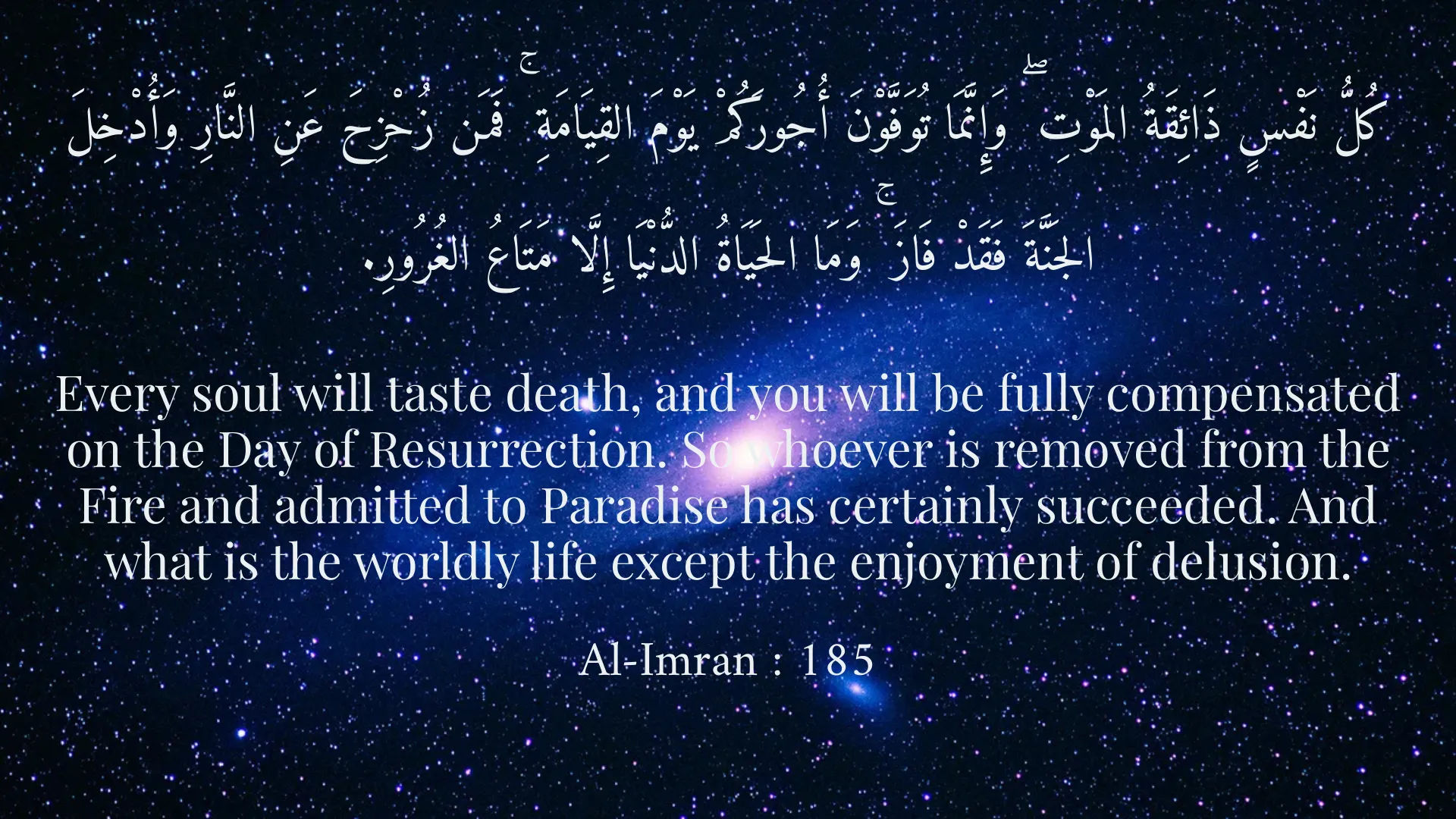
كُلُّ نَفْسٍ ذَائِقَةُ المَوْتِ ۖ وَإِنَّمَا تُوَفَّوْنَ أُجُورَكُمْ يَوْمَ القِيَامَةِ ۚ فَمَن زُحْزِحَ عَنِ النَّارِ وَأُدْخِلَ الجَنَّةَ فَقَدْ فَازَ ۚ وَمَا الحَيَاةُ الدُّنْيَا إِلَّا مَتَاعُ الغُرُورِ.
Every soul will taste death, and you will be fully compensated on the Day of Resurrection. So whoever is removed from the Fire and admitted to Paradise has certainly succeeded. And what is the worldly life except the enjoyment of delusion.
Al-Imran : 185
وَ يَوْمَ نَحْشُرُهُمْ جَمِيعًا ۖ ثُمَّ نَقُولُ لِلَّذِينَ أَشْرَكُوا أَيْنَ شُرَكَاؤُكُمْ الَّذِينَ كُنتُمْ تَزْعُمُونَ.
And the Day We gather them all together, then We will say to those who associated others with Allah, 'Where are your partners that you used to claim?'
Yunus : 45
حَتَّى إِذَا جَاءَ أَحَدَهُمُ الْمَوْتُ قَالَ رَبِّ ارْجِعُونِ
Until when death comes to one of them, he says, 'My Lord, send me back.'
Al-Mu'minun : 99
Short Story
One day, a man named Sajjad felt a deep concern for his future. He was always consumed by the transient nature of life, but suddenly, he recalled Quranic verses that speak of the Hereafter and its importance. He said to himself, 'If I do not act well in this world, what fate awaits me in the Hereafter?' This thought led him to change, and he began to engage in charitable deeds. From then on, Sajjad not only had a better life, but a sense of peace and contentment settled in his heart.