Quranic Answer
The Holy Quran, as the central religious text of Islam, encompasses a myriad of moral teachings that guide the conduct of its followers. Among these teachings, honesty and integrity stand out as fundamental moral principles that not only define an individual's character but also shape the very foundation of a healthy society. This article aims to delve into the concept of honesty as presented in the Quran, explore its implications in daily life, and examine its significance in establishing sustainable communities. One of the notable verses that underscore the importance of honesty is verse 119 of Surah At-Tawbah, where Allah commands believers: 'O you who have believed, fear Allah and be with those who are true.' This verse serves as a poignant reminder that being truthful is not merely a suggestion but a divine command for Muslims. It explicitly highlights that honesty should be a defining trait for believers, urging them to associate with those who embody this virtue. This call to integrity emphasizes that honesty is not an isolated concept; rather, it is interconnected with one’s faith. To fear Allah is to acknowledge the significance of truthfulness in one’s life and strive to uphold it in all circumstances. The concept of honesty extends beyond mere verbal declarations; it must be reflected in actions and intentions as well. The Quran emphasizes this notion through various verses that condemn dishonesty and deceit. For instance, verse 53 of Surah Al-Ahzab admonishes believers against any form of lying, advising them to steer clear of a tongue that does not engage in truth and sincerity. Such directives make it clear that honesty is not simply about avoiding false statements; it implicates a holistic approach to truth in every aspect of human life. Here, the Quran provides clear guidance on the importance of consistency between one’s words and actions, highlighting that authenticity is a crucial component of honesty. Moreover, according to Quranic teachings, honesty evolves from being a personal virtue to a societal necessity. A society that thrives on lies and deception can never sustain healthy interpersonal relationships. When individuals prioritize their interests over honesty, they erode the very foundation of trust and respect that allows communities to flourish. Dishonesty breeds dysfunction, leading to conflicts, misunderstandings, and ultimately a breakdown in social cohesion. Conversely, a society rooted in honesty cultivates trust, openness, and mutual respect. These attributes are essential in fostering a sense of belonging and community among individuals, as they promote understanding and collaboration. Furthermore, the continuous emphasis placed on honesty throughout the Quran indicates an intrinsic understanding of its profound implications for individual lives and the broader community. Honesty is positioned as one of the pillars of faith, and its practice is seen as a reflection of divine qualities in humanity. By adhering to the principles of truthfulness, believers embody the attributes of justice, fairness, and integrity that are revered in Islam. In everyday life, the practice of honesty influences various aspects of human interaction. Honesty fosters an environment where individuals feel secure and valued, thereby enhancing self-confidence and promoting healthy relationships. When people communicate openly and authentically, they establish stronger bonds that are essential for emotional support and resilience. Additionally, honest interactions lead to effective problem-solving as individuals can collaboratively address challenges without the barriers created by deception or misrepresentation. The moral call to honesty as articulated in the Quran is not merely a spiritual edict; it is an invitation to establish a healthy and sustainable community. The repercussions of dishonesty are grave and far-reaching, impacting not only individual lives but also the entirety of society. The Quran urges believers to be mindful of their words and actions, promoting a culture of truthfulness that can overpower the temptations of deceit. The consequences of such behavior are not limited to spiritual repercussions; they translate into real-world implications where trust deficits can hinder progress and prosperity. Moreover, the Quran’s teachings on honesty are incredibly relevant in today's world, where misinformation and deceit often thrive. In a globalized society fraught with challenges, the Quranic exhortation for truthfulness serves as a beacon of hope and clear guidance for Muslims navigating complex social landscapes. Believers are thus encouraged to champion honesty in their dealings, whether in personal relationships, professional environments, or broader social contexts. By doing so, they contribute to a community that prioritizes integrity, ultimately transforming societal norms to favor truth and transparency. In conclusion, the call to honesty in the Holy Quran is a clarion invitation for individuals to align their lives with one of the essential moral principles that govern human conduct. Through its various verses, the Quran elucidates the significance of honesty, emphasizing that it is a divine command intertwined with faith. By embodying honesty, Muslims not only fulfill their spiritual obligations but also contribute to the establishment of a healthy, sustainable community rooted in trust, respect, and mutual understanding. In a world often clouded by lies and deceit, the teachings of the Quran remain a steadfast source of guidance for navigating the complexities of life with integrity and truthfulness.
Related Verses
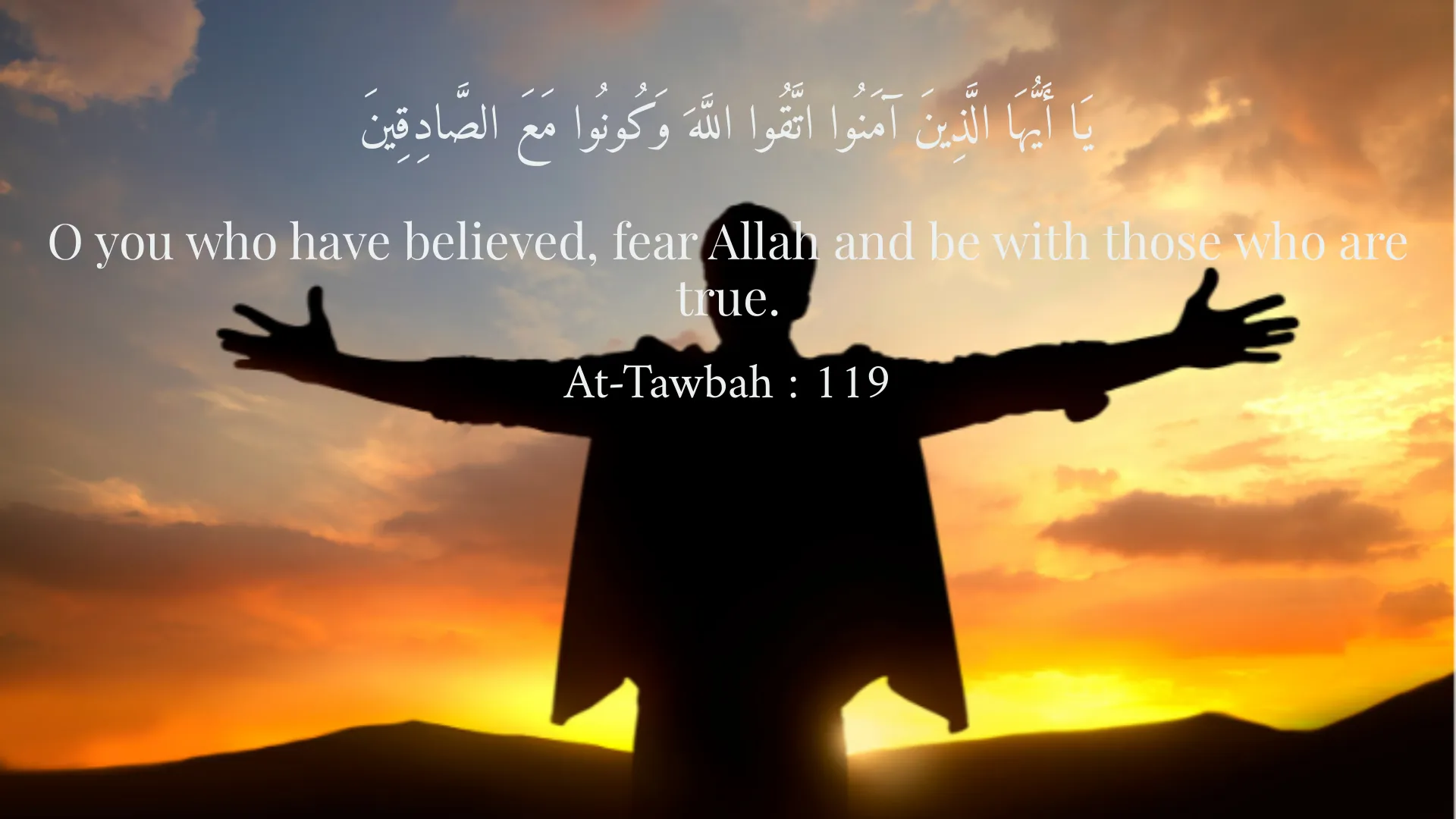
يَا أَيُّهَا الَّذِينَ آمَنُوا اتَّقُوا اللَّهَ وَكُونُوا مَعَ الصَّادِقِينَ
O you who have believed, fear Allah and be with those who are true.
At-Tawbah : 119
يَا أَيُّهَا الَّذِينَ آمَنُوا لَا تَدْخُلُوا بُيُوتَ النَّبِيِّ إِلَّا أَنْ يُؤْذَنَ لَكُمْ إِلَى طَعَامٍ غَيْرَ نَاظِرِينَ إِنَاهُ وَلَـٰكِن إِن دُعِيتُمْ فَادْخُلُوا فَإِذَا طَعِمْتُمْ فَانتَشِرُوا وَلَا مُسَائِمَ لِـمِيَثْذَهَا أَ لَـٰكِن إِن مَّسَّكُمْ فَلْكُم مَّسَّكُمْ أَيْ أُوْلَـٰئِكَ أَحَدًا كَانَ وَمَا يُخَالِفُ عَنْهُمْ فَأَنَا أَحَدٌ بِهَذَا وَإِي الْمَسَائِلَةٍ
O believers, avoid a tongue that does not engage in truth and sincerity.
Al-Ahzab : 53
Short Story
One day, a man named Reza was engrossed in his thoughts and daily activities when he suddenly realized that lying had crept into his life. He wondered, 'Why do I always lie to my brothers?' He recalled a Quranic verse that said, 'O you who have believed, be true.' After that, he decided to return to honesty and improve his relationship with his family. By being honest, he not only regained his family's trust but also felt a greater sense of peace within himself.