Quranic Answer
The Holy Quran, as a divine guide, encourages believers to honesty in all aspects of life, including the truthful expression of emotions, through various means and by emphasizing fundamental moral virtues. This invitation extends not only to speech and actions but also encompasses intentions and inner states. Honesty in expressing emotions is a subset of the broader concept of 'Sidq' (truthfulness), which holds a special place in the Quran. Sidq means the congruence of word with deed, deed with intention, and intention with truth. When the Quran calls for honesty in expressing emotions, it essentially means that an individual should genuinely articulate their innermost feelings and states, in an appropriate context and manner, refraining from pretense, hypocrisy, and concealing their inner truth. One of the most crucial foundations of this invitation is the Quran's emphasis on 'Sidq' and its condemnation of 'Nifaq' (hypocrisy). The Holy Quran repeatedly urges believers to be truthful and sincere with God and His creation. Surah At-Tawbah, verse 119, states: "O you who have believed, fear Allah and be with the truthful." This verse points not only to truthfulness in speech but also to truthfulness in association and alignment with the truthful, which inherently includes sincerity in intentions and inner states. Emotional honesty, therefore, means the alignment between what one feels inwardly and what is expressed verbally or through behavior. Hypocrisy, the antithesis of truthfulness, is severely condemned in the Quran. A hypocrite is someone whose outward appearance contradicts their inner reality; they conceal their true emotions and intentions, pretending to be something they are not. From the Quranic perspective, this concealment and lack of inner honesty are dangerous spiritual ailments that corrupt individuals and society. Verses like Surah Al-Baqarah, 8-10, eloquently describe the state of hypocrites who outwardly claim faith but are inwardly sick at heart and deceitful. These verses implicitly emphasize the importance of inner and outer integrity and personal congruence, which is impossible without emotional honesty. Furthermore, the Quran invites us to 'Qawl Sadeed' or 'righteous and firm speech.' In Surah Al-Ahzab, verse 70, it is mentioned: "O you who have believed, fear Allah and speak words of appropriate gravity." Qawl Sadeed does not merely mean correct speech free from falsehood, but also encompasses speech that is wise, appropriate, and originates from a pure heart. This implies that even when expressing emotions, one should do so truthfully, but with respect and wisdom. If a person feels anger or sadness, expressing it honestly while maintaining respect and avoiding abusive language is an example of Qawl Sadeed. This approach does not mean impulsively venting every emotion, but rather expressing them genuinely and responsibly, which can help resolve issues and foster healthy communication. Moreover, the Quran emphasizes 'Adam Katman al-Haqq' (not concealing the truth), which can extend to not concealing genuine feelings and intentions in necessary situations. In Surah Al-Baqarah, verse 42, we read: "And do not mix the truth with falsehood or conceal the truth while you know [it]." Although this verse primarily refers to concealing religious and divine truths, its broader implication can encompass not concealing inner truths and sincere emotions, especially if their concealment leads to injustice or deception of others. This principle indicates internal and external transparency. On the other hand, the Holy Quran encourages the expression of positive emotions such as love, mercy, compassion, gratitude, and hope in various ways. The expression of these emotions in prayer, supplication, and daily interactions with others must be accompanied by 'Ikhlas' (sincerity in intention and action). When a believer turns to God in prayer, expressing their hope and fear, it must be with utmost sincerity of heart. This sincerity in emotional expression deepens one's connection with the Creator and brings peace and assurance. Similarly, in human relationships, the Quran teaches us to treat parents (Al-Isra: 23), orphans, the needy, and all people with kindness and compassion (Al-Baqarah: 83). This call to kindness and empathy is not merely about outward gestures but about expressing genuine and sincere feelings of compassion and sympathy that originate from the heart. In conclusion, the Quran invites humanity to personal integrity; meaning that one's outer and inner self, one's words and deeds, and most importantly, one's inner feelings and thoughts should be harmonious and aligned with truth. This honesty in expressing emotions is the cornerstone of trust in human relationships, individual psychological well-being, and a pure connection with God. This honesty helps individuals embark on a path of spiritual growth, avoid hypocrisy and pretense, and ultimately attain true peace and happiness. Of course, honesty in expressing emotions does not mean an unrestrained or unwise outpouring of every feeling, but rather expressing them with propriety, rationality, and consideration of their consequences, so that they lead to the well-being and betterment of the individual and society rather than harm. This balance between honesty and wisdom reflects the Quran's profound insight into human development.
Related Verses
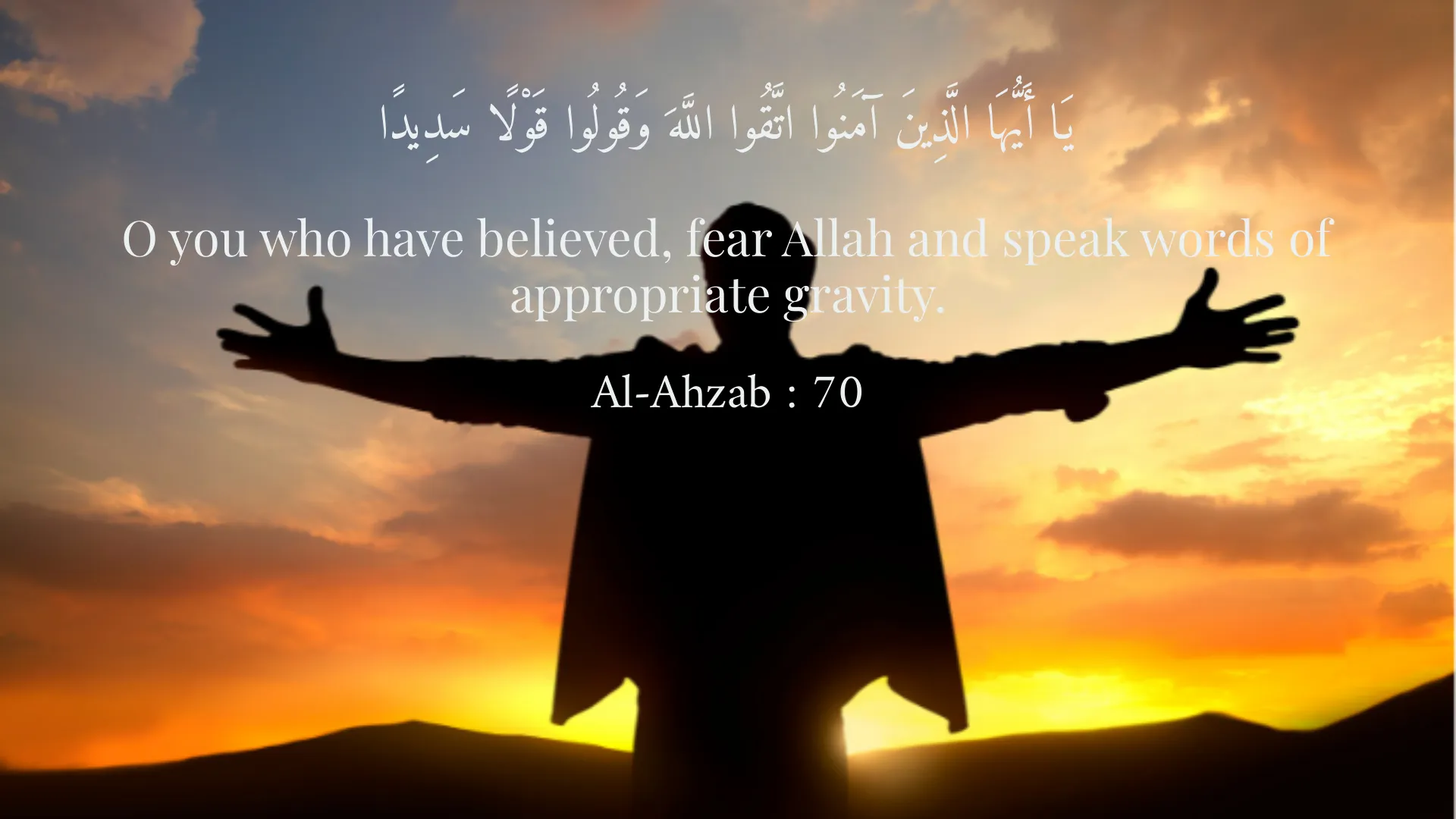
يَا أَيُّهَا الَّذِينَ آمَنُوا اتَّقُوا اللَّهَ وَقُولُوا قَوْلًا سَدِيدًا
O you who have believed, fear Allah and speak words of appropriate gravity.
Al-Ahzab : 70
يَا أَيُّهَا الَّذِينَ آمَنُوا اتَّقُوا اللَّهَ وَكُونُوا مَعَ الصَّادِقِينَ
O you who have believed, fear Allah and be with the truthful.
At-Tawbah : 119
وَلَا تَلْبِسُوا الْحَقَّ بِالْبَاطِلِ وَتَكْتُمُوا الْحَقَّ وَأَنتُمْ تَعْلَمُونَ
And do not mix the truth with falsehood or conceal the truth while you know [it].
Al-Baqarah : 42
Short Story
In Saadi's Golestan, it is narrated that a king asked a man: "Why do you not lie and always speak the truth?" The man replied: "Because truthfulness brings peace to the heart, and lies bring distress and remorse." The king was pleased with this wise saying and commented: "Your words are true, for whoever lives honestly, their heart is at peace and their mind at ease." This delightful tale reminds us that honesty, even in the smallest feelings and their expression, is the key to inner peace and contentment. For whatever comes from the heart, settles in the heart, and being far from hypocrisy and concealment leads to a good reputation and tranquility. Honesty in emotions is of the same kind; when we express what we truly feel in our hearts, with wisdom and discernment, a burden is lifted from us, and our relationships with others become stronger.