Quranic Answer
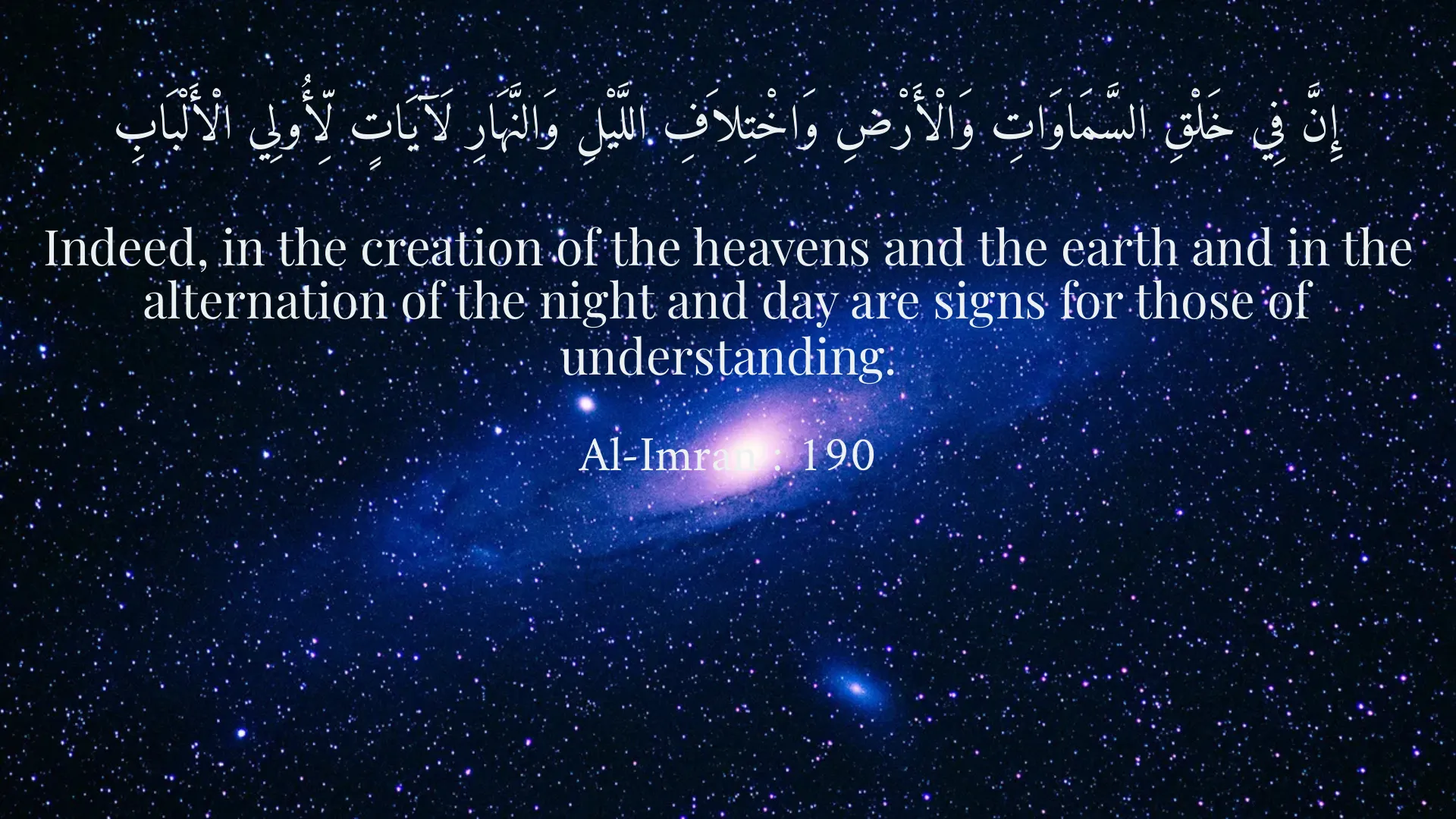
The Holy Quran, regarded as the last divine scripture in Islam, holds a profound message directed at humanity, urging them to engage in a deep process of thinking, reflecting, and utilizing their intellect. This call to contemplation is not merely a suggestion but an essential component of faith, as emphasized throughout its verses. The Quran serves not only as a religious document but also as a guide for intellectual and moral development. In this article, we will delve deeper into the significance of reflection and knowledge as illustrated in the Quran, exploring various verses that emphasize the importance of understanding our environment and drawing closer to Allah through knowledge. One of the most striking invitations to reflection is found in Surah Al-Imran, verse 190: "Indeed, in the creation of the heavens and the earth and in the alternation of the night and day are signs for those of understanding." This verse systematically encourages believers to observe and reflect upon the universe surrounding them. The heavens, the earth, and the cycles of nature serve as profound signs indicative of the Creator's existence and omnipotence. By contemplating these natural phenomena, individuals are guided to recognize the miraculous nature of creation, which in turn fosters a deeper understanding of life and one’s purpose within it. The Quran repeatedly connects the act of thinking critically with the recognition of divine signs. Through reflection on the physical world, believers are urged to develop a worldview grounded in spirituality and gratitude. This invitation to intellectual engagement reminds us that faith is not blind but rooted in understanding the creation and its Creator. This verse exemplifies how Islamic teachings advocate for an active, questioning, and contemplative approach to life. Additionally, Surah Al-An'am, verse 50, reinforces the necessity of knowledge and the responsibility that comes with it: "Say, 'I do not say to you, 'I have the treasures of Allah,' nor do I know the unseen, nor do I say to you, 'I am an angel.' I only follow what is revealed to me.'" In this verse, Allah instructs the Prophet Muhammad, reinforcing the notion that knowledge is paramount, and guidance should stem from it. The verse illustrates that even the most revered figures within Islam are bound by the knowledge they possess and must refrain from claiming unattainable knowledge or divine treasures. In our quest for spirituality and understanding, it is vital to prioritize knowledge and wisdom over assumptions and emotions. Hence, the Quran encourages believers to engage with its teachings, approach religious matters through inquiry, and develop their understanding. Each revelation in the Quran serves as a guide for humanity to navigate life's complexities responsibly and thoughtfully, respecting the boundaries of human understanding. Furthermore, Surah Al-Mujadila, verse 11 states, "Allah will raise those who have believed among you and those who were given knowledge by degrees." This verse clearly underscores the significance of knowledge and scholarship within the Islamic framework. The hierarchical elevation of believers emphasizes that not all of faith is equal; those who pursue knowledge and understanding are rewarded more significantly. Here, the Quran draws a distinction between mere belief and the enlightenment that comes through acquiring knowledge—highlighting that intellectual pursuits are integral to spiritual growth. Throughout history, Islamic civilization has revered scholars and intellectuals, promoting an environment that values education and learning. Many renowned scholars have emerged from Islamic societies with contributions to a multitude of fields, including philosophy, mathematics, astronomy, medicine, and law. The Quran's emphasis on knowledge has played a crucial role in initiating intellectual curiosity and exploration among its followers. In addition to promoting reflection and contemplation, the Quran presents knowledge as a means of discovering the truth, akin to shedding light in the dark. With every piece of information and insight gained, believers are encouraged to deepen their relationship with Allah. Knowledge acts as a bridge, drawing individuals closer to their Creator while inspiring them to fulfill their spiritual obligations and responsibilities. Ultimately, these verses collectively illustrate that reflection and contemplation are fundamental in everyday life, particularly within religious contexts. The Quran invites individuals to engage with its teachings actively and thoughtfully. Every reading of the Quran serves as a unique opportunity to gain insights and understanding, which act as guiding principles to navigate life through the lens of spirituality and morality. Moreover, the practice of engaging with the Quran extends beyond personal reflection; it transcends into communal learning experiences. Engaging in discussions, lectures, and study groups fosters a community of knowledge-seekers who support one another in their quest for spiritual and intellectual growth. This collective pursuit of knowledge cultivates an environment where faith flourishes alongside critical thinking, and as such, believers are better equipped to face moral and ethical dilemmas. In conclusion, the Holy Quran profoundly emphasizes the importance of thinking, reflecting, and utilizing one's intellect. The verses highlighted illustrate how Allah encourages humanity to be observant of the world around them while recognizing the signs of their Creator. Knowledge becomes a vital instrument—one that facilitates a meaningful connection with the divine. Through consistent engagement with the Quran and its message, believers are invited into a realm of elevated understanding that goes beyond mere existence, guiding them toward a life enriched with faith, knowledge, and contemplation. The architecture of Islamic spirituality is thus built on the foundational stones of thought and understanding, demonstrating that through reflection and knowledge, one can draw closer to the ultimate truth of existence.
Related Verses
إِنَّ فِي خَلْقِ السَّمَاوَاتِ وَالْأَرْضِ وَاخْتِلاَفِ اللَّيْلِ وَالنَّهَارِ لَآيَاتٍ لِّأُولِي الْأَلْبَابِ
Indeed, in the creation of the heavens and the earth and in the alternation of the night and day are signs for those of understanding.
Al-Imran : 190
قُل لَّا أَقُولُ لَكُمْ عِندِي خَزَائِنُ اللَّهِ وَلَا أَعْلَمُ الْغَيْبَ وَلَا أَقُولُ إِنِّي مَلَكٌ إِن أَتَّبِعُ إِلَّا مَا يُوحَى إِلَيَّ
Say, 'I do not say to you, 'I have the treasures of Allah,' nor do I know the unseen, nor do I say to you, 'I am an angel.' I only follow what is revealed to me.'
Al-An'am : 50
يَرْفَعِ اللَّهُ الَّذِينَ آمَنُوا مِنكُمْ وَالَّذِينَ أُوتُوا الْعِلْمَ دَرَجَاتٍ
Allah will raise those who have believed among you and those who were given knowledge by degrees.
Al-Mujadila : 11
Short Story
Once upon a time, there was a young man named Amir who pondered over the world and its matters. He recalled the Quranic verses that invited him to think and reflect. He decided to pay more attention to nature and the phenomena around him. Soon, he realized that the world was filled with divine signs, and with every question and answer he obtained, he felt that a deeper world lay ahead of him. This shift in perspective transformed his life and led him towards tranquility.