Quranic Answer
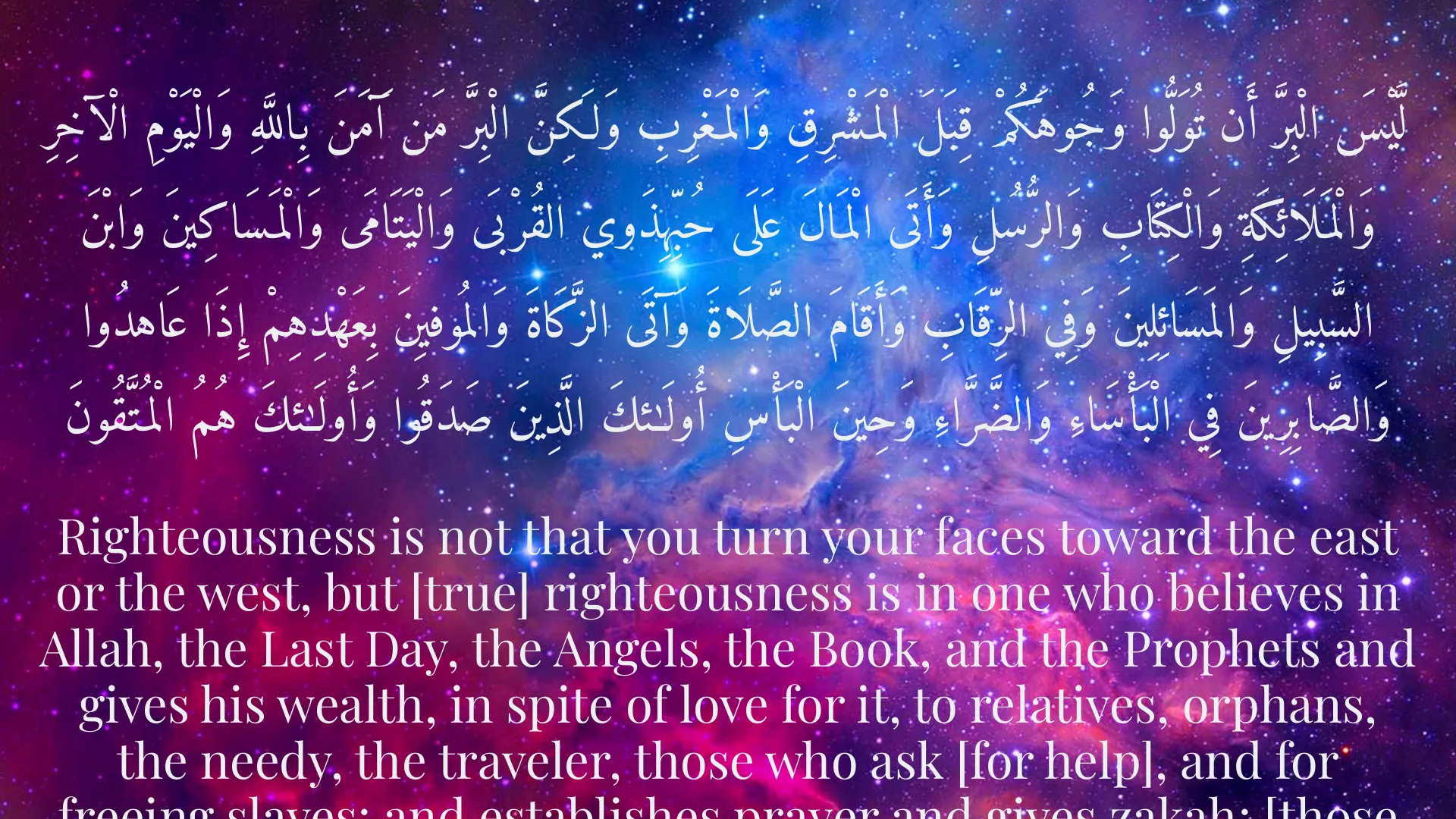
The Holy Quran, revered as a complete guide for humanity, explicitly emphasizes the significance of honesty and truthfulness in numerous verses. The importance of being truthful is not just a moral guideline, but it is profoundly intertwined with faith and piety. In Surah Al-Baqarah, verse 177, Allah underlines that being genuinely virtuous in our deeds, including honesty in speech, is an attribute of true believers. The verse states: ‘Righteousness is not that you turn your faces toward the east or the west, but [true] righteousness is in one who believes in Allah, the Last Day, the Angels, the Book, and the Prophets and gives his wealth, in spite of love for it, to relatives, orphans, the needy, the traveler, those who ask [for help], and for freeing slaves; and establishes prayer and gives zakah; [those who fulfill their promise when they promise] and [those who are] patient in poverty and hardship and during battle. Those are the ones who have been true, and it is they who are the righteous.' (Surah Al-Baqarah, 2:177). This verse incentivizes us to prioritize honesty as a fundamental principle in our lives. Furthermore, in Surah Al-Imran, verse 61, Allah instructs His Prophet to convey the message to the people with utmost sincerity and to not compromise on truthfulness. This directive extends to believers who are encouraged to adhere to honesty in their words and actions. In Surah At-Tawbah, verse 119, Allah calls upon the believers to maintain truthfulness in their thoughts and deeds: ‘O you who have believed, fear Allah and be with those who are true.’ This clearly illustrates that honesty is a defining characteristic of believers, and we must strive to embody this trait in our social and familial relationships. Truthfulness finds significant importance in Islamic teachings, and it is regarded as a moral cornerstone that shapes the very fabric of a believer's life. In Islam, a person's character is yet another reflection of their faith, and truthfulness plays a key role in enhancing one’s integrity and reliability within society. The Quran emphasizes that being truthful builds trust and enhances the bond between individuals, fostering a sense of community that is essential for social harmony. The teachings of the Prophet Muhammad (peace be upon him) further reinforce the priority of truthfulness in Islamic ethics. Numerous Hadiths highlight the importance of honesty and provide insight into the virtues of being truthful. For instance, the Prophet Muhammad (peace be upon him) stated: ‘Truthfulness leads to righteousness, and righteousness leads to Paradise. A man will continue to be truthful and strive to be truthful until he is recorded as a truthful person.’ This is not only an encouragement but serves as a clear warning that the opposite of truthfulness—lying—can lead one astray from the right path, distancing them from their Creator. The ethical ramifications of being truthful extend beyond personal conduct; they manifest significantly in areas of business, communication, and familial ties. In commercial dealings, honesty is crucial. The Quran stresses fair trading practices and integrity in financial matters, discouraging deceit and fraud. In Surah Al-Mutaffifin, Allah warns against those who give less than what is due to others: ‘Woe to those who give less [than due] and who, when they take a measure from people, take in full. But if they give by measure or by weight to them, they cause loss.’ (Surah Al-Mutaffifin, 83:1-3). Such admonitions reflect the expectation of integrity in both personal and public domains. Moreover, within family settings, honesty nurtures trust between individuals. The foundation of any successful relationship—be it familial or otherwise—is built upon transparency and forthrightness. Adhering to honesty fosters an environment where open communication can thrive, allowing families to navigate conflicts and misunderstandings more effectively and harmoniously. On a broader societal scale, when honesty pervades, communities become strengthened through shared values and mutual respect. Fostering a culture of honesty reduces corruption and dishonesty, leading to a more just and equitable society. The teachings of Islam inspire believers to pursue truth in all dealings, making it imperative for individuals to engage in practices that cultivate honesty within the community. In conclusion, the significance of truthfulness and honesty as outlined in the Holy Quran and emphasized in the teachings of Prophet Muhammad (peace be upon him) cannot be overstated. This foundational principle, which is deeply rooted in faith, not only enhances personal character but also significantly contributes to the welfare of society. Being truthful is not merely a personal virtue but a communal responsibility that calls for every believer to strive towards sincerity in their interactions. Therefore, upholding honesty in every aspect of life enables individuals to fulfill their obligations as Muslims while promoting a just and harmonious society. In light of these teachings, every believer is encouraged to place truthfulness at the forefront of their moral compass, as it ultimately leads to greater faith, righteousness, and success in both this world and the hereafter.
Related Verses
لَّيْسَ الْبِرَّ أَن تُوَلُّوا وَجُوهَكُمْ قِبَلَ الْمَشْرِقِ وَالْمَغْرِبِ وَلَكِنَّ الْبِرَّ مَن آَمَنَ بِاللَّهِ وَالْيَوْمِ الْآخِرِ وَالْمَلَائِكَةِ وَالْكِتَابِ وَالرُّسُلِ وَأَتَى الْمَالَ عَلَى حُبِّهِذَوي القُرْبَى وَالْيَتَامَى وَالْمَسَاكِينَ وَابْنَ السَّبِيلِ وَالمَسَائِلِينَ وَفِي الرِّقَابِ وَأَقَامَ الصَّلَاةَ وَآتَى الزَّكَاةَ وَالمُوفيِنَ بِعَهْدِهِمْ إِذَا عَاهدُوا وَالصَّابِرِينَ فِي الْبَأْسَاءِ وَالضَّرَّاءِ وَحِينَ الْبَأْسِ أُولَـٰئكَ الَّذِينَ صَدَقُوا وَأُولَـٰئكَ هُمُ الْمُتَّقُونَ
Righteousness is not that you turn your faces toward the east or the west, but [true] righteousness is in one who believes in Allah, the Last Day, the Angels, the Book, and the Prophets and gives his wealth, in spite of love for it, to relatives, orphans, the needy, the traveler, those who ask [for help], and for freeing slaves; and establishes prayer and gives zakah; [those who fulfill their promise when they promise] and [those who are patient in poverty and hardship and during battle]. Those are the ones who have been true, and it is those who are the righteous.
Al-Baqarah : 177
إِنَّ اللَّهَ يَأْمُرُكُمْ أَنْ تُؤَدُّوا الأَمَانَاتِ إِلَى أَهْلِهَا وَإِذَا حَكَمْتُمْ بَيْنَ النَّاسِ أَنْ تَحْكُمُوا بِالْعَدْلِ ۚ إِنَّ اللَّهَ نِعِمَّا يَعِظُكُمْ بِهِ ۚ إِنَّ اللَّهَ كَانَ سَمِيعًا بَصِيرًا
Indeed, Allah commands you to render trusts to whom they are due and when you judge between people to judge with justice. Excellent is that which Allah instructs you. Indeed, Allah is ever Hearing and Seeing.
Al-Imran : 61
يَا أَيُّهَا الَّذِينَ آمَنُوا اتَّقُوا اللَّهَ وَكُونُوا مَعَ الصَّادِقِينَ
O you who have believed, fear Allah and be among those who are true.
At-Tawbah : 119
Short Story
One day in the market, a person distinguished himself among the people for his honesty and truthfulness. People respected him and requested that he serve as a judge between two people who had a dispute. He listened carefully to both parties and made a judgment with complete honesty. This action not only resolved the issue but also increased his reputation among the people. Later, he said to his friends, 'Truthfulness is always the best path, even if it appears challenging at first.'