Quranic Answer
The Holy Quran takes a very serious stance against hypocrisy and insincerity, which are considered deep moral failings that can destroy a person's spiritual integrity and social relationships. Hypocrisy, defined as the practice of claiming to have moral standards or beliefs to which one's own behavior does not conform, is an issue that has been prevalent throughout history and across cultures. However, in the context of Islam, the Quran provides a profound analysis of hypocrisy, underscoring the need for authenticity in belief and action. The condemnation of hypocrisy is not arbitrary; it serves as a crucial reminder of the importance of intention behind one’s actions. One of the most illustrative verses that convey this idea appears in Surah Al-Baqarah, verse 264, wherein Allah cautions believers, stating: "O you who have believed, do not invalidate your charities with reminders or injury, as one who spends his wealth to be seen by the people, and does not believe in Allah and the Last Day." In this verse, Allah emphasizes the importance of charitable giving; however, He does so by clearly condemning the act of hypocrisy. Here, the Quran emphasizes that the act of giving should stem primarily from sincerity and a desire to please God rather than seeking societal approval or recognition. The verse serves as a moral compass for those engaged in charitable acts, reminding them that the intention behind giving should not be tainted by ulterior motives. Generosity becomes meaningless when it is performed to garner admiration from people instead of being a genuine expression of faith and goodwill. This message applies universally. Individuals of faith are encouraged to evaluate their actions and motivations constantly, reflecting on the purity of their intentions. The Quran does not merely stop at highlighting the importance of sincere intention in isolated acts of charity. In Surah Al-Ma'idah, verse 54, Allah makes a dire proclamation: "O you who have believed, whoever of you should revert from his religion - Allah will bring forth for the people He will love and who will love Him." This verse serves as a stark warning that those who engage in hypocrisy risk alienation from Allah. It implies that a lack of sincerity and faith can lead to a spiritual downfall, emphasizing the profound need for authenticity in one's relationship with the divine. In understanding these verses, it becomes clear that the Quran consistently ties the essence of faith to the purity of actions. The consequences of hypocrisy are severe, as they result not only in a personal alienation from Allah but also affect communal relations among believers. Hypocrisy sows discord and mistrust within a community, leading to an environment devoid of mutual respect and love. Hence, in a society striving for moral goodness, believers are not only encouraged to avoid hypocrisy but also to actively foster sincerity in every aspect of life. To achieve this sincerity, the Quran encourages individuals to cultivate patience and steadfastness in the pursuit of genuine actions that align with Islamic teachings. The qualities of patience and perseverance, referred to as ‘sabr’ in Arabic, are deeply embedded within the Quran’s teachings and are essential for overcoming the trials that may tempt a believer toward hypocrisy. Allah calls upon believers to remain steadfast in their faith, urging them to constantly renew their intentions and strive for a heart filled with sincerity and truthfulness. Ultimately, the Quran reassures believers that Allah is fully aware of their true intentions and that nothing remains hidden from Him. This divine awareness serves a dual purpose: it acts as both a comforting reminder and a sobering warning. For those who perform good deeds out of pure intentions, there remains a promise of divine recognition and love. However, for those who succumb to the trap of hypocrisy, the Quran delineates a clear and solemn path of spiritual ruin. It is vital to realize that the implications of hypocrisy extend beyond the individual who engages in it. A hypocritical persona can disrupt the community, leading to suspicion, division, and a failure to unite in the name of mutual support and devotion to God. Therefore, the Quran’s messages against hypocrisy resonate throughout the Muslim community, reflecting an urgent call to bolster integrity, truthfulness, and commitment to sincere belief in Allah. In conclusion, the Quran establishes that the fight against hypocrisy is one of the central tenets of Islamic teachings. Through a careful examination of one’s intentions and actions, believers are called to foster sincerity in every aspect of their lives. This emphasis on authenticity serves as a foundational pillar of Islamic ethics and moral conduct, shaping the believer's spirit and steering them toward a harmonious existence both with themselves and with others in their communities. Ultimately, by aligning actions with genuine faith in Allah, believers can nurture a life devoid of hypocrisy that strives toward attaining the divine love and acceptance that is promised to those who walk in sincerity.
Related Verses
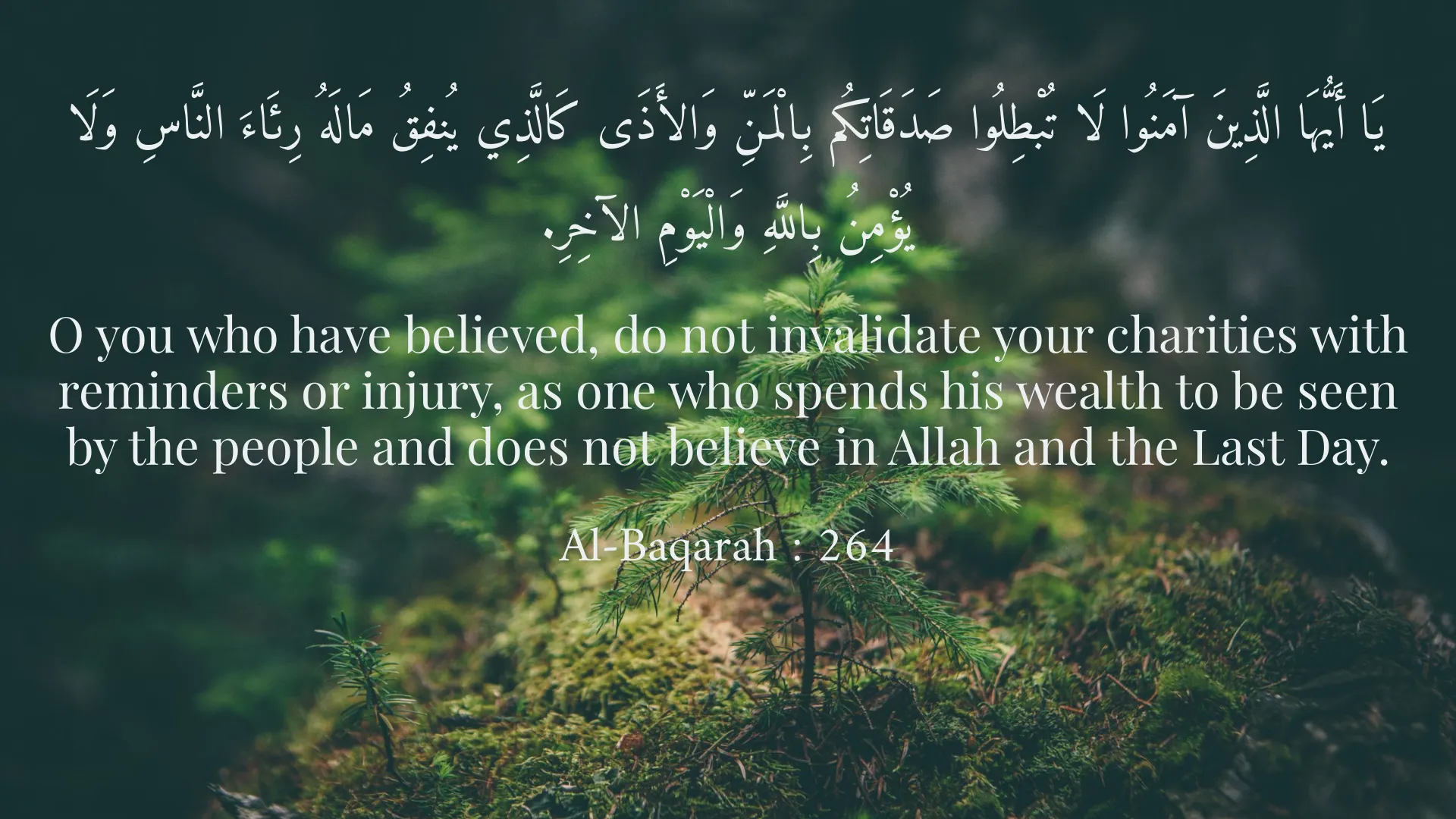
يَا أَيُّهَا الَّذِينَ آمَنُوا لَا تُبْطِلُوا صَدَقَاتِكُم بِالْمَنِّ وَالأَذَى كَالَّذِي يُنفِقُ مَالَهُ رِئَاءَ النَّاسِ وَلَا يُؤْمِنُ بِاللَّهِ وَالْيَوْمِ الآخِرِ.
O you who have believed, do not invalidate your charities with reminders or injury, as one who spends his wealth to be seen by the people and does not believe in Allah and the Last Day.
Al-Baqarah : 264
يَا أَيُّهَا الَّذِينَ آمَنُوا مَنْ يَرْتَدَّ مِنْكُمْ عَنْ دِينِهِ ۖ فَسَوْفَ يَأْتِيَ اللَّهُ بِقَوْمٍ يُحِبُّهُمْ وَيُحِبُّونَهُ.
O you who have believed, whoever of you should revert from his religion - Allah will bring forth for the people He will love and who will love Him.
Al-Ma'idah : 54
Short Story
Once upon a time, there was a friend whose intentions were not always sincere. He prayed for others by the mosque, but internally, he struggled with hypocrisy. One day, he decided to help with a pure intention and spread a table of charity without anyone knowing. When he experienced that sincere intention in his heart, he felt his life became brighter and more peaceful.