Quranic Answer
The Holy Quran and Professional Ethics: A Comprehensive Exploration The Holy Quran, as a central religious text in Islam, provides profound insights into the principles and values that underpin a moral and ethical approach to life, particularly in the realm of professional ethics. Understanding these principles is vital for believers striving to navigate the complexities of modern workplaces while adhering to their faith. This article explores the Quran's teachings on professional ethics, highlighting key verses that emphasize honesty, integrity, justice, and accountability in work and commercial dealings. ### The Essence of Professional Ethics in the Quran The Quran, often regarded as a guide for moral and ethical conduct, sets foundational principles that govern not just spiritual practice, but also daily interactions, professional engagements, and societal responsibilities. One of the cardinal principles it advocates for is that of honesty and integrity. #### Honesty and Integrity in Work Surah Al-Ma'idah, verse 8, emphasizes the importance of fairness and justice, stating: "O you who have believed, be persistently standing firm in justice, witnesses for Allah, even if it be against yourselves or parents and relatives." This verse not only calls for justice in judgments but underscores the paramount importance of honesty in all our actions and dealings. This speaks directly to the ethical framework required in the workplace, where integrity must reign supreme. Honest representation in one’s work fosters a culture of trust and respect, which is essential for team cohesion and organizational effectiveness. Moreover, Surah Al-Baqarah, verse 188 presents a stern warning against unjust practices: "And do not consume one another's wealth unjustly or send it [in bribery] to the rulers in order that [they might aid] you [to] consume a portion of the wealth of the people in sin, while you know [it is unlawful]." This verse beautifully encapsulates the ethical stance against exploitation and dishonesty, urging individuals to respect the rights and wealth of others. The principles gleaned from these verses hold immense relevance in today’s capitalist societies, where competition can sometimes overshadow ethical considerations. ### The Pursuit of Excellence in Professional Endeavors The Quran also places significant importance on the pursuit of excellence. In Surah As-Sajdah, verse 9, it is elucidated that Allah has endowed humans with life and reason, and emphasizes the obligation to use our faculties meaningfully: "Then He fashioned him and breathed into him of His Spirit and made for you hearing and vision and hearts; little are you grateful!" This directive calls for individuals to not only seek personal ambition but to strive to work in the best possible manner, utilizing the gifts bestowed upon them for the betterment of society. This notion of excellence should translate into one’s professional conduct, signifying that any work undertaken should reflect quality, creativity, and commitment. Striving for excellence in our professional life not only enhances our standing within our profession but also serves to honor our divine gifts. ### The Pillars of Trustworthiness and Transparency In the realm of commercial dealings, the significance of trustworthiness is accentuated repeatedly throughout the Quran. Whether it is in financial transactions or the provision of services, being honest and trustworthy are recognized as two essential pillars of professional ethics. Surah Al-Baqarah, verse 282 reinforces the importance of documentation and clarity in financial agreements: "O you who have believed, when you contract a debt for a specified term, write it down." This verse underlines the necessity of transparency and accountability in financial matters, advocating that all agreements be made clear and recorded to prevent disputes and ensure fairness. Such guidelines reveal the Quran's holistic approach towards fostering a trustworthy business environment, where both parties engage from a position of transparency and honesty. ### Ethical Principles as a Duty for Believers The overall message conveyed through these verses is a clarion call for believers to embody ethical principles within their professional lives. It makes it a moral duty for all Muslims to adhere to these values not just as religious obligations but as essential components of their social identity and professional reputations. By committing to ethical practices, individuals contribute positively to their workplaces, communities, and the broader society, fostering a cycle of integrity that can combat corruption and dishonesty. These ethical imperatives extend beyond the individual to encompass corporate responsibility, urging companies and organizations to establish ethical frameworks that align with Quranic principles. Businesses can achieve this by implementing codes of conduct that promote fairness, integrity, and respect for human dignity. ### Conclusion In summation, the Holy Quran profoundly addresses the topic of professional ethics, providing essential guidelines for honesty, integrity, excellence, and trustworthiness in all professional engagements. By adhering to these principles, believers can navigate their professional paths with a sense of accountability that honors their faith and fosters ethical behavior in every aspect of work. The teachings of the Quran not only offer a framework for personal spiritual growth but also serve as a beacon for establishing a moral compass in the professional realm, urging Muslims to rise above challenges and consistently uphold the principles of justice and fairness. Indeed, integrating these values into one’s daily professional life can lead to both spiritual fulfillment and the advancement of a just and ethical society, underscoring the timeless relevance of the Holy Quran's teachings on professional ethics.
Related Verses
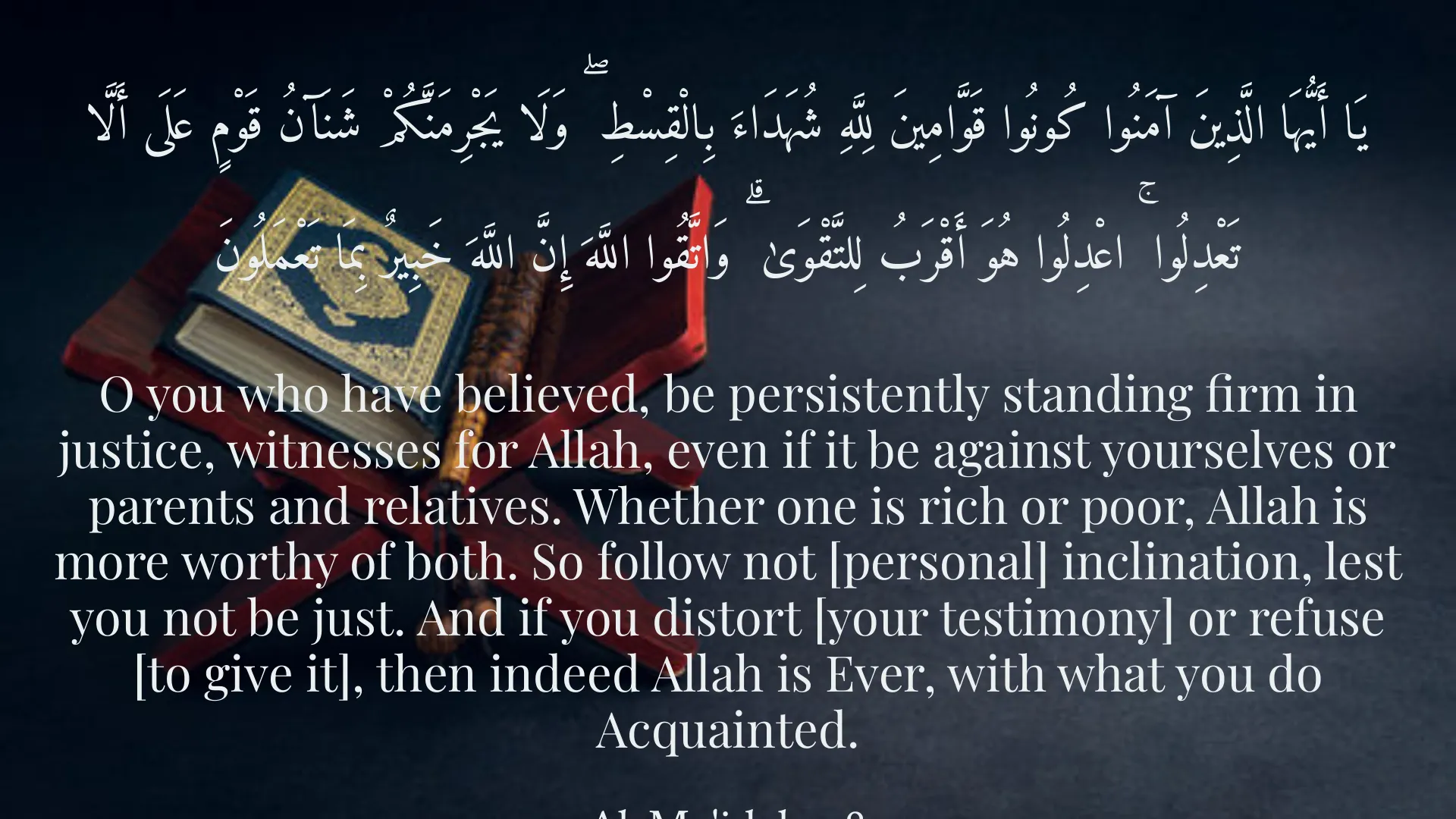
يَا أَيُّهَا الَّذِينَ آمَنُوا كُونُوا قَوَّامِينَ لِلَّهِ شُهَدَاءَ بِالْقِسْطِ ۖ وَلَا يَجْرِمَنَّكُمْ شَنَآنُ قَوْمٍ عَلَى أَلَّا تَعْدِلُوا ۚ اعْدِلُوا هُوَ أَقْرَبُ لِلتَّقْوَىٰ ۗ وَاتَّقُوا اللَّهَ إِنَّ اللَّهَ خَبِيرٌ بِمَا تَعْمَلُونَ
O you who have believed, be persistently standing firm in justice, witnesses for Allah, even if it be against yourselves or parents and relatives. Whether one is rich or poor, Allah is more worthy of both. So follow not [personal] inclination, lest you not be just. And if you distort [your testimony] or refuse [to give it], then indeed Allah is Ever, with what you do Acquainted.
Al-Ma'idah : 8
وَلَا تَأْكُلُوا أَمْوَالكُمْ بَيْنَكُمْ بِالْبَاطِلِ وَلَا تَدْفَعُوا بِهَا إِلَى الْحُكَّامِ لِتَأْكُلُوا فَرِيقًا مِّنْ أَمْوَالِ النَّاسِ بِالإِثْمِ وَأَنتُمْ تَعْلَمُونَ
And do not consume one another's wealth unjustly or send it [in bribery] to the rulers in order that [they might aid] you [to] consume a portion of the wealth of the people in sin, while you know [it is unlawful].
Al-Baqarah : 188
ثُمَّ أَمَدَّنَاهُم بِجِنَانٍ ۭ وَلَهُم فِي هَذَا الْحَيَاةِ بَقَاءٌ وَاجِبٌ
Then He molded him and breathed into him of His [created] soul; and He gave you hearing and vision, and hearts; little are you grateful.
As-Sajdah : 9
Short Story
Once upon a time, a man named Hasan started a new job. He knew that to be successful in his career, he had to adhere to ethical principles. Hasan always strived to be honest in his dealings and to fulfill all the promises he made. One day, a customer asked him for a larger discount. Although Hasan could have easily agreed, he recalled the Quranic verses that emphasize fairness and honesty. Thus, he declined the request, and the customer returned to him because of his sincerity and kindness. Hasan learned that adhering to ethical principles in his profession not only maintained his reputation but also brought him greater happiness and satisfaction.