Quranic Answer
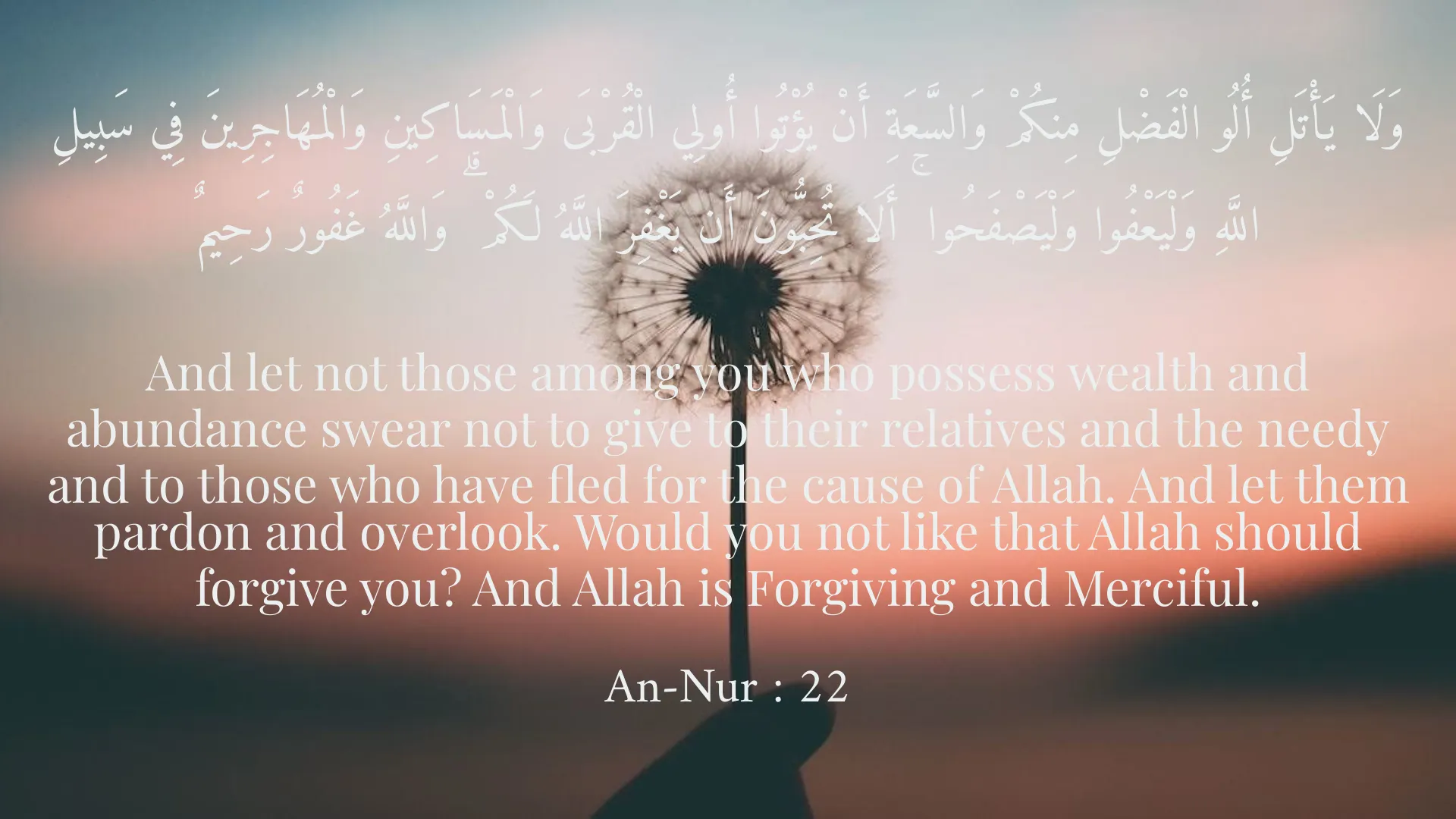
The Holy Quran, being a divine book for Muslims, lays significant emphasis on the core values that shape the character of a true believer. Among these values, forgiveness stands out as a paramount trait that is consistently celebrated in various contexts throughout the Quran. Understanding the profound importance that forgiveness holds within Islamic teachings is crucial, not only for believers but for humanity as a whole. In essence, forgiving others is framed as an act of immense spiritual strength and moral integrity, making it one of the key characteristics of those who seek closeness to Allah. The notion of forgiveness is rooted deeply within the Islamic concept of mercy, a quality ascribed to Allah Himself. The Quran provides clear guidance on this subject, reminding believers of the fundamental principle that forgiveness is essential for personal growth and spiritual elevation. One prominent illustration of this can be found in Surah An-Nur, verse 22, where Allah instructs believers, saying, 'Let not those among you who are endowed with grace and wealth swear not to give to their relatives and the needy and to those who have fled for the cause of Allah; rather let them pardon and overlook. Would you not like that Allah should forgive you? And Allah is Forgiving and Merciful.' This verse profound in its implications, elaborates on the necessity of demonstrating generosity through forgiveness, especially towards those who may have wronged us or who are in distress. The message encapsulated in this verse speaks to the heart of community, urging those in positions of comfort to extend kindness and forgiveness to those in need. In essence, it challenges believers to reflect on their actions and whether they align with the broader teachings of Islam. Moreover, Allah’s reminder that He Himself is 'Forgiving and Merciful' serves as an impetus for believers to practice the same virtue within their own lives. The reciprocal relationship between Allah's mercy and human forgiveness draws a direct correlation, thereby encouraging individuals to embody the values they hope to receive from the divine. Similarly, in Surah Al-Imran, verse 134 unfolds further insights regarding the intrinsic qualities of true believers: 'Who spend in the cause of Allah during ease and hardship, and who restrain anger and who pardon the people. And Allah loves the doers of good.' This verse encompasses a spectrum of commendable traits that define a believer, highlighting the act of spending (charity) and the control of anger as integral components. The call to 'pardon the people' underscores the imperative nature of forgiveness as synonymous with righteousness and noble character. The loving disposition towards others, even amidst adversity, illustrates a holistic approach to personal conduct and community interactions. It is noteworthy that the Quran emphasizes the aspect of patience in the practice of forgiveness. Maintaining composure and restraint in the face of provocation is depicted not merely as an act of self-control but as a profound demonstration of spiritual maturity. Thus, the Quranic perspective envisions patience as a companion to forgiveness—an essential ingredient that empowers individuals to let go of past grievances and strive for reconciliation. Moreover, the narrative of forgiveness continues in Surah Al-Ma'idah, verse 13, which states that if someone forgives others, Allah will also grant him mercy. This intertwining of mercy and forgiveness establishes a moral framework within which believers are encouraged to cultivate these virtues actively. Not only does this verse highlight the benefits of forgiveness, but it also reinforces the idea that acts of mercy are reciprocated; by forgiving others, individuals become worthy of divine mercy themselves. This reciprocal relationship inspires believers to extend compassion and grace to those around them, reinforcing the message that forgiveness enriches both the giver and the recipient. The Quran also cautions against harboring grudges and ill feelings, emphasizing instead the value of empathy and understanding. In the context of interpersonal relationships, the teachings advocate for a culture of forgiveness where conflict resolution is approached with kindness rather than resentment. By engaging in acts of forgiveness, believers are not only adhering to divine injunctions but also nurturing a social fabric that thrives on compassion, love, and mutual respect. The implications of forgiveness as outlined in the Quran extend into everyday life, encouraging believers to cultivate positive relationships and a harmonious community. Practicing forgiveness isn’t just limited to grand gestures but can manifest in small acts of kindness and the daily decisions individuals make toward others. For example, forgiving a minor grievance or misunderstanding can alleviate tensions and foster a sense of belonging and unity among individuals. Additionally, this philosophy of forgiveness has a significant impact on mental and emotional well-being. Studies have shown that embracing forgiveness can lead to increased happiness, lower levels of stress, and enhanced overall quality of life. The teachings of the Quran align with these findings, illustrating that the path to personal peace is paved with the willingness to forgive and forget. As believers, learning to interact with kindness and forgiveness in all aspects of life is indispensable. The Quran strongly encourages a lifestyle entrenched in these values, highlighting that forgiveness should not only be a sporadic act but rather a part of our character and conduct. When individuals embody forgiveness, they exhibit spiritual strength, resilience, and greatness—qualities that not only uplift their personal journeys but also inspire others. In conclusion, the Holy Quran's teachings on forgiveness are both profound and practical, calling on believers to reflect, act, and embody the virtues that align with divine expectations. By engaging in forgiveness, believers not only seek to emulate the mercy of Allah but also contribute to a world that values compassion over conflict. Ultimately, the journey of forgiveness leads to the blossoming of a more serene community and a deeper connection with the divine, where mercy and forgiveness go hand in hand, ushering in peace and love in the hearts of people.
Related Verses
وَلَا يَأْتَلِ أُلُو الْفَضْلِ مِنكُمْ وَالسَّعَةِ أَنْ يُؤْتُوا أُولِي الْقُرْبَى وَالْمَسَاكِينِ وَالْمُهَاجِرِينَ فِي سَبِيلِ اللَّهِ وَلْيَعْفُوا وَلْيَصْفَحُوا ۚ أَلَا تُحِبُّونَ أَن يَغْفِرَ اللَّهُ لَكُمْ ۗ وَاللَّهُ غَفُورٌ رَحِيمٌ
And let not those among you who possess wealth and abundance swear not to give to their relatives and the needy and to those who have fled for the cause of Allah. And let them pardon and overlook. Would you not like that Allah should forgive you? And Allah is Forgiving and Merciful.
An-Nur : 22
الَّذِينَ يُنفِقُونَ فِي السَّرَّاءِ وَالضَّرَّاءِ وَالْكَاظِمِينَ الْغَيْظَ وَالْعَافِينَ عَنْ النَّاسِ ۗ وَاللَّهُ يُحِبُّ الْمُحْسِنِينَ
Who spend in the cause of Allah during ease and hardship, and who restrain anger and who pardon the people. And Allah loves the doers of good.
Al-Imran : 134
فَأَمَّا الَّذِينَ تَابُوا وَأَصْلَحُوا فَإِنَّ اللَّهَ يَتُوبُ عَلَيْهِمْ ۗ إِنَّ اللَّهَ غَفُورٌ رَحِيمٌ
But as for those who repent and do righteous deeds, indeed Allah will replace their evil deeds with good. And ever is Allah Forgiving and Merciful.
Al-Ma'idah : 13
Short Story
Once upon a time, in a tribe, there was a man who had made a mistake and was rejected by others. He was sad and didn't know what to do. Meanwhile, the tribe leader told him, 'Forgiveness is a sign of strength. Instead of seeking revenge, it is better to be kind and apologize. Your act of forgiveness may encourage others to be kind to you as well.' After contemplating this advice, the man decided to apologize and change his behavior. After some time, peace and friendship returned to him.