Quranic Answer
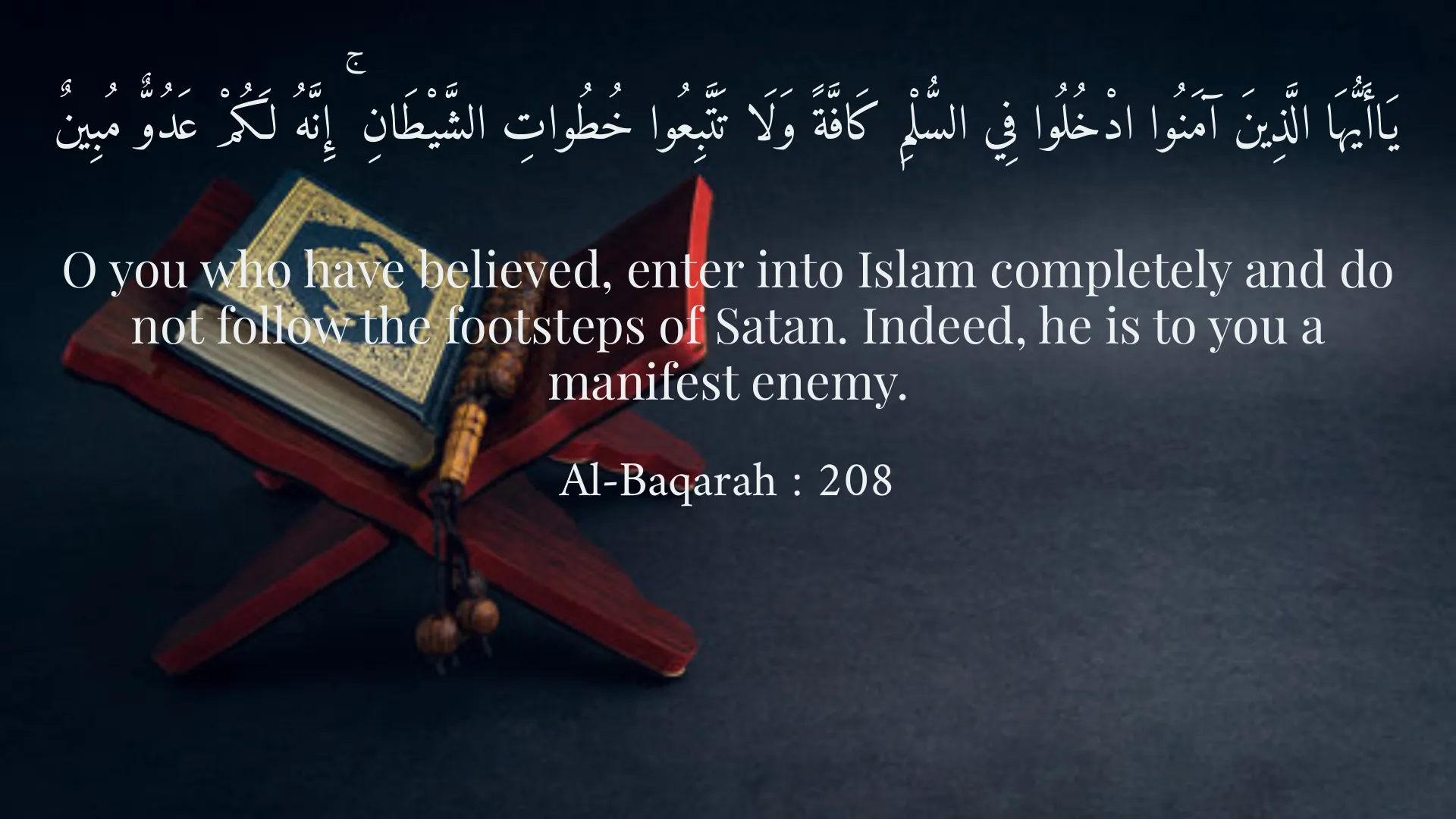
In the Holy Quran, the themes of temptation, guidance, and the ongoing battle against evil are recurrent motifs that highlight the nature of human existence and the necessity for spiritual vigilance. Among these pivotal elements, the deception of Satan is frequently addressed, serving as a profound reminder for believers to remain alert and steadfast in their faith. The Quran delineates Satan not merely as a distant concept or an abstract entity but as a palpable force actively working to lead individuals away from righteousness and towards moral decay. This article aims to delve into the specific references of Satan's deception found within the Quran, analyzing their implications and encouraging a deeper understanding of how believers can protect themselves from such insidious influences. One of the most explicit admonitions regarding Satan and his deceptive ways is found in Surah Al-Baqarah, verse 208. Here, Allah commands, "O you who have believed, enter into Islam completely and do not follow the footsteps of Satan. Indeed, he is to you a manifest enemy." This verse serves not only as a call to faith but also as a stark warning regarding the insidious nature of Satan's influence. By referencing Satan as a 'manifest enemy,' the Quran underscores the urgency for believers to not only accept their faith in theory but to embody its principles fully. To "enter into Islam completely" means to embrace all aspects of life that align with Islamic teachings, free from the distractions and traps often laid by the devil. The ramifications of this warning are far-reaching. In a world fraught with distractions and moral ambiguities, individuals must actively cultivate awareness of the potential for deception. The implication here is that moral integrity requires conscious effort, vigilance, and an unwavering commitment to spiritual practices. The exhortation to refrain from following "the footsteps of Satan" implies that the path to righteousness is user-driven; it is not merely about avoiding overt sins but also about steering clear of subtle corruptions that can gradually lead one astray from their path. In further elucidation of Satan's deceptive tactics, Surah Al-Imran, verse 175, offers solace and clarity. The verse states, "And it is but a reminder for you. And let not the devil threaten you with fear of those who reject faith. Indeed, the devil only threatens with his allies." This verse serves as a powerful reminder that the fear instilled by Satan often correlates with doubt and the external pressures faced by believers, particularly in an increasingly secular world. The dimension of community and alliance becomes significant here: the devil does not operate alone but elects to use complicity as a tool for deception. Satan’s whispers can mirror societal fears, leading individuals to reconsider their commitments to their faith in the face of adversity. This verse urges believers to lean on their faith and the community of believers rather than succumbing to fear. By reminding oneself of the divine assurances and promises found within Islamic teachings, believers can combat Satan's influence more effectively. Engaging in communal worship and fostering relationships within the Islamic community can act as a protective shield against these pressures. This collective affirmation of faith can not only fortify individual resolve but also serve as a bulwark against the challenges posed by non-believers, allowing believers to navigate their journeys with more confidence and assurance in Allah’s guidance. Furthermore, Surah Fatir, verse 6, addresses another aspect of Satan's deception. The verse states, "Indeed, Satan threatens you with poverty and commands you to immorality. And Allah promises you forgiveness from Him and bounty." Here, the notion of Satan threatening individuals with poverty elucidates how fear can manifest in practical, life-altering decisions. One of the more potent forms of deception involves instilling a false sense of need or urgency in individuals, which can lead to unethical choices and moral compromise. The dichotomy presented between Satan's threats and Allah's promises is critically important. While Satan lures individuals with the fear of scarcity and the allure of immoral gain, Allah reassures believers of His infinite generosity and mercy. The juxtaposition here is illuminating; it reflects the broader battle between material allurements and spiritual fulfillment. The essence of this struggle lies in recognition. Believers are encouraged to perceive beyond immediate earthly circumstances and to place their trust in Allah's promises, which are rooted in both forgiveness and abundance. This mindset cultivates resilience against Satan's whispers and strengthens the faith of believers. Moreover, it highlights the necessity of remembrance (dhikr) and worship in safeguarding oneself from such deceptions. Engaging in acts of devotion and recalling Allah's blessings serve as vital tools for maintaining spiritual clarity amid temptation. The act of remembrance reconnects the individual to their purpose and roots them in their faith, allowing them to navigate life’s challenges with confidence and serenity. The repeated emphasis on staying alert and dedicated in the face of Satan's deceptions underscores a fundamental tenet of Islamic belief: that life is a struggle, and part of being a believer is recognizing the ongoing battle—not merely against external forces but within oneself. It calls upon individuals to constantly introspect, engage in self-improvement, and cultivate a robust relationship with Allah. Regular prayer, reading of the Quran, and seeking knowledge are essential practices that reinforce this connection, providing the tools with which to counteract the deceptions that menace the soul. In conclusion, the Holy Quran offers profound insights into the nature of Satan's deception and its pervasive influence on believers. Through verses such as those found in Surah Al-Baqarah, Surah Al-Imran, and Surah Fatir, the text encapsulates the challenges faced by individuals and emphasizes the need for vigilance and steadfastness. Understanding these teachings encourages believers to engage with their faith fully, to seek refuge in Allah consistently, and to cultivate a life characterized by worship and remembrance. While the threats posed by Satan may be significant, the promises of guidance, forgiveness, and bounty from Allah remain ever-present, illuminating the path for those who strive to maintain their faith in the face of temptation. Ultimately, it is through this awareness and commitment that believers can navigate the complexities of life, emerging resilient and steadfast against the deceptions that seek to divert them from the right path.
Related Verses
يَاأَيُّهَا الَّذِينَ آمَنُوا ادْخُلُوا فِي السُّلْمِ كَافَّةً وَلَا تَتَّبِعُوا خُطُواتِ الشَّيْطَانِ ۚ إِنَّهُ لَكُمْ عَدُوٌّ مُبِينٌ
O you who have believed, enter into Islam completely and do not follow the footsteps of Satan. Indeed, he is to you a manifest enemy.
Al-Baqarah : 208
وَلَا تَحْزَنْ عَلَيْهِمْ وَلَا تَكُ فِي ضَيْقٍ مِّمَّا يَمْكُرُونَ
And let not the devil threaten you with fear of those who reject faith.
Al-Imran : 175
إنما يخوفكم بالشياطين
Indeed, Satan threatens you with poverty and commands you to immorality.
Fatir : 6
Short Story
Once, a man named Hamid was walking among the people and noticed the wrongdoings of the youth around him. He recalled the Quranic verses warning about the deception of Satan and realized that without God, a person can easily fall into delusions. Thus, he decided to discuss these verses with his friends to awaken them as well. This led the youth to pay more attention to remembering God and steering clear of temptations, and they changed their lives for the better.