Quranic Answer
Title: The Significance of Time in the Holy Quran: An Exploration of Accountability and Life's Purpose Introduction Time is a fundamental aspect of human existence. Often overlooked or taken for granted, time holds immense importance in shaping our lives, choices, and ultimately our destinies. The Holy Quran emphasizes the significance of time and warns against the squandering of our precious moments through various verses. As believers, it is imperative to reflect on the messages conveyed by the Quran regarding time and understand how they can guide us in leading a meaningful life. This article delves into the Quranic perspective on time, accountability, and the call for individuals to engage in righteous endeavors. The Essence of Time in the Quran In the Quran, time is presented as a valuable asset, and numerous verses remind us of its fleeting nature. One of the most prominent illustrations comes from Surah Al-Asr (Chapter of Time), which asserts the importance of mankind’s time on earth. The verses state, 'By the time, indeed, mankind is in loss, except for those who have believed and done righteous deeds and advised each other to truth and advised each other to patience.' (Surah Al-Asr, 103:1-3) This profound declaration highlights that the majority of humanity is in a state of loss due to the misuse of time, engaging in activities that do not lead to their betterment or fulfillment. The exceptions, as delineated in these verses, are those who believe, carry out good deeds, and encourage each other toward truth and patience. Here, the Quran sets forth a clear criterion for success – a successful life is one spent in faith, good actions, and mutual support. Accountability and the Purpose of Life The concept of accountability is woven intricately into the fabric of the Quran. In Surah Al-Mu'minun (Chapter of the Believers), verse 115 states: 'Did you think that We created you uselessly and that to Us you would not be returned?' This verse serves as a poignant reminder that life is not a random occurrence or devoid of purpose. Instead, every moment we experience is significant and contributes to our spiritual journey. According to Islamic teachings, life is fundamentally an act of worship, during which individuals are tasked with making choices that reflect their beliefs and principles. The awareness of our ultimate return to God should drive us to manage our time prudently, taking into account that we will be asked about how we spent our days, our resources, and ultimately our lives. Constructive Engagement with Time The Quran not only emphasizes avoiding the pitfalls of time-wasting activities but also promotes the idea of engaging in constructive habits. Engaging in righteous actions, be it through worship, charity, or acts of kindness, is central to fulfilling one’s purpose according to the Quran. Furthermore, in the contemporary world, the distractions of technology, materialism, and societal pressures often lead individuals away from meaningful engagements. The messages of the Quran stand as a counter-narrative to this trend, encouraging believers to foster a sense of discipline and focus regarding their time. Time management is often equated with self-discipline and efficiency, and the Quran endorses these virtues as they align with attaining personal and communal growth. The Role of Community and Accountability An interesting aspect that emerges from the verses of Surah Al-Asr is the emphasis on community. The encouragement to 'advise each other to truth and patience' signifies the collective responsibility we hold toward one another. In Islam, the concept of ummah (community) plays a crucial role in reinforcing faith and uplifting one another in righteousness. This mutual support system acts as a motivator, pushing individuals to lead lives that are not only fruitful for themselves but also beneficial for those around them. Engaging with family, friends, and the community helps in creating an environment that values time spent in positive endeavors. Encouraging open discussions about values, faith, and community well-being promotes accountability within the society and fosters a culture of responsible time use. Time as a Currency of Spiritual Growth As Muslims navigate through life, the notion of time can be seen as a currency, something that must be spent wisely to yield the greatest spiritual returns. The Quran continuously reminds its followers about the ephemeral nature of worldly life. Surah Al-Hadid (Chapter of Iron) emphasizes this notion with the ayah: 'Know that the life of this world is merely amusement and diversion, and adornment, and boasting among yourselves and competition in increase of wealth and children.' (Surah Al-Hadid, 57:20) Thus, acquiring wealth or status should not eclipse the awareness of time slipping away. Instead, believers are encouraged to look beyond superficial gains and invest their time in actions that yield spiritual rewards and lead to a profound realization of their purpose on Earth. This perspective transforms how time is perceived, turning it into a focus of worship and self-improvement rather than a mere resource to be spent. Conclusion In summary, the Quran profoundly accentuates the significance of time, urging believers to take accountability for how they utilize each moment of their lives. The verses provide a powerful framework for understanding the value of time as intertwined with faith, action, and communal responsibility. By reminding us of the ephemeral nature of worldly life and the certainty of accountability in the hereafter, the Quran inspires Muslims to lead purposeful lives that are not only beneficial for themselves but also for society at large. Ultimately, this divine guidance encourages an engaged and conscientious approach to time management, enabling individuals to cultivate a life filled with meaning, purpose, and adherence to the principles of righteousness.
Related Verses
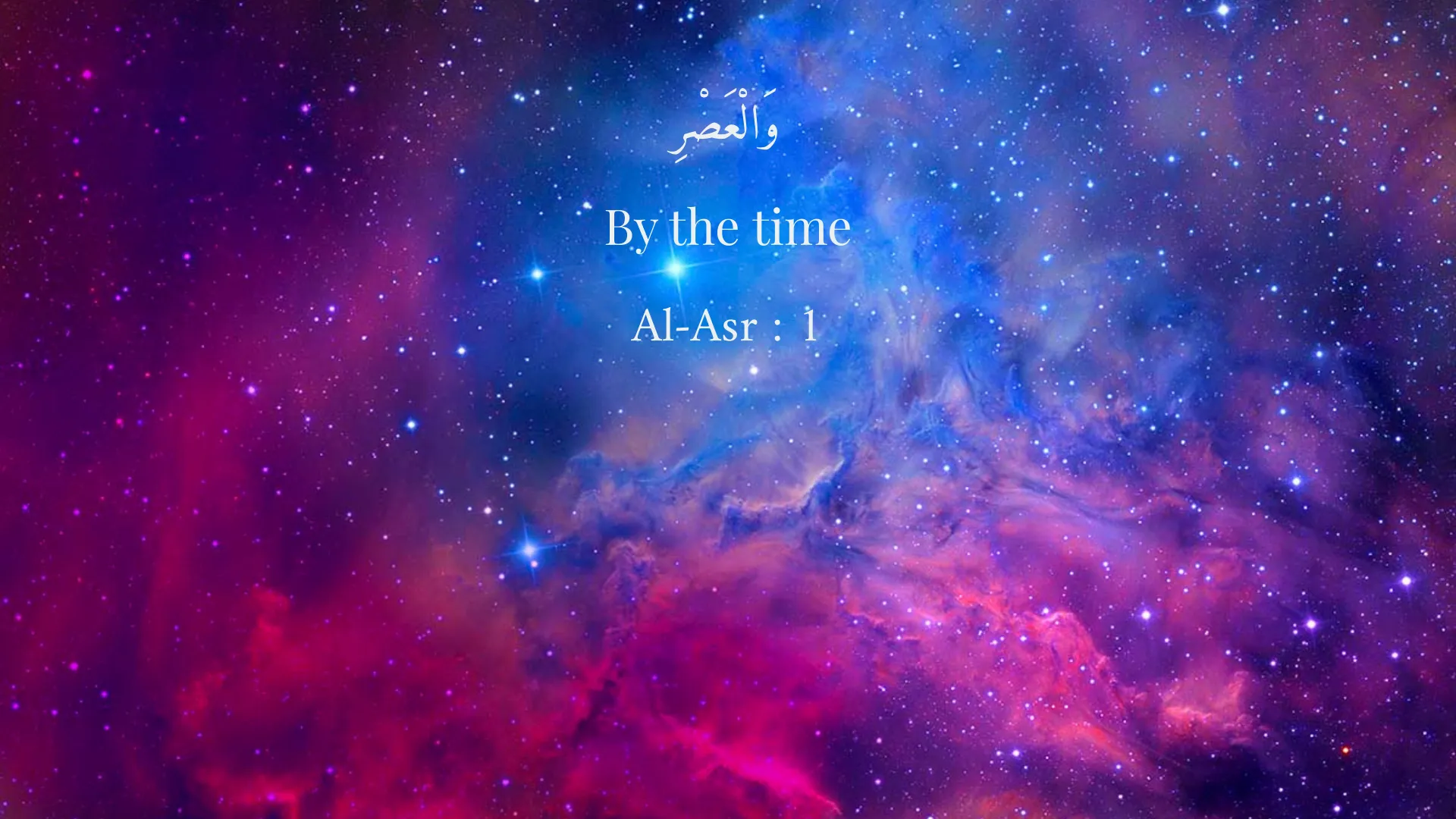
وَالْعَصْرِ
By the time
Al-Asr : 1
أَحَسِبْتُمْ أَنَّمَا خَلَقْنَاکُمْ عَبَثًا وَأَنَّكُمْ إِلَىٰنا لَا تُحْشَرُونَ؟
Did you think that We created you uselessly and that to Us you would not be returned?
Al-Mu’minun : 115
Short Story
Once upon a time, there was a man named Sohrab who decided to better manage his time. He would always sit in a corner and reflect on his wasted days. One day, while sitting with a friend, they discussed life and the Quranic teachings. His friend said, 'Sohrab, we never know when our time might end, so we should make the most of every moment.' This statement inspired Sohrab and he resolved to spend every minute of his life doing good and serving others.