Quranic Answer
The Holy Quran, as a divine guide, is not limited to mere acts of worship; it provides comprehensive and complete guidance for all aspects of human life, including emotion management and anger control. Anger, though a natural human emotion that can sometimes serve as a motivating force for defending rights and combating injustice, if left unchecked, can become one of the most destructive forces, leading to the ruin of individual and social life. Therefore, the Quran strongly emphasizes the necessity of curbing this potentially devastating force and offers practical and spiritual solutions. One of the most central Quranic teachings regarding anger management is the concept of 'Kazm al-Ghayz.' This phrase is beautifully expressed in Surah Al-Imran, verse 134, where Allah enumerates the qualities of the righteous: “Who spend [in the cause of Allah] during ease and hardship and who restrain anger and who pardon the people – and Allah loves the doers of good.” Kazm al-Ghayz literally means 'swallowing anger' or 'holding it within,' not eliminating anger entirely, but rather suppressing and controlling it to prevent destructive reactions. This act is a sign of self-control, nobility, and restraint, allowing an individual to make thoughtful decisions in critical moments instead of acting on sudden impulses. The Quran considers this characteristic among the prominent virtues of the righteous, indicating its high value in the sight of Allah. Someone who is capable of controlling their anger has, in effect, overcome their impulsive self (nafs al-ammarah) and reached a stage of spiritual maturity where they can weigh the consequences of their actions and prevent potential harm. Alongside Kazm al-Ghayz, the Quran also emphasizes 'Afw and Forgiveness.' The aforementioned verse in Surah Al-Imran immediately links suppressing anger with pardoning people. This signifies that merely holding back anger is insufficient; one must go a step further and forgive the transgressions of others. Forgiveness not only helps in the spiritual tranquility of the angry individual but also contributes to repairing relationships and fostering an atmosphere of love and understanding. In Surah Ash-Shura, verse 37, we read: “And those who avoid the major sins and immoralities, and when they are angered, they forgive.” This verse clearly shows that forgiveness in moments of anger is one of the characteristics of true believers and the righteous. Forgiveness opens a gateway to inner and outer peace, preventing grudges and animosities from taking root. This act demonstrates a high spiritual capacity and a deep understanding of the transient nature of this world and the importance of human relationships based on mutual love and respect. Another Quranic strategy for dealing with the roots of anger and preventing it is 'repelling evil with goodness.' In Surah Fussilat, verses 34 and 35, it states: “And not equal are the good deed and the bad. Repel [evil] with that which is better; then verily he, between whom and you was enmity, (will become) as though he was a close friend. But none is granted it except those who are patient, and none is granted it except one having a great portion [of good].” These verses offer a preventive and therapeutic strategy: instead of responding to anger with anger, or evil with evil, one should respond with kindness and good conduct. This approach not only prevents the escalation of conflict but can also transform enmities into friendships and solidarity. This requires immense patience and perseverance, but the outcome is highly valuable, as it leads to peace and reconciliation instead of an endless cycle of revenge and anger. Repelling evil with good extinguishes the roots of many conflicts and builds a healthier, more compassionate society. Furthermore, the concept of 'Sabr' (patience), which is frequently mentioned throughout the Quran, plays a key role in anger management. Patience is the ability to endure difficulties, adversities, and delays in achieving desires. When an individual is patient, they are less affected by external factors and do not easily become angry. Patience allows a person time to analyze the situation before reacting and choose the best response. Patience does not mean indifference, but rather perseverance and steadfastness in the face of challenges. Remembrance of Allah (Dhikr Allah) is also a spiritual and powerful method for calming the heart and controlling anger. In Surah Ar-Ra'd, verse 28, it states: “Those who have believed and whose hearts are assured by the remembrance of Allah. Unquestionably, by the remembrance of Allah hearts are assured.” In moments of extreme anger, resorting to the remembrance of Allah and seeking His forgiveness can reduce the intensity of anger and restore tranquility to the heart. This act shifts an individual's focus from the external factors that caused anger to the true source of peace and power, which is Allah. In conclusion, the Holy Quran, by presenting these teachings, provides a comprehensive framework for anger management that includes both suppression and control (Kazm al-Ghayz), as well as addressing its roots and preventing it through forgiveness and responding to evil with good, and strengthening spiritual foundations through patience and divine remembrance. Adhering to these recommendations not only contributes to an individual's mental health and inner peace but also helps build a society with healthier human relationships based on mutual love and respect. These guidelines are more than just ethical commands; they are instructions for a successful and peaceful life in this world and ultimate happiness in the hereafter.
Related Verses
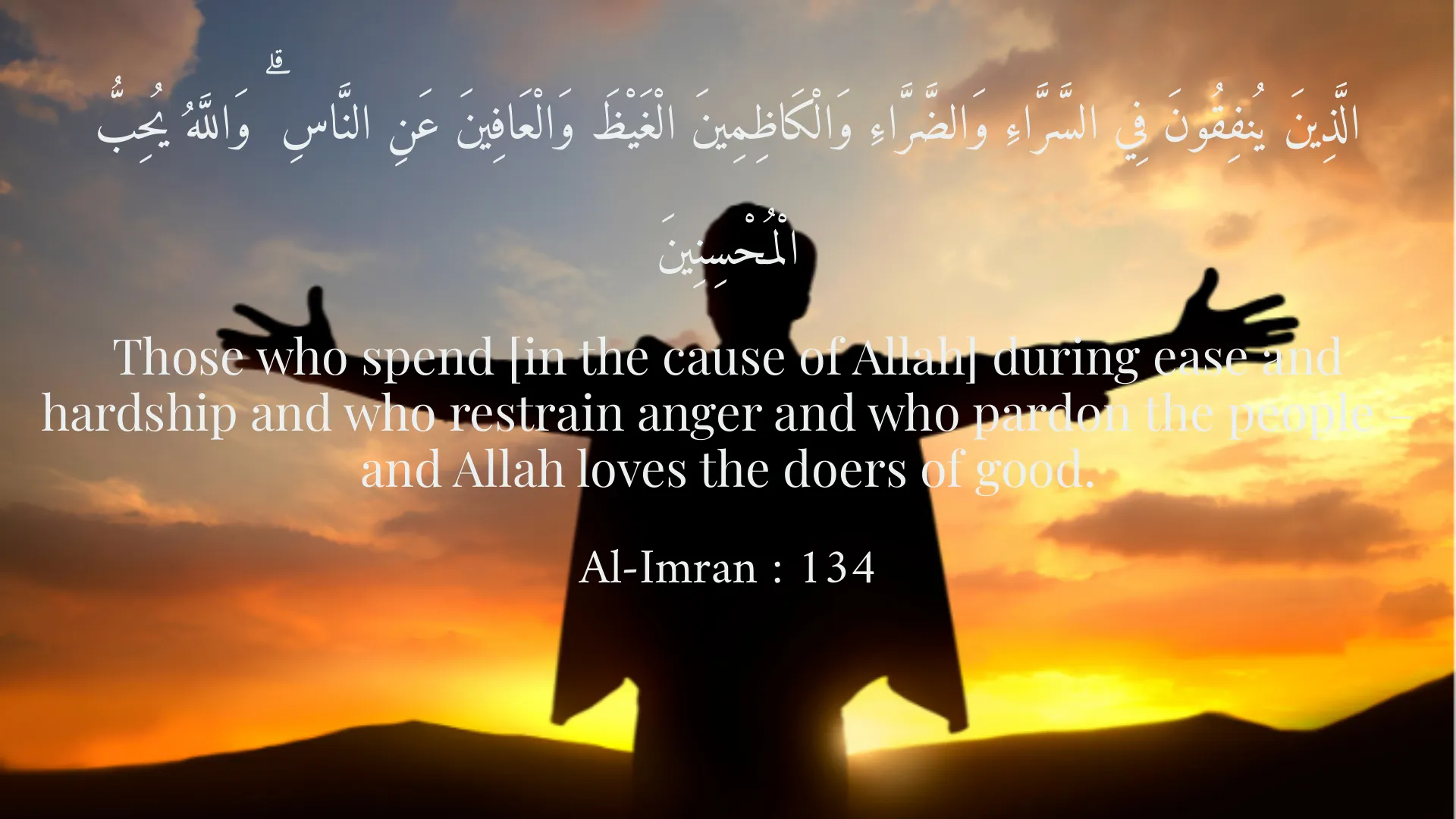
الَّذِينَ يُنفِقُونَ فِي السَّرَّاءِ وَالضَّرَّاءِ وَالْكَاظِمِينَ الْغَيْظَ وَالْعَافِينَ عَنِ النَّاسِ ۗ وَاللَّهُ يُحِبُّ الْمُحْسِنِينَ
Those who spend [in the cause of Allah] during ease and hardship and who restrain anger and who pardon the people – and Allah loves the doers of good.
Al-Imran : 134
وَالَّذِينَ يَجْتَنِبُونَ كَبَائِرَ الْإِثْمِ وَالْفَوَاحِشَ وَإِذَا مَا غَضِبُوا هُمْ يَغْفِرُونَ
And those who avoid the major sins and immoralities, and when they are angered, they forgive.
Ash-Shura : 37
وَلَا تَسْتَوِي الْحَسَنَةُ وَلَا السَّيِّئَةُ ۚ ادْفَعْ بِالَّتِي هِيَ أَحْسَنُ فَإِذَا الَّذِي بَيْنَكَ وَبَيْنَهُ عَدَاوَةٌ كَأَنَّهُ وَلِيٌّ حَمِيمٌ
And not equal are the good deed and the bad. Repel [evil] with that which is better; then verily he, between whom and you was enmity, (will become) as though he was a close friend.
Fussilat : 34
Short Story
It is narrated in Saadi's Gulistan that a king grew angry with a servant and intended to punish him severely for a transgression. The servant, trembling from head to toe with fear, spoke calmly and with utmost respect: “O King, those praised in divine verses are those who, in moments of wrath, suppress their anger and overlook the faults of people. I am a sinful servant, but I hope that your majesty will, at this moment, emulate a divine attribute.” The king was so deeply moved by this wise remark and kind reminder that his anger subsided, and mercy and compassion filled his heart. He not only pardoned the servant from punishment but also set him free and forgave his misdeed. This heartwarming tale teaches us how a measured word and a reminder of virtue can extinguish the flames of anger and, instead, plant the seeds of forgiveness and mercy in hearts.