Quranic Answer
The concept of provision (rizq) in the Holy Quran is a subject of deep significance, illustrating the divine relationship between Allah and His creations. The Quran presents provision not merely as a matter of sustenance, but as a holistic approach to understanding life, encompassing spiritual, emotional, and material aspects. In delineating this concept, it reveals how Allah's mercy and grace manifest through the provisions granted to humanity. Through various verses, the Quran emphasizes that the abundance of rizq is an intrinsic part of Allah's creation, which serves as a reminder for believers to place their trust in Him. In Surah Al-Isra, verse 31, Allah states, 'And do not kill your children for fear of poverty. We provide for them and for you.' This verse captivates the essence of divine provision, addressing the deeply-rooted fears surrounding material lack. In a society often consumed by economic pressures, this verse urges parents not to resort to drastic measures out of fear for their children’s sustenance. Allah assures that He is the ultimate sustainer, reinforcing the idea that life and provision are in His hands. The verse is a testament to the fact that Allah understands human concerns and reassures His followers of His omnipotent ability to provide. Furthermore, in Surah Az-Zumar, verse 52, it is stated, 'Is he who relies on Allah’s provision as those who disbelieve?' Here, the Quran draws a critical comparison between believers and disbelievers. This verse emphasizes that those who have faith in Allah's provision live with a sense of peace, trusting in His plans and bounties. On the contrary, disbelievers are depicted as those who remain shackled by their material concerns, never content and always fearful of not having enough. Allah’s message is clear: His mercy envelops everyone, and no one will be abandoned or deprived. In addition to these reassuring verses, Surah Al-Baqarah, verse 261 portrays Allah’s blessings further: 'The example of those who spend their wealth in the way of Allah is like a seed that sprouts seven ears.' This metaphor illustrates the principle of generosity and its rewards. Spending in the path of Allah, whether it be through charity or community support, is prescribed as an investment that yields not just worldly benefits but also spiritual dividends. The analogy of a seed sprouting multiple ears signifies abundance, and this verse serves as an affirmation that acts of kindness lead to greater sustenance. The Quran encourages believers to engage in charitable giving, promising that such actions lead to an increase in provision and blessings in both this life and the hereafter. Moreover, the Quran underscores the importance of moving away from materialism—shifting focus from earthly concerns to spiritual enlightenment. The repeated emphasis on Allah’s provision reminds us to trust in Him above all else. In times of hardship, this reliance can provide the solace and strength necessary to navigate life’s challenges. The understanding that there exists a divine plan alleviates the burdens of worldly anxieties. Believers are led to understand that their efforts, coupled with faith in Allah, result in a balance of both material needs and spiritual growth. The concept of rizq extends beyond mere financial wealth. It encompasses all forms of blessings bestowed upon us—health, relationships, knowledge, and spiritual contentment. The Quran indicates that true sustenance is not restricted solely to material wealth. For instance, it is through love, compassion, and social bonds that individuals can truly experience life’s richness. In the presence of Allah’s mercy, comfort comes from an array of sources, rendering material wealth secondary to spiritual fulfillment. Furthermore, the Quran lays down ethical principles surrounding wealth and provision. It encourages fair trade, just dealings, and the avoidance of interest-based practices that may harm individuals or communities. These principles highlight the moral responsibility of individuals in ensuring that provisions are shared and fairly distributed. Economic justice becomes part of the divine provision, stressing that the affluent have a duty toward the less fortunate. By promoting social equity, the Quran nurtures compassion and solidarity within the community. The teachings surrounding rizq also inspire believers to adopt a mindset of gratitude. Recognizing the myriad blessings we receive fosters an attitude of thankfulness and appreciation. Such a perspective shifts focus from what one lacks to the abundance that one already possesses. Gratitude is integral to faith and is a quality that Allah expects from His servants. It is through gratefulness that individuals can foster a wholesome relationship with their provisions, acknowledging the source of their blessings. In conclusion, the Quran's discussion of provision offers a profound insight into the nature of sustenance as an extension of Allah’s mercy. The concept of rizq transcends mere material wealth, encompassing all aspects of life. By relying on Allah’s provisions as outlined in the Quran, believers can cultivate a state of peace, understanding, and gratitude. This relationship encourages individuals to move beyond material obsessions, recognizing that true sustenance lies in faith, community, and the fulfillment of moral responsibilities. In a world often marred by anxiety over resources, the Quran’s message of provision stands as a beacon of hope, urging humanity to trust in the divine mercy that sustains us all.
Related Verses
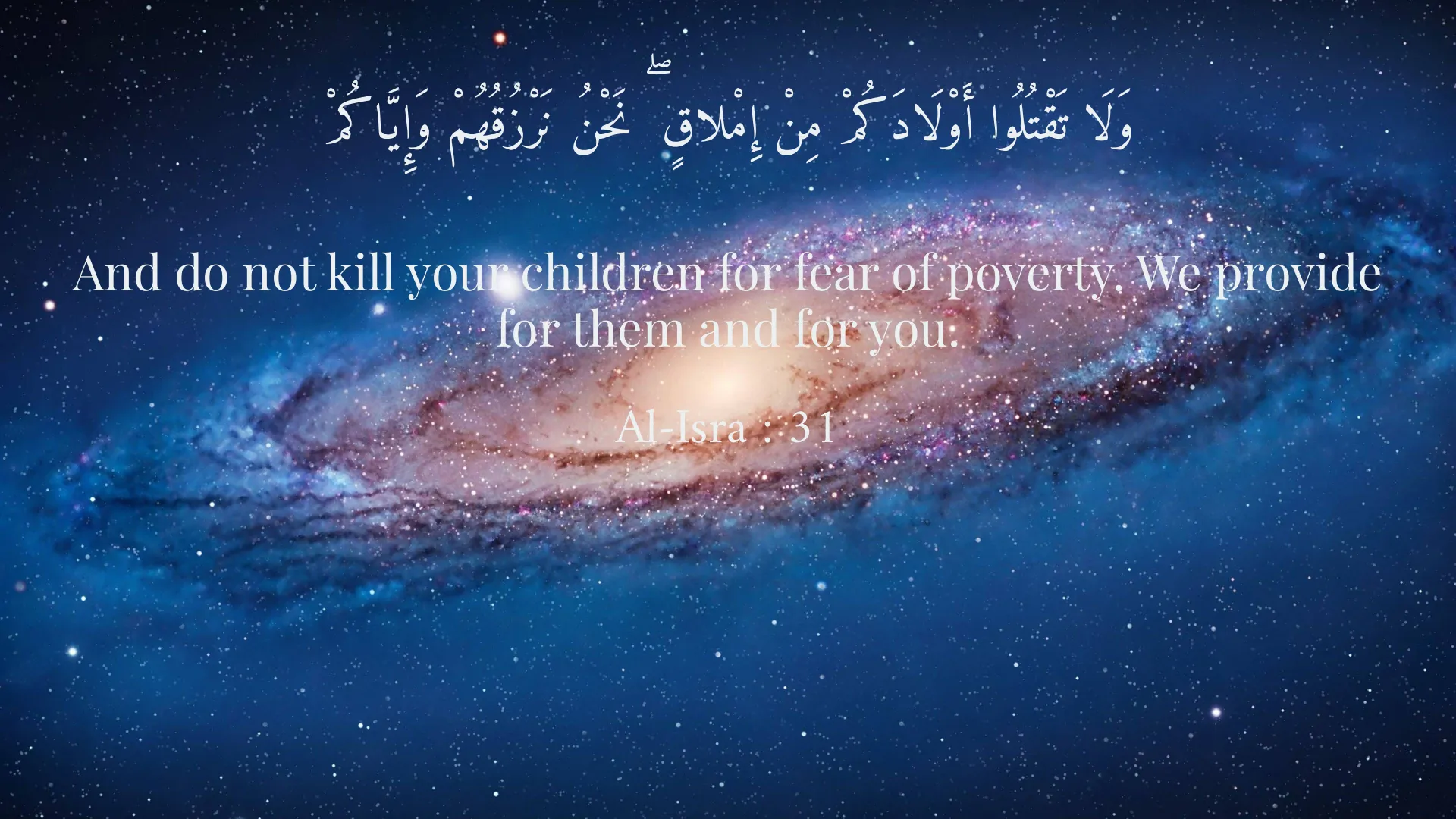
وَلَا تَقْتُلُوا أَوْلَادَكُمْ مِنْ إِمْلاقٍ ۖ نَحْنُ نَرْزُقُهُمْ وَإِيَّاكُمْ
And do not kill your children for fear of poverty. We provide for them and for you.
Al-Isra : 31
أَفَمَن يُقَانِعُ الرَّزقَ عَلَى اللَّهِ الْمُتَفَرِّقِينَ
Is he who relies on Allah’s provision as those who disbelieve?
Az-Zumar : 52
مَثَلُ الَّذِينَ يُنفِقُونَ أَمْوَالَهُمْ فِي سَبِيلِ اللَّهِ كَمَثَلِ حَبَّةٍ أَنبَتَتْ سَبْعَ سُنبُلَاتٍ
The example of those who spend their wealth in the way of Allah is like a seed that sprouts seven ears.
Al-Baqarah : 261
Short Story
One day, a man named Salim was walking through the streets, preoccupied with thoughts of sustenance and material concerns. Suddenly, he remembered the verses of the Quran that stated, 'We provide for them and for you,' which instilled hope in him that Allah oversees provision. He decided to continue working hard rather than worry and always place his trust in God. With faith, he increasingly felt blessings in his life.