Quranic Answer
Chastity is an indispensable and esteemed value deeply embedded within the teachings of the Holy Quran. The Quran provides guidance for the moral and ethical conduct of individuals, particularly with respect to their interactions and relationships. An integral part of this guidance is the emphasis on chastity, a concept that encompasses modesty in behavior, attire, and thoughts. This article aims to explore the significance of chastity in the Quran, particularly as highlighted in Surah An-Nur and Surah Al-Ahzab, while also reflecting on its broader implications for personal development, social harmony, and mutual respect in human interactions. In Surah An-Nur, verses 30 and 31, Allah explicitly instructs both believing men and women to lower their gazes and dress modestly. The command to lower the gaze signifies a commitment to self-control and mindfulness in the face of temptation. This act is not simply a matter of physical restraint, but rather a profound respect for the dignity of oneself and others. By discouraging objectification and encouraging respectful behavior, these verses promote a culture of integrity and sincerity in social conduct. Moreover, the Quran further emphasizes the importance of modest clothing as a manifestation of one's inner values. Modesty in dress is not merely a superficial guideline but a reflection of a believer’s character and faith. It serves to protect the individual from undue attention and potential harm, creating a safer environment where mutual respect can flourish. When individuals dress modestly, they communicate a sense of self-respect and assert their identity without succumbing to societal pressures that promote objectification. The Quranic emphasis on chastity is also interlinked with behavioral integrity. Maintaining purity and chastity is deemed crucial for honest behavior in various aspects of life, including personal relationships, workplace ethics, and community interactions. It is posited that when individuals commit to chastity and uphold their moral values, they are more likely to engage in ethical behavior. This behavior not only fosters personal moral development but also contributes to a more just and harmonious society. In this context, chastity plays a significant role in guiding interpersonal relationships, particularly in diverse social environments. The Quran encourages discipline in social interactions by promoting mutual respect and responsibility. This principle is particularly important in mixed gatherings, where adherence to boundaries can prevent misunderstandings and conflicts. Chastity ultimately acts as a societal glue, holding together the fabric of interactions with respect and sincerity, thus preventing the erosion of moral values. Furthermore, Surah Al-Ahzab, verse 59, addresses women specifically by instructing them to wear hijab. This directive serves not only as an act of obedience to divine command but also as a means of ensuring safety and dignity. The hijab is often misunderstood as a restriction; however, it is fundamentally a form of empowerment. By donning the hijab, women assert their identity and autonomy while signaling their commitment to chastity. It provides them with a shield, allowing them to navigate public spaces without the fear of harassment or judgment based on superficial appearances. The Quran's focus on chastity extends beyond the individual; it underlines the mutual responsibilities shared between men and women in fostering a respectful community. Chastity is not a burden placed solely on women; rather, it is a collective obligation that requires both genders to cultivate a culture of dignity and respect. Men's responsibility to lower their gaze complements women's obligation to dress modestly, creating a balanced approach where both contribute to a respectful social atmosphere. So, what does adherence to chastity mean for individuals and society at large? Firstly, it fosters personal growth and self-discipline. By practicing chastity, individuals learn to control their impulses and desires, leading to a more harmonious relationship with themselves and others. This self-control also cultivates qualities such as patience, humility, and maturity, which are essential for meaningful personal development. On a societal level, the benefits of promoting chastity are profound. As individuals commit to their moral values and treat one another with respect and dignity, the community at large becomes more cohesive. The reduction of inappropriate behaviors and the promotion of respectful interactions lead to a more supportive and nurturing environment. It creates a foundation for mutual trust and understanding, essential ingredients for a thriving society. The Quran, through its teachings on chastity, encourages its followers to rise above mere physical existence and engage in relationships grounded in respect and integrity. Adherence to these principles yields not only spiritual rewards but also tangible benefits for individuals and communities alike. When individuals prioritize chastity, they contribute to a culture of dignity that permeates all aspects of life, reinforcing the strong bonds between community members. In conclusion, chastity, as emphasized in the Quran, serves as a fundamental tenet for believers. It is not merely about modest dress or lowering one's gaze; it symbolizes a deeper commitment to self-respect, respect for others, and the cultivation of ethical behavior. The Quran encourages a lifestyle that promotes dignity, safety, and harmony among individuals, ultimately fostering social cohesion. As believers engage with these teachings, they not only enhance their personal development but also contribute to a civil society rooted in mutual respect and understanding.
Related Verses
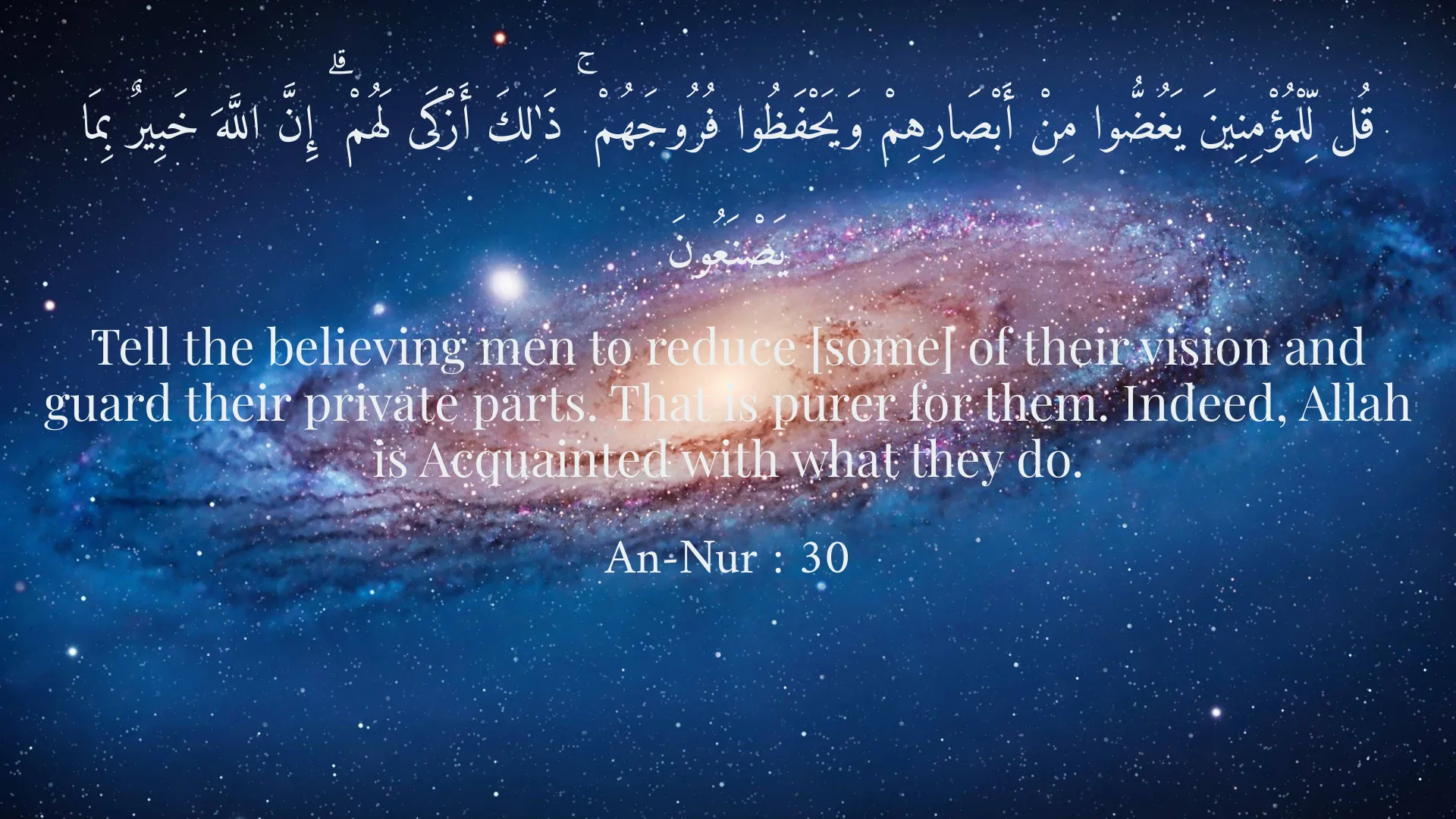
قُل لِّلْمُؤْمِنِينَ يَغُضُّوا مِنْ أَبْصَارِهِمْ وَيَحْفَظُوا فُرُوجَهُمْ ۚ ذَٰلِكَ أَزْكَى لَهُمْ ۗ إِنَّ اللَّهَ خَبِيرٌ بِمَا يَصْنَعُونَ
Tell the believing men to reduce [some] of their vision and guard their private parts. That is purer for them. Indeed, Allah is Acquainted with what they do.
An-Nur : 30
وَقُل لِّلنِّسَاءِ الْمُؤْمِنَاتِ يَغْضُضْنَ مِنْ أَبْصَارِهِنَّ وَيَحْفَظْنَ فُرُوجَهُنَّ وَلَا يُبْدِينَ زِينَتَهُنَّ إِلَّا مَا ظَهَرَ مِنْهَا ۖ وَلْيَضْرِبْنَ بِخُمرِهِنَّ عَلَى جُيُوبِهِنَّ وَلَا يُبْدِينَ زِينَتَهُنَّ إِلَّا لِبُعُولَتِهِنَّ أَوْ آبَائِهِنَّ أَوْ آبَاءِ بُعُولَتِهِنَّ أَوْ أَبْنَائِهِنَّ أَوْ أَبْنَاءِ بُعُولَتِهِنَّ أَوْ إِخْوَانِهِنَّ أَوْ بَنِي إِخْوَانِهِنَّ أَوْ بَنَاتِ أَخَوَاتِهِنَّ أَوْ نِسَائِهِنَّ أَوْ مَا مَلَكَتْ أَيْمَانُهُنَّ ۗ وَلْيَضْرِبْنَ بِخُمرِهِنَّ عَلَى جُيُوبِهِنَّ
And tell the believing women to reduce [some] of their vision and guard their private parts and not expose their adornment except that which [ordinarily] appears thereof and to wrap [a portion of] their scarves over their chests.
An-Nur : 31
يَا أَيُّهَا النَّبِيُّ قُل لِّأَزْوَاجِكَ وَبَنَاتِكَ وَنِسَاءِ الْمُؤْمِنِينَ يُدْنِينَ عَلَيْهِنَّ مِّن جَلَابِيبِهِنَّ ۚ ذَٰلِكَ أَدْنَى أَن يُعْرَفْنَ فَلَا يُؤْذَيْنَ ۗ وَكَانَ اللَّهُ غَفُورًا رَّحِيمًا
O Prophet, tell your wives and your daughters and the women of the believers to bring down over themselves [part] of their outer garments. That is more suitable that they will be known and not be abused. And ever is Allah Forgiving and Merciful.
Al-Ahzab : 59
Short Story
Once upon a time, in a small village, there lived a woman named Sarah. By practicing modesty and wearing hijab, Sarah became a role model for many young girls in the village. One day, a young girl asked her, "Why do you wear such covered clothes?" Sarah smiled and replied, "Chastity gives me peace and respect, and I want to live with dignity in the society I belong to." This statement inspired others, and they decided to follow her example and embrace chastity.