Quranic Answer
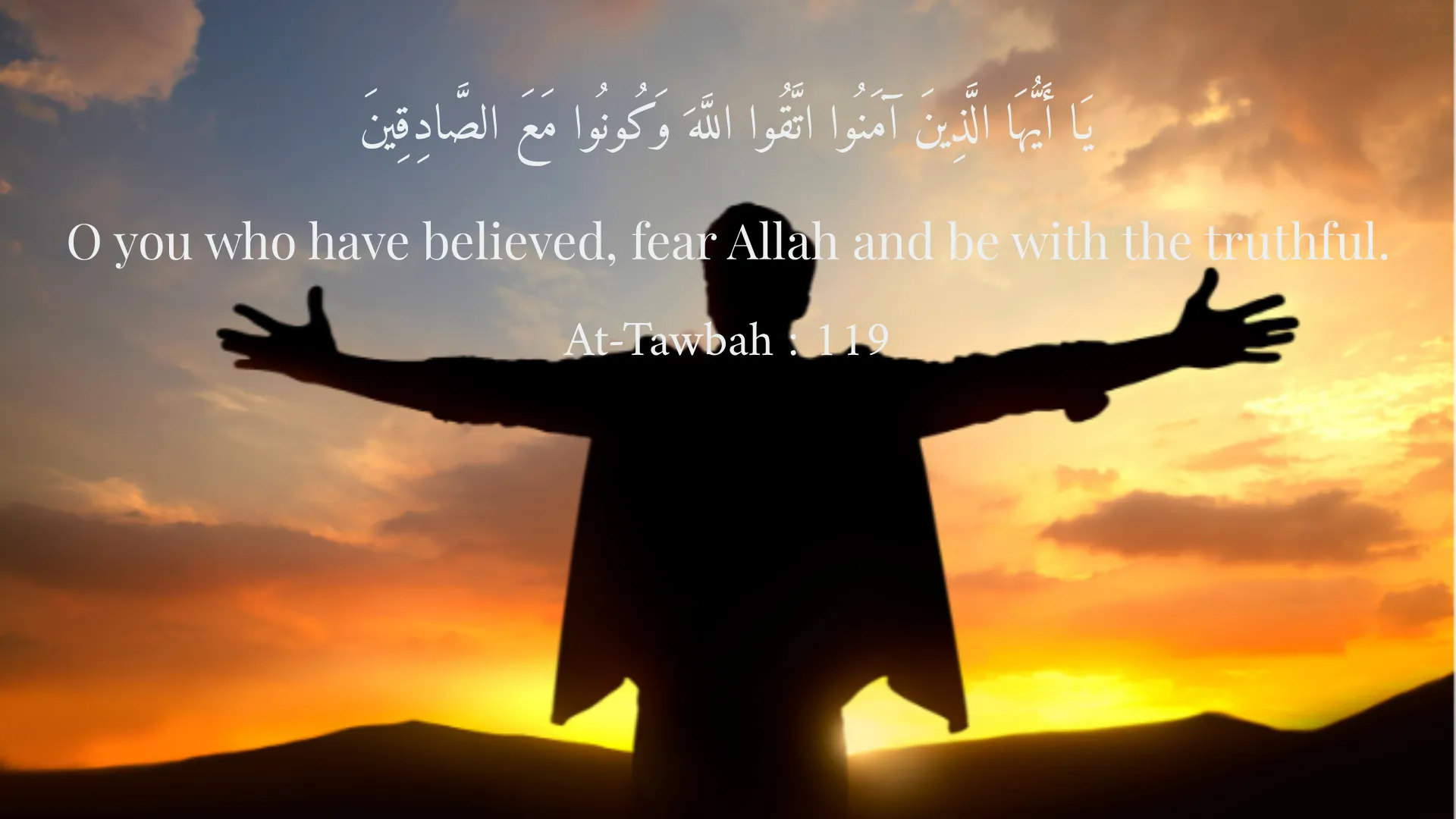
Facing bitter and difficult truths is one of humanity's greatest ethical and spiritual challenges. There might be moments when we are tempted to resort to lies, perhaps to maintain superficial calm, avoid confrontation, or even, in our misguided belief, to prevent harm to others. However, the Holy Quran and the teachings of Prophet Muhammad (PBUH) explicitly condemn lying and emphasize the unparalleled importance of honesty and truthfulness, even when the truth is harsh and difficult. These teachings tell us that truth, even in its bitterest form, has deep and stable roots that ultimately lead to betterment and salvation. In contrast, a lie, though it may initially seem sweet and comforting, is built on shaky foundations and ultimately leads to ruin and regret. The value of truthfulness in Islam is not merely an ethical recommendation; it is a fundamental principle of faith deeply intertwined with monotheism and reliance on God. Allah (SWT) states in the Quran: “O you who have believed, fear Allah and be with the truthful.” (At-Tawbah: 119). This verse clearly articulates the connection between piety (taqwa) and truthfulness, inviting believers to associate with the truthful, which in itself signifies the importance of this virtue. Lying is the root of many moral and social corruptions. It erodes trust, destroys human relationships, and takes away inner peace. A person who habitually lies eventually gets lost in the intricate webs of their own fabrications. The Holy Quran explicitly links lying to disbelief and hypocrisy, stating: “Only those invent falsehood who do not believe in the verses of Allah, and it is those who are the liars.” (An-Nahl: 105). This verse indicates that lying contradicts the very foundation of faith in Allah, and a person who possesses true faith refrains from lying. From an Islamic perspective, the solution to not lying when facing a bitter truth is to submit to Divine will and place one's trust in Allah. We must believe that Allah (SWT) is the best guide and supporter, and whatever He commands is for the good and welfare of humanity. When the truth is bitter, how should we convey it? This is where 'wisdom' and 'gentleness in speech' become crucial. Islam does not merely tell us to speak the truth, but it teaches us how to speak the truth. Allah says in the Quran: “And speak words of uprightness (or truth).” (Al-Ahzab: 70). He also states: “And tell My servants to say that which is best.” (Al-Isra: 53). These verses teach us that even when expressing difficult truths, we must use kind, calm, and measured words. Instead of hiding the truth, we can express it with kindness, empathy, and at the appropriate time. In some cases, we might achieve our goal by using less direct words or presenting facts in a way that minimizes their destructive impact, but never by resorting to outright falsehood. This is not about circumventing the truth, but about using the best methods to deliver it. For instance, if speaking the truth would cause extreme shame or irreparable harm to an individual, Islam might permit strategies such as 'Tawriyah' (using words that have a double meaning, where the listener understands one meaning but the speaker intended another, without actually lying). However, such instances are very limited and only permissible under specific circumstances to avert greater harm, never implying a general license for lying. The crucial point is that our goal must always be to uphold and propagate truth, not to conceal it. When a person adheres wholeheartedly to the principle of not lying, Allah opens paths for them and bestows numerous blessings upon their life. Truthfulness not only brings peace of conscience but also earns the trust of others and ultimately leads to worldly and otherworldly success. Lying, like a contagious disease, poisons human relationships and destroys the foundations of trust. But honesty, even if bitter, is the cornerstone of every healthy society and every stable relationship. By trusting in Allah and practicing wise methods of expressing truth, we can escape the trap of lying and experience a life based on honesty, which brings true peace and blessing. Let us remember that Allah is always with the truthful and does not withhold His help from them.
Related Verses
يَا أَيُّهَا الَّذِينَ آمَنُوا اتَّقُوا اللَّهَ وَكُونُوا مَعَ الصَّادِقِينَ
O you who have believed, fear Allah and be with the truthful.
At-Tawbah : 119
إِنَّمَا يَفْتَرِي الْكَذِبَ الَّذِينَ لَا يُؤْمِنُونَ بِآيَاتِ اللَّهِ ۖ وَأُولَٰئِكَ هُمُ الْكَاذِبُونَ
Only those invent falsehood who do not believe in the verses of Allah, and it is those who are the liars.
An-Nahl : 105
ذَٰلِكَ وَمَن يُعَظِّمْ حُرُمَاتِ اللَّهِ فَهُوَ خَيْرٌ لَّهُ عِندَ رَبِّهِ ۗ وَأُحِلَّتْ لَكُمُ الْأَنْعَامُ إِلَّا مَا يُتْلَىٰ عَلَيْكُمْ ۗ فَاجْتَنِبُوا الرِّجْسَ مِنَ الْأَوْثَانِ وَاجْتَنِبُوا قَوْلَ الزُّورِ
That is [the command]. And whoever honors the sacred rites of Allah – it is best for him in the sight of his Lord. And lawful for you are the grazing livestock, except what is recited to you. So avoid the uncleanliness of idols and avoid false statement [of testimony].
Al-Hajj : 30
Short Story
It is narrated that a king fell ill, and his physicians were unable to cure him. A wise scholar came to his bedside and, after examination, said: "O King, your medicine is bitter and the truth of your illness is difficult. If you wish to hear the truth, there is a path to recovery; otherwise, sweet lies will lead you to ruin." The king, who was a man of wisdom, said: "O wise one, acquaint me with the bitter truth, for my cure lies in it, not in false comfort." The wise man prescribed a bitter medicine, and the king patiently drank it. After a while, although the treatment was difficult, the king recovered and became grateful to the wise man. Saadi says that truth, though initially unpalatable, ultimately leads to salvation, and a lie, though it may seem pleasing, ends only in regret. (Adapted from Saadi's tales)