Quranic Answer
Fault-finding is a behavior that has permeated societies across cultures and epochs. As individuals, we often find it too tempting to scrutinize and point out the shortcomings of others while ignoring our own flaws. This tendency toward fault-finding is not merely a trivial matter but one that the Quran emphasizes has significant implications for our personal lives and our communities. In Surah Al-Hujurat, verse 12, Allah explicitly warns against this behavior, stating, "O you who have believed, avoid much [negative] assumption. Indeed, some assumption is sin. And do not spy or backbite each other. Would one of you like to eat the flesh of his brother while he is dead?" This powerful imagery serves to highlight the gravity of fault-finding and backbiting, portraying them as destructive acts that not only tarnish the character of others but can also ultimately lead to social disintegration and personal isolation. The Quran's perspective on fault-finding calls for introspection and personal growth. Instead of indulging in the flaws of others, we are encouraged to embark on a self-reflective journey, to recognize and rectify our own faults first. This transformative approach fosters a culture of humility and kindness. When we shift our focus inward, we dedicate our energy toward self-improvement rather than tearing others down. Such a mindset is paramount in developing healthy relationships, both personally and within the community. As the Quran often highlights, the essence of ethical living is interconnectedness. In Surah Al-Imran, verse 133, Allah states, "And hasten to forgiveness from your Lord and a garden as wide as the heavens and the earth, prepared for the righteous." This verse urges believers to seek forgiveness and to foster relations based on mercy and compassion instead of judgment and criticism. Forgiveness is a cornerstone of the Islamic faith and plays a pivotal role in nurturing social harmony. To understand the detrimental impact of fault-finding, we can analyze the dynamics of personal relationships. Fault-finding creates a toxic environment where trust and respect begin to erode. When we habitually point out the mistakes and shortcomings of others, it often leads to feelings of resentment and hostility. People become defensive; they withdraw or respond with their own criticisms. This cycle of negativity can poison friendships, familial bonds, and professional interactions. In extreme cases, it can even lead to the disintegration of relationships that once flourished in love and support. Furthermore, our propensity to engage in fault-finding can illuminate deeper psychological issues within ourselves. Often, the need to criticize others stems from our insecurities and fears. By projecting our disappointments onto others, we distract ourselves from addressing our personal challenges and emotional wounds. Engaging in this behavior allows us to momentarily feel superior while simultaneously breeding further negativity within ourselves. The Quran, through its guidance, implores us to break this cycle. By focusing on personal development, we not only improve our own lives but also contribute positively to the lives of those around us. Humility is one of the core values espoused by the Quran. When recognizing our own imperfections, we naturally cultivate compassion for the failings of others. Understanding that everyone is on their unique journey allows us to approach others with kindness instead of criticism. This alignment with the Quranic principles presents an opportunity to promote empathy and understanding, essential attributes in ensuring that our communities thrive. Social cohesion is often dependent on the presence of supportive relationships—all of which can be jeopardized through continual fault-finding and negativity. Moreover, cultivating a non-fault-finding approach not only transforms our relationships but it also nurtures our spiritual state. The act of judging others often diverts attention away from our own relationship with Allah. In an attempt to elevate ourselves, we forget that true worth lies in righteousness, humility, and the constant endeavor for self-betterment. The Quran repeatedly emphasizes these virtues, guiding us toward becoming better individuals who positively impact the world around us. Practical strategies for abandoning fault-finding include practicing mindfulness and self-awareness. By becoming conscious of the moments when we feel the urge to criticize, we can pause and reflect on our motives. Engaging in regular self-reflection and focusing on personal growth not only shifts our perspective but also improves our emotional well-being. Additionally, cultivating gratitude for our own lives can ease the disposition toward observing the faults in others, thereby nurturing a more compassionate outlook. In conclusion, the Quran offers profound insights into the detrimental effects of fault-finding on personal and social relationships. Such behavior engenders mistrust, hostility, and disunity while simultaneously fostering a culture of negativity that undermines the spirit of community. By adopting Quranic principles of introspection, humility, kindness, and forgiveness, we can not only enrich our relationships but also elevate our own personal growth. In striving for a fault-finding-free life, we align ourselves with the values of the Quran, paving the way for a more harmonious existence rooted in compassion and understanding. Ultimately, as we embrace this transformative approach, we cultivate an environment where relationships can flourish, paving the way towards a united, caring, and supportive community.
Related Verses
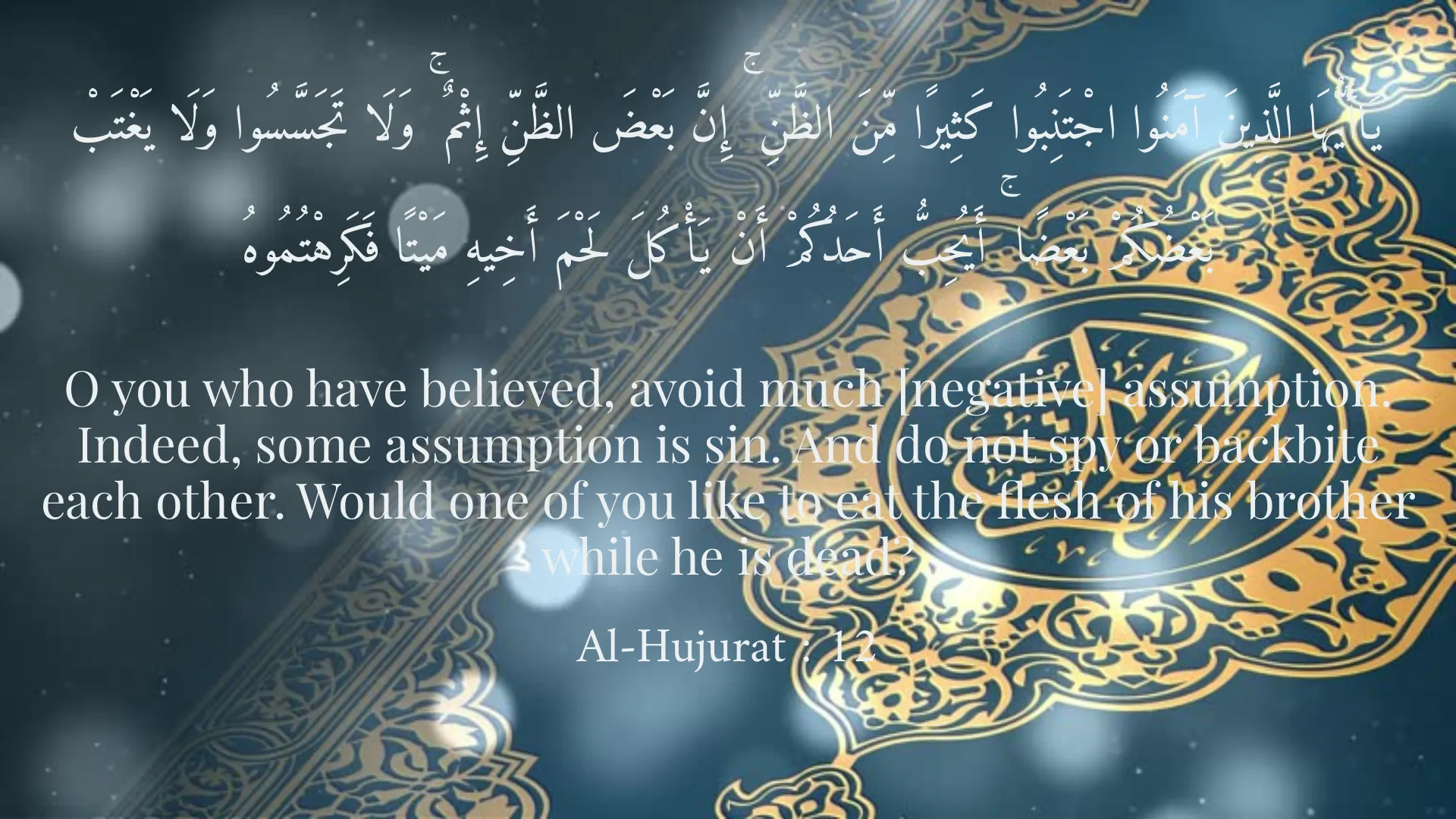
يَاأَيُّهَا الَّذِينَ آمَنُوا اجْتَنِبُوا كَثِيرًا مِّنَ الظَّنِّ ۚ إِنَّ بَعْضَ الظَّنِّ إِثْمٌ ۚ وَلَا تَجَسَّسُوا وَلَا يَغْتَبْ بَعْضُكُمْ بَعْضًا ۚ أَيُحِبُّ أَحَدُكُمْ أَنْ يَأْكُلَ لَحْمَ أَخِيهِ مَيْتًا فَكَرِهْتُمُوهُ
O you who have believed, avoid much [negative] assumption. Indeed, some assumption is sin. And do not spy or backbite each other. Would one of you like to eat the flesh of his brother while he is dead?
Al-Hujurat : 12
وَسَارِعُوا إِلَى مَغْفِرَةٍ مِّن رَّبِّكُمْ وَجَنَّةٍ عَرْضُهَا كَعَرْضِ السَّمَاءِ وَالْأَرْضِ أُعِدَّتْ لِلْمُتَّقِينَ
And hasten to forgiveness from your Lord and a garden as wide as the heavens and the earth, prepared for the righteous.
Al-Imran : 133
Short Story
Once upon a time, there was a young man named Amin who was keen on finding faults in others and sharing them with others. But one day, he asked one of his friends: 'Why do we need to focus so much on each other's flaws?' After that, Amin decided that from today on, he would only focus on the good deeds of others. With this thought, he added a new color and flavor to his life and found more friendships.