Quranic Answer
Hypocrisy in worship poses a significant threat to the spiritual well-being of an individual. In religious contexts, hypocrisy often manifests as the dissonance between one’s outward practices and inner beliefs. This discrepancy can be particularly dangerous as it not only undermines the authenticity of one’s worship but also distances the believer from the divine essence of their faith. The Holy Quran, being the fundamental text of Islam, addresses the issue of hypocrisy plainly, urging believers to reflect upon their intentions and sincerity in both acts of worship and charitable deeds. In Surah Al-Baqarah, the Quran states in verse 264: "O you who have believed, do not invalidate your charities with reminders or injury, like one who spends his wealth only to be seen by the people." This verse eloquently highlights the necessity of pure intention in performing good deeds. Charitable actions should stem from a desire to please Allah rather than seeking recognition from others. When one performs acts of kindness with an ulterior motive, the spiritual value of such acts diminishes significantly. Moreover, when the motivations behind charity or worship are tainted by the desire for public acknowledgment, it can lead to an internal spiritual crisis, wherein the individual becomes further entrenched in hypocrisy. The concept of intentionality is central to the Islamic understanding of worship. Allah emphasizes in Surah Al-Ma'idah, verse 54: "O you who have believed! Fear Allah and be with those who are true." Ensuring that one's actions—be it through charity, prayer, or any other form of worship—are untainted by the intention of public display is paramount. This call to sincerity and truth echoes throughout Islamic teachings and emphasizes a composer of surroundings and intentions. The verse urges believers to assess their company and to strive for integrity in their feelings and actions. To combat hypocrisy, a believer must engage in self-reflection, consistently evaluating their intentions. It is critical to question the motives behind one’s practices. Is the act of worship performed to attract attention, to fit into a social construct, or is it a pure act aimed solely at gaining Allah's pleasure? This introspective process forms the foundation of spiritual growth and authenticity in worship. Moreover, the philosophy of worship in Islam emphasizes the relationship between the individual and Allah. Worship should be an intimate dialogue, conducted in a manner where the individual seeks refuge and solace in the act itself, knowing it is solely for the divine. Thus, efforts to nurture this connection are essential for maintaining the purity of one’s intentions. When worship is approached with the aim of connecting with Allah, the chances for hypocrisy diminish significantly. Hypocrisy often thrives in environments where intentions are not scrutinized, and awareness of one’s inner self is absent. Therefore, practices that promote mindfulness and spiritual engagement can deter the seeds of hypocrisy from taking root. One format of worship that exemplifies sincerity is the act of prayer (Salah). Prayer, in its true form, is a direct link between the individual and their Creator, allowing for a space of reflection and vulnerability. During prayer, a believer is advised to maintain a state of humility and focus, ensuring that their thoughts are aligned with the notion of asking for forgiveness and guidance. Additionally, the rituals associated with prayer encourage a physical manifestation of submission, reinforcing the sincerity aspect that is needed to ward off any form of hypocrisy. Furthermore, the value of personal accountability cannot be underestimated in the effort to combat hypocrisy. Believers must strive to hold themselves responsible for their actions, ensuring that their outer expressions of faith align with their inner convictions. This form of self-discipline not only fosters one's spiritual health but also reinforces community integrity, as believers strive to support one another in authenticity and sincerity. It is also essential to note the role of community in combating hypocrisy. Being part of a supportive, faith-oriented community serves as a reminder for individuals to stay true to their intentions. Fellowship with like-minded individuals encourages sharing struggles, successes, and the realities of personal spiritual journeys. Engaging with others who prioritize sincerity in their worship helps to create an environment that is conducive to growth, reducing the likelihood of falling into hypocritical patterns. Islam also teaches that the journey toward sincerity is an ongoing process. There are moments when individuals may falter, and recognizing one's shortcomings is key to spiritual growth. The act of seeking forgiveness, both from Allah and from fellow believers, is a form of acknowledging human fallibility in striving towards sincerity. Such an attitude embodies humility, which is a vital characteristic in the spiritual landscape of Islam. In conclusion, combating hypocrisy in worship is a crucial endeavor for anyone wishing to maintain their spiritual health and authenticity. The Holy Quran provides direct guidance on this matter, encouraging believers to approach their acts with sincerity and pure intentions. By reflecting continuously on our motives, fostering meaningful relationships within our communities, and engaging in practices that remind us of our connection to Allah, we can diminish the chances of hypocrisy taking root. Worship should serve as a pathway to divine communion, isolating the individual from external distractions and superficial motivations. Ultimately, when our worship is sincere and rooted in love for Allah, we can appreciate the transformative power it holds for our spiritual lives.
Related Verses
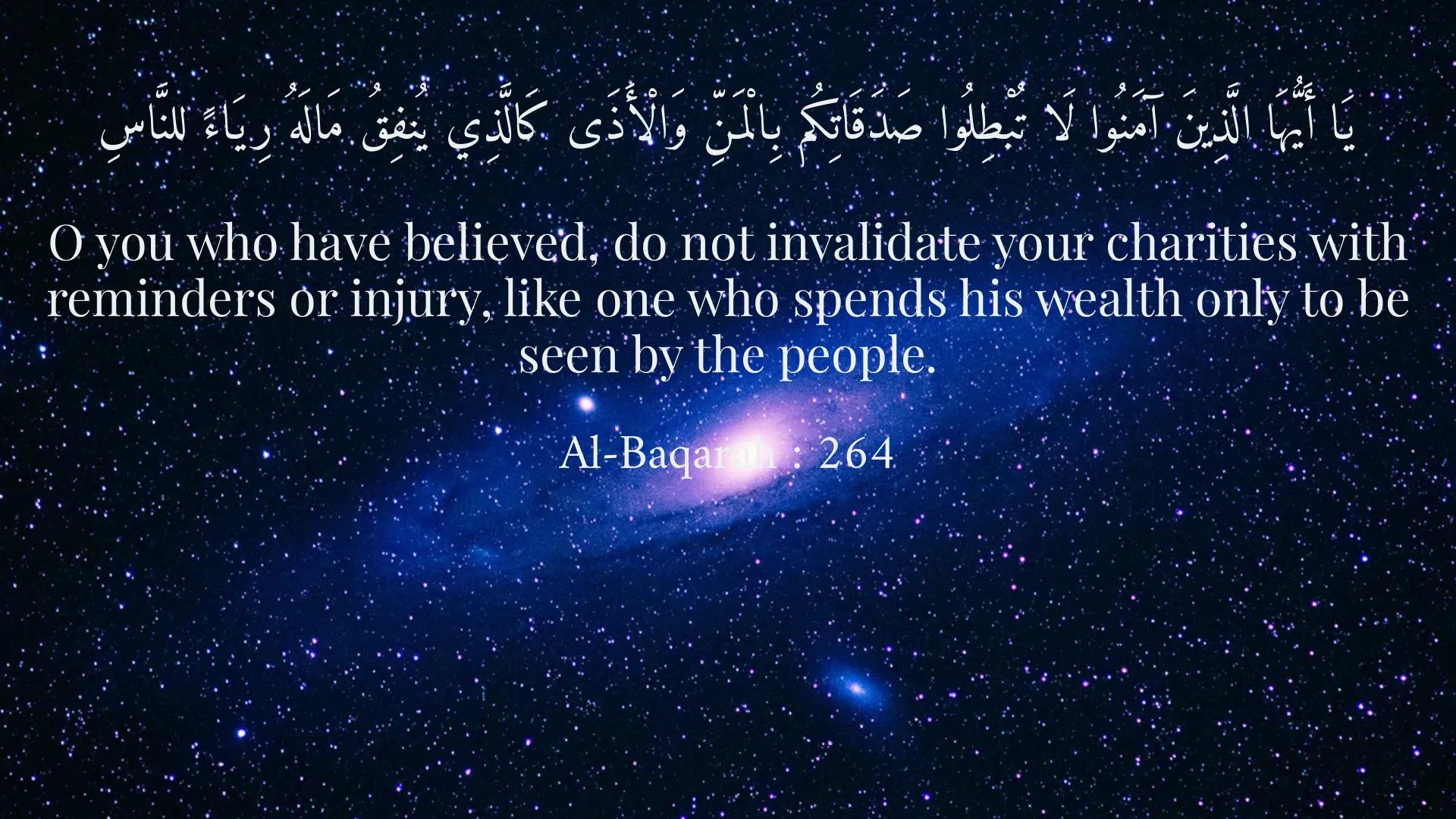
يَا أَيُّهَا الَّذِينَ آمَنُوا لَا تُبْطِلُوا صَدَقَاتِكُم بِالْمَنِّ وَالْأَذَى كَالَّذِي يُنفِقُ مَالَهُ رِيَاءً للنَّاسِ
O you who have believed, do not invalidate your charities with reminders or injury, like one who spends his wealth only to be seen by the people.
Al-Baqarah : 264
يَا أَيُّهَا الَّذِينَ آمَنُوا اتَّقُوا اللَّهَ وَكُونُوا مَعَ الصَّادِقِينَ
O you who have believed! Fear Allah and be with those who are true.
Al-Ma'idah : 54
Short Story
One day, one of my friends, named Hossein, talked to me and said, 'Sometimes I feel like when I pray, I imagine people in my mind, and it worries me.' I told him, 'This is a good sign that you're worried about hypocrisy. Try to focus on only Allah in each prayer and remember that He is aware of all your thoughts and intentions.' Over time, Hossein was able to find more peace by concentrating on sincere supplication for God's sake.