Quranic Answer
The Holy Quran emphasizes the paramount significance of human rights and the moral obligation to safeguard them. Rights, as defined in various interpretations, are entitlements that every individual possesses simply by being human. The Quran addresses these rights comprehensively, instructing individuals on how to interact with one another justly and respectfully. One of the principles that underline the Quranic discourse on rights is the idea of trust and integrity. In Surah An-Nisa, verse 58, Allah commands believers to be vigilant regarding the trusts bestowed upon them and to respect the rights of others. This verse serves not only as a reminder of the ethical responsibilities that come with being part of a community but also emphasizes that betrayal of trust can have dire consequences, both in this world and the hereafter. In many societies, respecting the rights of others is not merely a matter of social decorum; it is a legal obligation. The Quran accentuates this need for accountability. For instance, in Surah Al-Baqarah, verse 188, Allah explicitly instructs against the consumption of others' wealth through unfair means, cautioning against bribery and deceit in judicial proceedings. This instruction is essential, especially in a world where material wealth often overshadows moral integrity. Such verses inspire individuals to be fair and truthful, guiding them to act with morality and honesty in their everyday interactions. When fairness becomes the norm, it forms the backbone of a just and equitable society. Moreover, the significance of fulfilling promises and honoring agreements is a recurring theme in the Quran. In Surah Al-An'am, verse 152, it is articulated that one must fulfill their covenants and respect the rights bestowed upon others. This directive is crucial in fostering a culture of trust and accountability among community members. When individuals honor their promises, it nurtures healthy relationships, laying the groundwork for a supportive and harmonious society. The Quran, through these teachings, provides a framework for interaction, rooted in respect and trust. In the context of modern society, the Quran’s teachings provide enduring relevance. The challenges individuals face in the current socio-economic climate often include exploitation and injustice. The Quran serves as a guide, reminding us of our ethical responsibilities towards one another. To avoid infringing on the rights of others, one must engage in self-reflection, considering the repercussions of their actions and ensuring they act with diligence in their words and deeds. Such mindfulness elevates individual character and strengthens community bonds. Fostering friendships and mutual respect is foundational to ensuring the protection of rights. When individuals prioritize relationships built on trust, they create a supportive community where everyone feels valued. The Quran’s emphasis on community and collective responsibility encourages us to look out for one another, helping to safeguard the rights of those around us. By cultivating friendships, individuals become more aware of each other's rights and needs, allowing for a more compassionate world. Furthermore, the collective responsibility highlighted in the Quran is critical in combating social issues such as discrimination, inequality, and injustice. Recognizing the inherent dignity and worth of every individual transcends cultural and social boundaries. The teachings of the Quran push followers to advocate for those who cannot defend themselves, reflecting a commitment to justice. Encouraging community engagement and active participation in societal matters can help in confronting these issues effectively. The application of these Quranic principles in daily life requires commitment and vigilance. Continuous education on rights, both personal and communal, is vital in ensuring that these teachings are implemented. Community programs focusing on ethical education and moral behavior can play a significant role in raising awareness. Engaging in dialogues about social justice, equality, and ethical practices can significantly contribute to building a respectful society. In conclusion, the Holy Quran's teachings regarding the rights of others underscore the moral and ethical responsibilities imposed on each individual. The verses highlight the importance of trust, fairness, and mutual respect, which form the bedrock of healthy societal interactions. By adhering to these principles, individuals can foster a culture of kindness, understanding, and compassion. Upholding the rights of others is not merely a legal obligation but a profound moral endeavor that contributes to the overall well-being of society. Therefore, each member of the community should strive to fulfill their obligations towards others, ultimately creating a more just and equitable world. Actively promoting harmony and respect, inspired by the Quran, will indeed lead to a more enlightened and supportive community, wherein the rights of all individuals are recognized and protected.
Related Verses
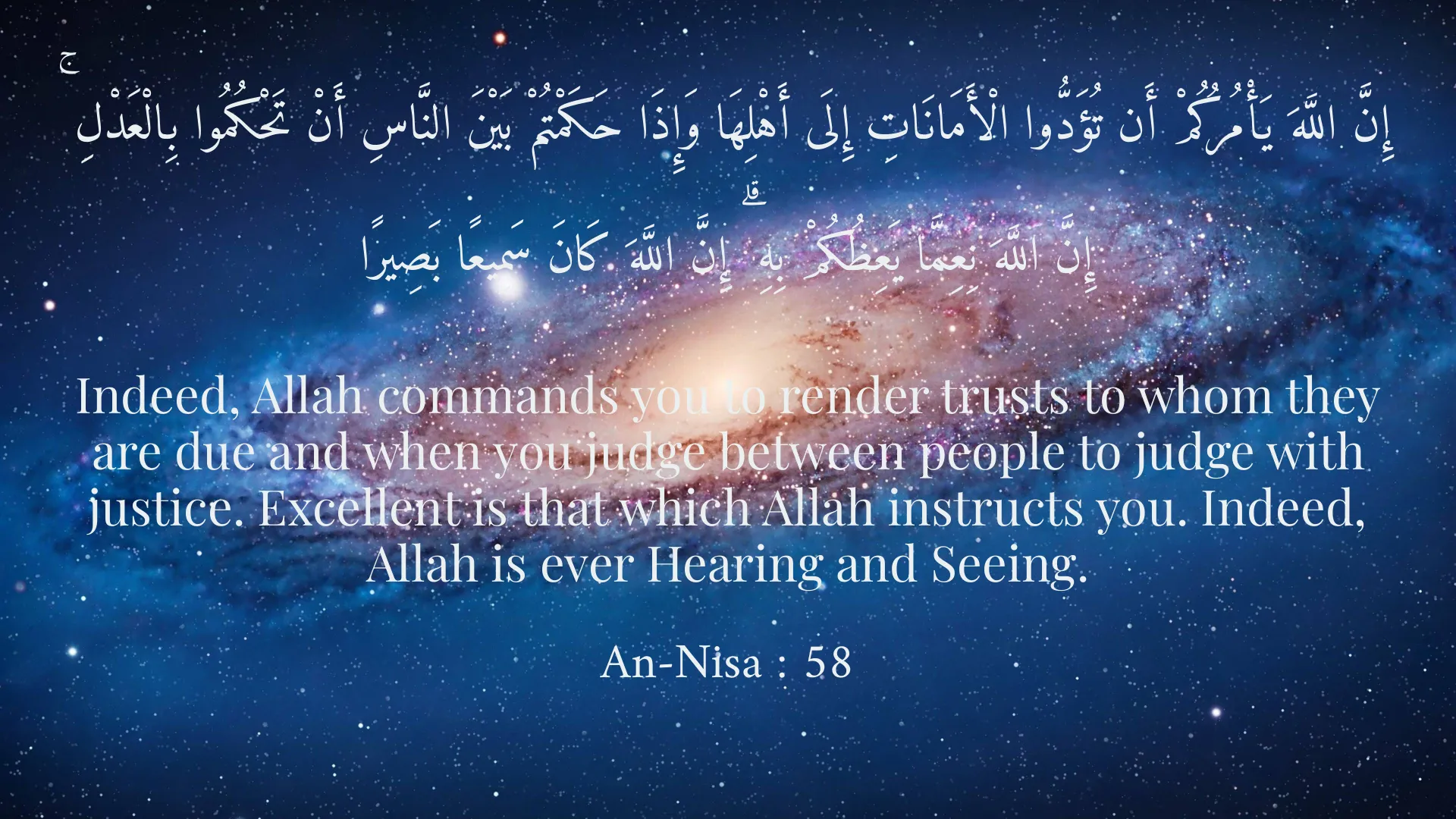
إِنَّ اللَّهَ يَأْمُرُكُمْ أَن تُؤَدُّوا الْأَمَانَاتِ إِلَى أَهْلِهَا وَإِذَا حَكَمْتُمْ بَيْنَ النَّاسِ أَنْ تَحْكُمُوا بِالْعَدْلِ ۚ إِنَّ اللَّهَ نِعِمَّا يَعِظُكُمْ بِهِ ۗ إِنَّ اللَّهَ كَانَ سَمِيعًا بَصِيرًا
Indeed, Allah commands you to render trusts to whom they are due and when you judge between people to judge with justice. Excellent is that which Allah instructs you. Indeed, Allah is ever Hearing and Seeing.
An-Nisa : 58
وَلَا تَأْكُلُوا أَمْوَالَكُمْ بَيْنَكُم بِالْبَاطِلِ وَلَا تَجْعَلُوا لِلسُّلطَانِ عَلَيْكُمْ سَبِيلًا إِلَّا أَلَّا تَفَرَّقُوا وَتَعَبَّدَتْكُمُ أمْوَالَكُمْ فِتْنَةً
And do not consume one another's wealth unjustly or send it [in bribery] to the rulers in order that [they might aid] you [to] consume a portion of the wealth of the people in sin, while you know [it is unlawful].
Al-Baqarah : 188
وَلَا تَقْرَبُوا مَالَ الْيَتِيمِ إِلَّا بِالَّتِي هِيَ أَحْسَنُ حَتَّى يَبْلُغَ أَشُدَّهُ ۚ وَأَوفُوا بِالْعَهْدِ إِنَّ الْعَهْدَ كَانَ مَسْؤُولًا
And do not approach the orphan's property except in a way that is best until he reaches maturity. And fulfill [every] commitment. Indeed, the commitment is ever [that about which one will be] questioned.
Al-An'am : 152
Short Story
Once upon a time, there was a man known for his integrity in handling trusts. He always respected the rights of others. One day, a friend borrowed a book from him and forgot to return it. The man said to his friend: 'Always remember that we must uphold the rights of others. If we do not protect each other's rights, our community will suffer.' His kindness and humanity led his friend to remember his trustworthiness and quickly return the book.