Quranic Answer
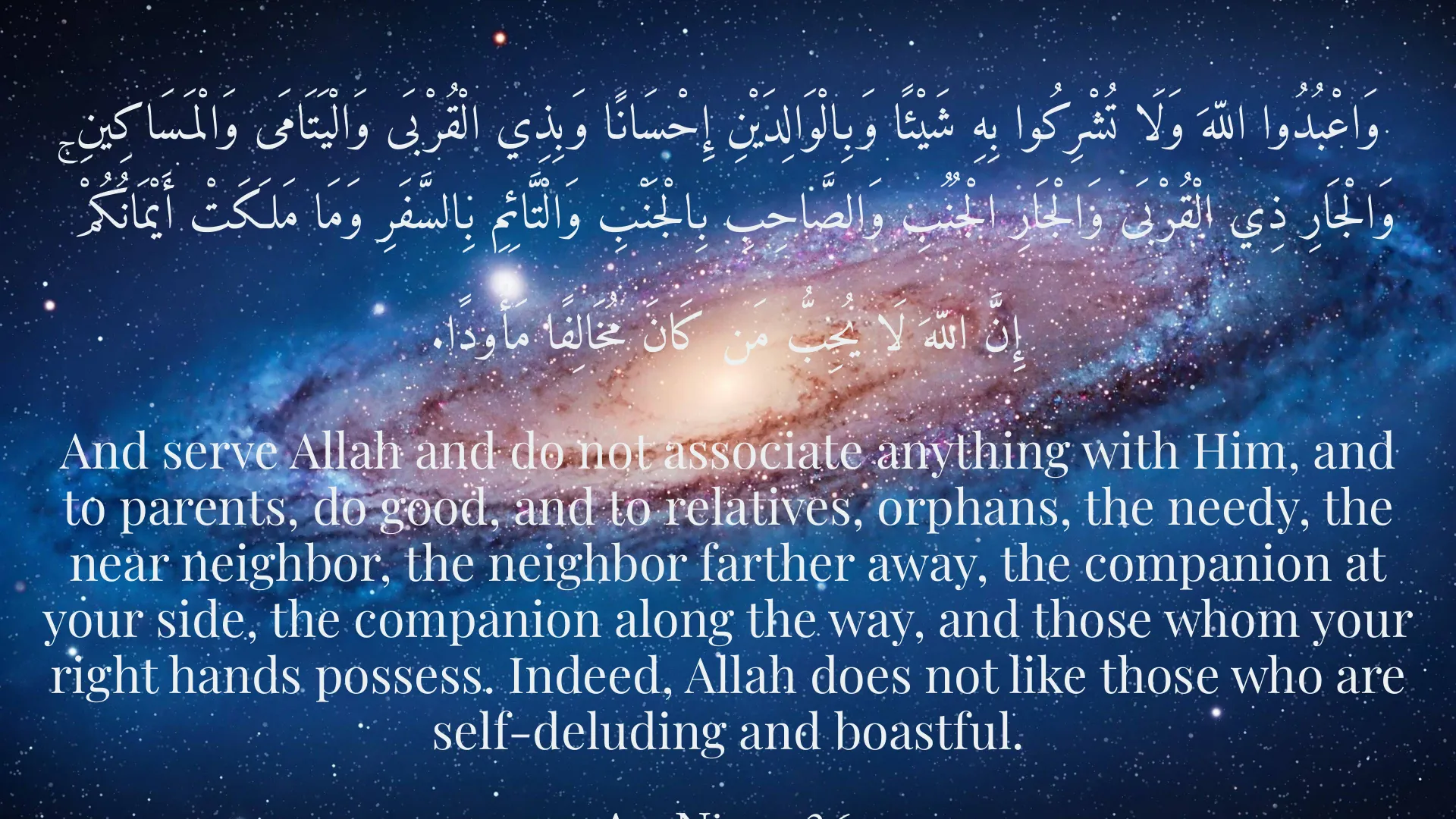
The Quran emphasizes the significance of kindness to neighbors, portraying it as both a moral obligation and a means of fostering community harmony. In Surah An-Nisa, verse 36, Allah commands the believers, saying: "And serve Allah and do not associate anything with Him, and to parents, do good, and to relatives, orphans, the needy, the near neighbor, the neighbor farther away, the companion at your side, the companion along the way, and those whom your right hands possess. Indeed, Allah does not like those who are self-deluding and boastful." This verse sheds light on the fundamental responsibilities of a Muslim, where being good to one’s neighbor assumes a monumental significance that extends beyond mere social niceties, anchoring itself in religious duty. At the heart of this divine exhortation lies the idea that kindness to neighbors is an essential element in nurturing community bonds. It acts as a catalyst for fostering strong social relationships, thereby enhancing not just individual lives but society as a whole. When individuals engage in acts of kindness, they exhibit a noble character, and these traits can ripple through the neighborhood, creating a more uplifting communal atmosphere. The Quran does not merely suggest kindness; it commands it, thus imbuing these actions with spiritual importance. Furthermore, in Surah Muhammad, verse 22, the Quran reinforces the value of kindness, stating that being kind to others, especially neighbors, is immensely pleasing to Allah. This emphasis on kindness reflects a core tenet of Islamic teachings: the interconnection of humanity and the importance of treating one another with respect and compassion. Neighborly kindness serves as a barometer of one’s faith and moral standing, encouraging Muslims to embody a spirit of goodwill in their daily interactions. Islam delineates the rights of neighbors with great clarity, underscoring that such rights encompass more than mere physical proximity. They involve emotional support and mutual respect, extending to acts of generosity and compassion. Muslims are reminded of the virtues of behavior that fosters tolerance and kindness, particularly towards neighbors, which ultimately paves the way for a more serene and cohesive social landscape. The teachings around neighborly kindness aim to elevate societal standards, moving individuals away from selfishness and towards collective welfare. To translate this ideology into practice, there are numerous simple yet profound acts one can engage in. Helping a neighbor with daily chores or supporting them in moments of need can significantly enhance community ties. The act of sharing food, whether through inviting a neighbor to share a meal or simply offering a dish during special occasions, symbolizes generosity and fosters communal bonds. Small gestures, such as greeting a neighbor with a warm smile or listening to their concerns, may seem minor but can profoundly impact one’s neighborhood dynamic. Moreover, these acts of kindness extend beyond just personal relationships; they contribute to the emotional and social fabric of the community. When kindness is observed and practiced, it sets off a chain reaction of goodwill. One kind act can inspire others to follow suit, creating a community culture focused on support and compassion. This emphasizes the Quranic perspective that good deeds strengthen the social bond and are paramount to a fulfilling and meaningful life in Islam. The significance of neighborly kindness is not only a religious doctrine but also a practical approach to building a healthier community. A society where kindness prevails will inevitably see reduced conflicts and greater cooperation among its members. This reflects the broader Islamic vision of Ummah (community), which encourages collective welfare and social responsibility. As Muslims cultivate habits of kindness toward their neighbors, they inherently contribute to the broader mission of establishing a harmonious society. In conclusion, the Quran's teachings on kindness to neighbors serve as pivotal guidelines for the conduct of Muslims in their daily lives. Through verses like Surah An-Nisa 36 and Surah Muhammad 22, the importance of neighborly kindness is crystallized as both a divine obligation and a practical necessity. By emphasizing respect, compassion, and generosity, Muslims are urged to cultivate a spirit of kindness that not only reflects personal virtue but also strengthens the community’s social framework. In embracing these teachings, individuals contribute towards nurturing a society that is rooted in mutual understanding and love, ultimately fulfilling not only their religious duties but also their roles as responsible members of the community. Thus, the practice of kindness to neighbors stands as a testament to the transformative power of good deeds in shaping lives and enhancing societal harmony.
Related Verses
وَاعْبُدُوا اللّهَ وَلَا تُشْرِكُوا بِهِ شَيْئًا وَبِالْوَالِدَيْنِ إِحْسَانًا وَبِذِي الْقُرْبَى وَالْيَتَامَى وَالْمَسَاكِينِ وَالْجَارِ ذِي الْقُرْبَى وَالْجَارِ الْجُنُبِ وَالصَّاحِبِ بِالْجَنْبِ وَالْتَّائِمِ بِالسَّفَرِ وَمَا مَلَكَتْ أَيْمَانُكُمْ ۚ إِنَّ اللّهَ لَا يُحِبُّ مَن كَانَ مُخَالِفًا مَأُودًا.
And serve Allah and do not associate anything with Him, and to parents, do good, and to relatives, orphans, the needy, the near neighbor, the neighbor farther away, the companion at your side, the companion along the way, and those whom your right hands possess. Indeed, Allah does not like those who are self-deluding and boastful.
An-Nisa : 36
فَأَفَلا يَتَوَدَّدُونَ إِلَى اللّهَ بِلَبِسٍ لَهُمْ أَحَبُّ مِنْهُمْ إِلَيْهِ، أَوْ مَا قَدَّمُوا مِنْ عَمَلٍ خَيْرٍ.
So will they not be moved toward Allah with a love that is more favorable to them than what they have done of good deeds?
Muhammad : 22
Short Story
On a warm summer day, Hassan decided to help his elderly neighbor. He asked if he needed anything. The neighbor smiled and said, 'My son, if you could bring me some fruits, I would be very grateful.' Hassan excitedly went to the market, bought the best fruits, and brought them to the neighbor. When the neighbor thanked Hassan, he felt how wonderful his good deed was, and it deepened his love for his neighbor.