Quranic Answer
Justice and fairness are foundational values that play a crucial role in guiding human interactions and societal functioning. Their importance is underscored in various philosophical and religious traditions around the world, but one of the most profound sources emphasizing these virtues is the Holy Quran, a text celebrated for its comprehensive guidance on personal conduct and social justice. In the Quran, God does not merely mention justice as a desirable quality; He elevates it to a divine command and integral feature of human morality. The significance of justice and fairness is not limited to personal ethics but extends to the broader social order, influencing how communities, governments, and institutions function. This article will explore the principles of justice and fairness as emphasized in the Quran, their implications for individuals and society, and their relevance in the contemporary world. To begin, it's essential to recognize the Quranic injunctions that embody the principles of justice and fairness. In Surah An-Nisa, verse 135, Allah commands believers to "be persistently standing firm in justice, witnesses in justice, even if it be against yourselves or parents and relatives." This verse serves as a poignant reminder that the pursuit of justice must transcend personal interests, familial ties, and societal pressures. The call to uphold fairness even when it contradicts our own desires or those of our loved ones highlights the moral imperative of justice in Islam. This principle requires individuals to approach judgments with integrity, ensuring that their decisions are grounded in objective truth rather than subjective bias. Moreover, Surah Al-Ma'idah, verse 8 reinforces this commitment to justice by instructing believers to "be persistently standing firm in justice, witnesses for Allah, even if it be against yourselves." This verse emphasizes the idea that justice is not only a human responsibility but also a divine duty. Witnessing for justice, according to this instruction, involves being accountable not just to society but also to God, who calls upon believers to act with fairness and equity at all times. This transcendent perspective on justice significantly elevates its moral weight and reinforces the belief that every act of fairness is a reflection of one's faith. The Quranic conception of justice extends beyond mere legalistic frameworks; it encompasses a holistic understanding of equity in all aspects of life. Fairness in speech and action, as mentioned in the verses, implies that a just person will strive to embody these values in their daily conduct, whether in professional settings, community interactions, or family relations. This consistency is essential because it not only influences personal integrity but also shapes the moral fabric of the community and society at large. In today's tumultuous world, where individuals frequently face various pressures—be it economic, social, or political—adhering to the principles of justice and fairness becomes even more critical. The challenges may tempt individuals to compromise their integrity for personal gain or to avoid conflict; however, the Quran encourages unwavering commitment to justice, regardless of external circumstances. Such steadfastness is a testament to the strength of one’s faith and moral conviction. Justice and fairness also play a pivotal role in maintaining social cohesion and harmony. When individuals and institutions uphold these values, trust is fostered within the community, leading to stronger relationships and a greater sense of security among its members. Conversely, when injustice prevails, social fabric unravels, leading to conflict, resentment, and division. The Quran recognizes this dynamic and advocates for a just society where everyone’s rights are respected and upheld. Believers are urged not only to seek justice for themselves but also to advocate for the rights of others, thereby promoting a culture of fairness that extends beyond personal interactions. It is also pertinent to consider the role of justice in governance and law. The Quran emphasizes the duty of rulers and leaders to implement justice within their jurisdictions. The idea is that a just governance system is a key pillar in promoting social equity and fairness. Leaders are called upon to be role models in justice, reflecting the divine principles in their decision-making processes. In Islam, effective leadership is synonymous with moral responsibility, and injustices perpetrated by those in power are met with strict accountability in both this world and the hereafter. Furthermore, the concept of justice is intricately tied to the assurance of equal rights and opportunities for all individuals, regardless of race, ethnicity, gender, or socioeconomic status. The Quranic directives compel believers to actively work toward establishing systems that promote equity and resist any form of discrimination or oppression. In this light, the pursuit of justice is not merely a passive endeavor but a dynamic and proactive one. In conclusion, justice and fairness are not just principles enshrined in the Holy Quran; they represent the cornerstone of human morality and social harmony. The teachings of the Quran compel believers to embody these values in their daily lives, highlighting their profound importance in personal conduct and communal living. Upholding justice, even in the face of adversity or personal sacrifice, reflects a commitment to faith and integrity, ultimately transforming individuals into true believers. As we navigate the complexities of the modern world, the Quran's call for justice and fairness remains a crucial guide, reminding us of our ethical responsibilities toward ourselves, each other, and the society we inhabit. In embracing justice and fairness, we step closer to fulfilling not only our religious obligations but also our shared humanity.
Related Verses
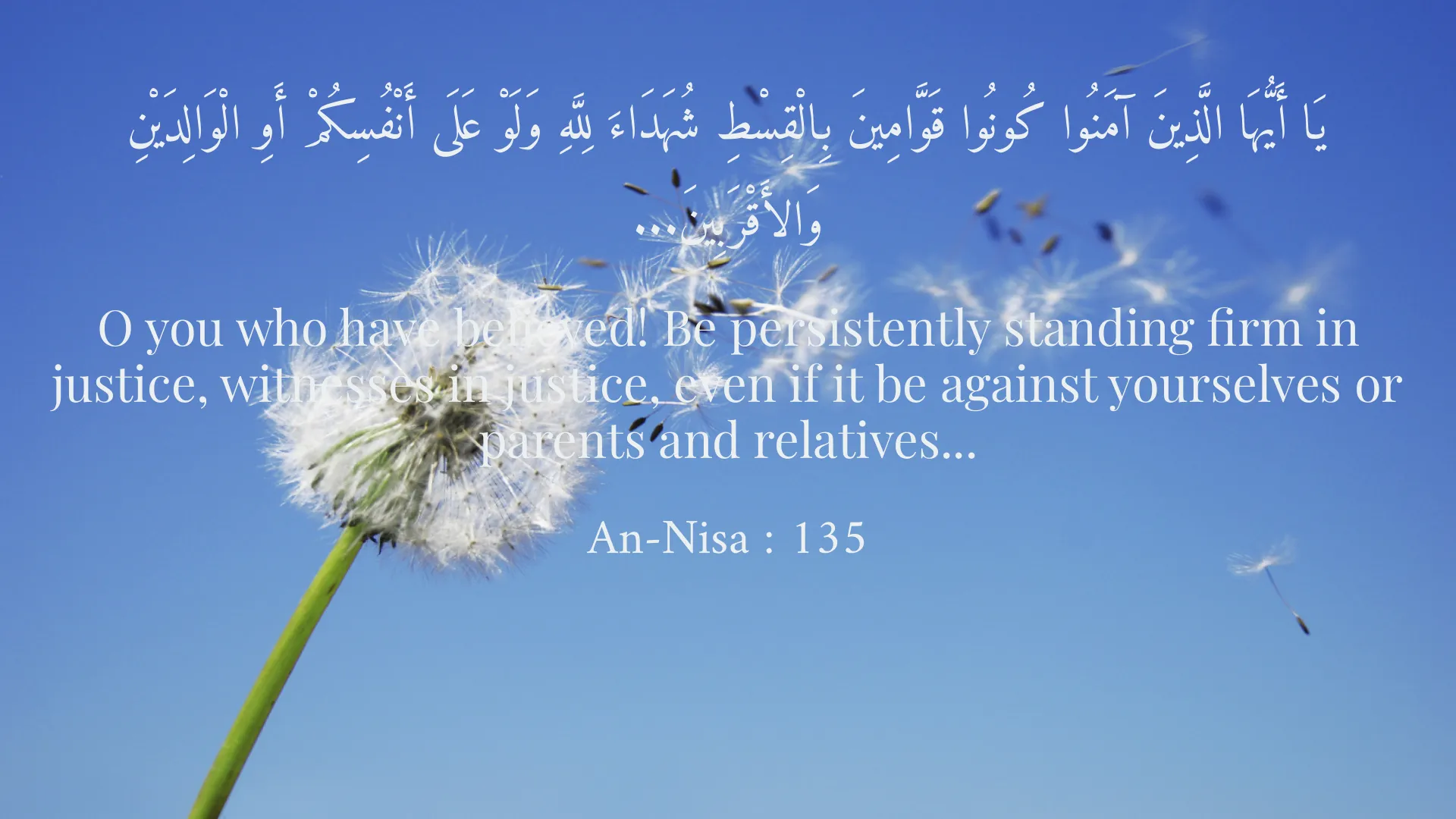
يَا أَيُّهَا الَّذِينَ آمَنُوا كُونُوا قَوَّامِينَ بِالْقِسْطِ شُهَدَاءَ لِلَّهِ وَلَوْ عَلَى أَنْفُسِكُمْ أَوِ الْوَالِدَيْنِ وَالأَقْرَبِينَ...
O you who have believed! Be persistently standing firm in justice, witnesses in justice, even if it be against yourselves or parents and relatives...
An-Nisa : 135
يَا أَيُّهَا الَّذِينَ آمَنُوا كُونُوا قَوَّامِينَ لِلَّهِ شُهَدَاءَ بِالْقِسْطِ...
O you who have believed! Be persistently standing firm in justice, witnesses for Allah...
Al-Ma'idah : 8
Short Story
One day, a teenager named Ali pondered why justice had seemingly faded from his community. He decided to refer to the Quran and study the verses concerning fairness. Ali said to his friends: 'Let’s practice fairness before we judge others and strive to give others their due rights.' Gradually, he noticed that not only was he changing, but his friends were also influenced, and together they achieved a greater sense of justice.