Quranic Answer
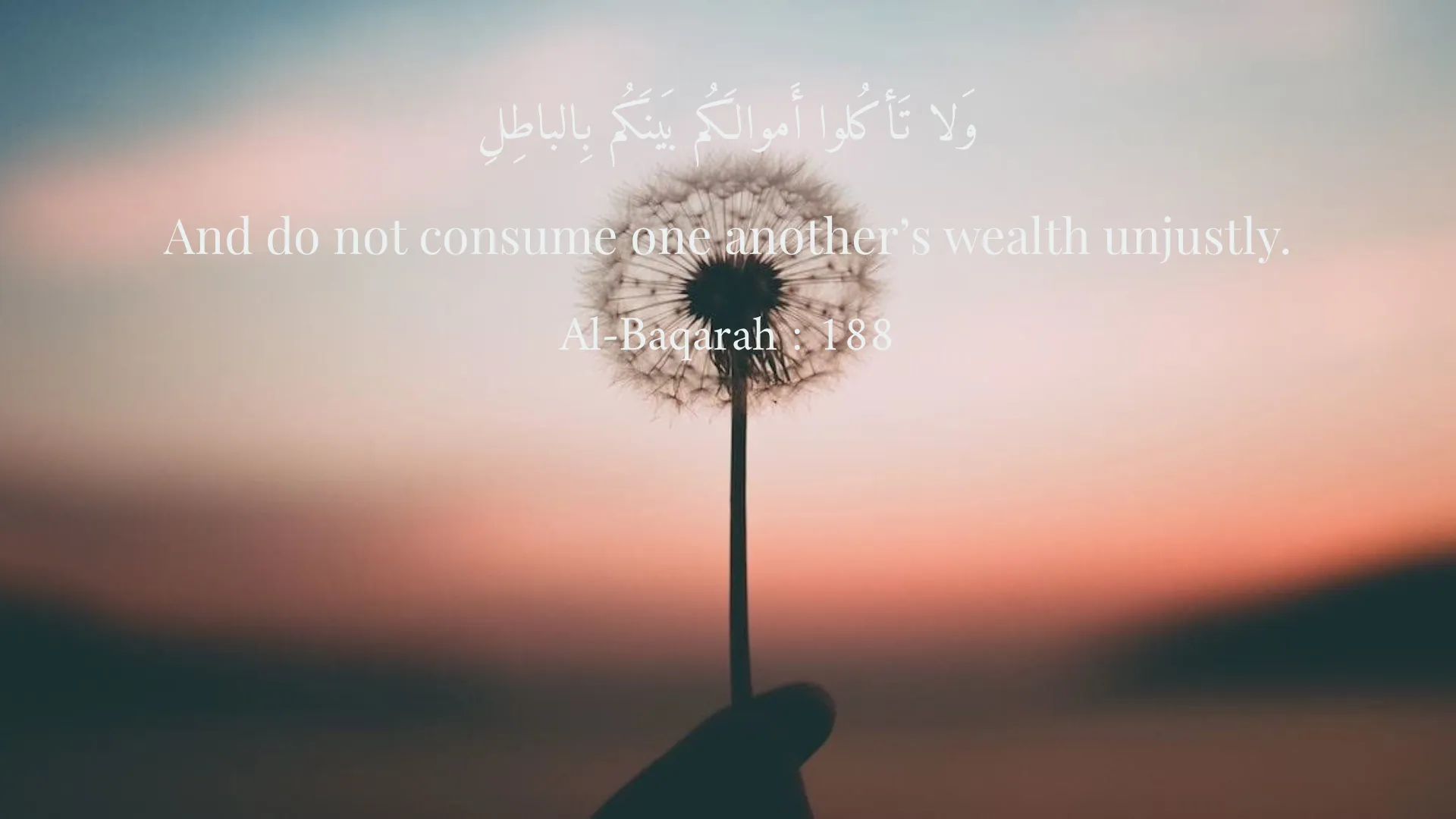
In the contemporary world, the topic of wealth and its ethical implications has become increasingly significant, especially in light of the teachings found in religious texts. Among these texts, the Holy Quran provides profound insights on the concept of prohibited wealth and the ways in which believers should navigate their financial dealings. With a focus on the verses from Surah Al-Baqarah, we can explore the nuances of prohibited wealth in Islam and the imperative actions that believers should undertake to ensure their wealth is earned and used rightly. The Quran explicitly addresses the issue of unjust wealth consumption in Surah Al-Baqarah, verse 188: 'And do not consume one another’s wealth unjustly'. This verse underscores an essential principle in Islamic finance: the importance of respecting other people's rights and property. The term 'unjustly' implies that there are legitimate and illegitimate ways of earning and using wealth. Engaging in deceitful practices that exploit others is strictly forbidden in Islam. For instance, practices such as theft, fraud, and embezzlement are clear violations of this divine command, and believers must remain vigilant against such behaviors. Additionally, Allah emphasizes the prohibition of usury, or 'riba', in verse 279 of Surah Al-Baqarah, stating that anyone who recognizes the prohibition must desist from it. Riba is defined as the practice of charging excessive interest on loans, creating a system that often oppresses the debtor. The Quranic injunction against usury stresses the need for fairness and balance in financial transactions. Not only does it protect the rights of individuals, but it also promotes a just economic system where wealth circulation occurs without exploitation. To effectively address the challenges associated with prohibited wealth, believers must take several proactive steps. The first step is to identify the sources of illicit income. Knowledge is power, and by understanding what constitutes forbidden wealth, individuals can make more informed decisions in their financial dealings. There are various sources of income deemed unlawful according to Islamic jurisprudence, including those derived from gambling, alcohol sales, and other activities that contradict Islamic principles. Believers are encouraged to educate themselves about these categories of prohibited earnings and develop a habit of avoiding them altogether. They should strive to engage solely in transactions that align with their ethical and spiritual values. The second strategy to counter forbidden wealth involves placing trust in Allah and ensuring reliance on lawful provisions. In Surah At-Talaq, verses 2 and 3, Allah assures believers that those who act out of piety will not only find relief but will also be granted lawful sustenance. This emphasizes a crucial belief in Islam: having faith that Allah will provide for all necessary provisions if one engages in righteous actions and avoids prohibited practices. Trusting in Allah’s wisdom allows individuals to seek alternative ways of earning a living that do not compromise their values or spiritual commitments. This trust in Allah extends to financial matters as well. Instead of resorting to unethical avenues for quick financial gain, believers are encouraged to continue working hard and seeking opportunities that are halal, or permissible. Believers often find that having a sincere intention to earn through lawful means can lead to unexpected rewards, both spiritually and materially. Moreover, seeking to purify one's soul and heart by engaging in acts of charity and good deeds is another essential element in distancing oneself from prohibited wealth. The Quran repeatedly emphasizes that giving in Allah's path not only detracts from one's accumulated wealth but also attracts divine blessings. Through acts of charity, individuals can purify their earnings, reaffirm their commitment to ethical practices, and nurture a sense of community and interconnectedness with others. This act of giving can manifest in numerous forms, including financial assistance to those in need, volunteering time and energy to help community organizations, or simply sharing one’s knowledge and skills with others. The importance of maintaining a charitable spirit in Islam cannot be overstated. Charity, known as 'Sadaqah', plays a vital role in rectifying the economic inequalities prevalent in society. By actively engaging in charitable acts, individuals demonstrate their dedication to ethical living, ultimately steering themselves away from the clutches of forbidden wealth. In conclusion, the Holy Quran presents a clear framework for understanding and dealing with prohibited wealth. The verses from Surah Al-Baqarah emphasize the importance of abstaining from consuming wealth unjustly and avoiding usury. For believers, the path to a secure and fulfilling financial life is paved with the identification of illicit income sources, placing trust in Allah's provisions, and dedicating oneself to acts of charity. By adhering to these teachings, believers not only safeguard their spiritual integrity but also contribute positively to the broader community. As individuals strive to earn and manage their wealth ethically, they can ultimately pave the way for a more just and equitable society, aligning their financial pursuits with their faith and values.
Related Verses
وَلا تَأكُلوا أَموالَكُم بَينَكُم بِالباطِلِ
And do not consume one another’s wealth unjustly.
Al-Baqarah : 188
فَمَنْ جاءَهُ مَوْعِظَةٌ مِّن رَّبِّهِ فَانْتَهَى فَلَهُ مَا سَلَفَ وَأَمْرُهُ إِلَى اللَّهِ
So whoever receives an admonition from his Lord and desists may have what is past, and his affair rests with Allah.
Al-Baqarah : 279
وَمَن يَتَّقِ اللَّهَ يَجْعَل لَّهُ مَخْرَجًا
And whoever fears Allah - He will make for him a way out.
At-Talaq : 2
Short Story
One day, a man named Mahdi was wandering in the market when he came across a vendor selling suspicious food items. He started contemplating whether this wealth was lawful or unlawful. He recalled the verses of the Quran and decided to refrain from buying it to maintain the purity of his faith. This decision led to a sense of peace in his soul and brought more blessings into his life.