Quranic Answer
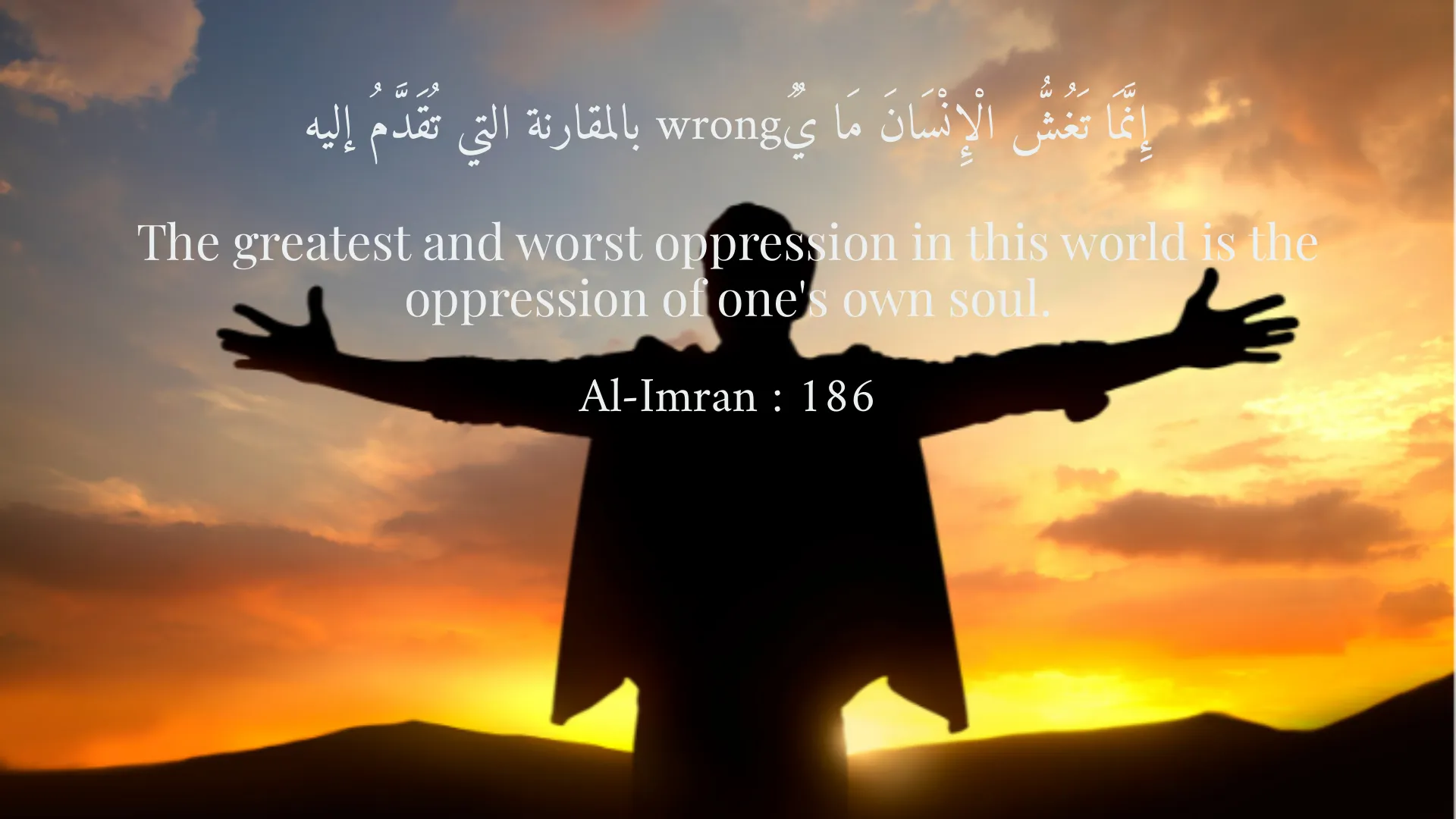
In the Holy Quran, the concept of justice and dealing with oppression is a recurring theme intricately woven into the fabric of its verses. The Quran emphasizes the importance of morality, justice, and the necessity to confront oppression, both externally and internally. Understanding and applying these principles can significantly affect societal dynamics, promote fairness, and ultimately lead to a more harmonious existence. \n\nOne of the most poignant verses that encapsulates this message is found in Surah Al-Imran, verse 186. This verse states: ‘The greatest and worst oppression in this world is the oppression of one's own soul.’ Here, the Quran introduces a fundamental principle – that self-oppression is the root of all injustice. When individuals fail to uphold their own morals and values, they are not only harming themselves but also perpetuating a cycle of injustice that can affect others around them. This introspective aspect of justice urges us to reflect on our actions, ensuring that we are rooted in integrity and virtue before we extend our judgments to the actions of others. \n\nFurthermore, Surah An-Nisa, verse 135 commands believers to stand firm in justice, even if it contradicts their personal interests. The verse declares: ‘O you who have believed, be persistently standing firm in justice, witnesses in testimony, whether it be against yourselves or parents and relatives, whether one is rich or poor…’ This profound instruction highlights that justice must remain impartial and unwavering, prioritizing moral duty over personal affiliations. This can be particularly challenging but signifies a higher ethical standard where truth and righteousness take precedence, even in situations that could lead to familial or social discord. \n\nJustice, as prescribed by the Quran, also flows into the responsibility of individuals within the community. The theme of collective accountability emerges strongly, prompting each person to engage actively in establishing justice. The call to action does not merely end with abstaining from oppression but extends to rectifying injustices where possible. This can mean speaking out against unfair practices, assisting those marginalized by systemic inequalities, or participating in initiatives that foster equity and support. \n\nIn Surah Al-Furqan, verse 67, patience and care are encouraged in facing the injustices of others, suggesting a measured response to wrongdoing. Here, believers are led to understand that while confronting injustice is vital, the approach must be characterized by patience, wisdom, and compassion. Combating oppression with additional aggression can lead to a cycle of violence and retaliation, which diminishes the very essence of justice. Instead, the Quran advocates for a temperament that embodies calmness and careful deliberation, where justice is sought through peacemaking and constructiveness. \n\nThe moral teachings of the Quran on justice not only characterize interpersonal relationships but also reflect upon the broader societal constructs within which we live. Justice cannot thrive where individuals act solely in pursuit of their self-interests; hence, a collective shift in consciousness is required. By fostering an understanding of justice rooted in Islamic principles, communities can work together to create societal structures that are more equitable and just for all individuals. \n\nIn expanding upon these themes, it is essential to consider the application of these teachings in everyday life. For believers, this implies an ongoing commitment to moral uprightness, ensuring that their actions reflect the values they hold dear. Regular self-reflection, accountability, and willingness to engage in dialogues surrounding fairness can empower individuals to challenge unjust systems. \n\nMoreover, education plays a vital role in nurturing an awareness of justice that aligns with the Quranic perspective. Informing communities about their rights, inspiring them to advocate for fairness, and equipping them with the tools to articulate their needs can lead to proactive movements against oppression. Knowledge is indeed power, and in the context of annihilating injustice, it serves as a driving force for change. \n\nUltimately, confronting injustice requires patience, trust in God, and fairness in our behaviors. It is essential to recognize that change often necessitates time and effort, and communities that inspire respect and understanding can cultivate environments where justice flourishes. By practicing diligence and kindness in our interactions while standing firm against wrongdoing, we can uphold the standards of justice that not only reflect individual principles but also resonate with the collective ethos outlined in the Quran. \n\nIn conclusion, the Quran presents a compelling framework for addressing injustice, encouraging introspection, unwavering commitment to justice, patience, and active engagement. It beckons us to recognize the gravity of self-oppression, champion fairness even at personal costs, and take a collective stand against societal injustices. In embracing these teachings, individuals and communities can contribute to building a more just society, fostering a legacy of compassion and equity for generations to come. The struggle against injustice is inextricably linked to our spiritual journey, highlighting that true justice stems from a place of moral integrity and divine guidance.
Related Verses
إِنَّمَا تَغُشُّ الْإِنْسَانَ مَا يُwrongُ بالمقارنة التي تُقَدَّمُ إليه
The greatest and worst oppression in this world is the oppression of one's own soul.
Al-Imran : 186
يَا أَيُّهَا الَّذِينَ آمَنُوا كُونُوا قَوَّامِين بِالْقِسْطِ شُهَدَاءَ لِلَّهِ وَلَوْ عَلَى أَنفُسِكُمْ أَوِ الْوَالِدَيْنِ أَوِ الأَقْرَبِينَ...
O you who have believed, be persistently standing firm in justice, witnesses in testimony, even if it be against yourselves.
An-Nisa : 135
وَالَّذِينَ إِذَا أَنفَقُوا لَمْ يُسْرِفُوا وَلَمْ يَقْتُرُوا وَكَانَ بَيْنَ ذَٰلِكَ قَوَامًا
And if you are patient and endure in the face of injustice against others, you will be victorious.
Al-Furqan : 67
Short Story
Once upon a time, a man faced the injustices of those around him. He was very upset and didn't know how to cope with this situation. He decided to turn to the Quran and study its verses. After a while, he learned that patience and also selflessness were needed to overcome these injustices. This helped him to face his problems with greater calmness and remain committed to justice in his life.