Quranic Answer
Forgiveness is one of the essential human qualities, and it holds profound significance in various cultures, religions, and philosophies around the world. It is often described as a virtue that not only brings peace to the one who forgives but also lays the foundation for healthier relationships and a more compassionate society. Among the many texts that reflect on this important theme, the Quran addresses forgiveness in a deeply insightful manner, illustrating its importance in the life of a believer and the pathway it creates towards spiritual improvement. By examining the nuances of forgiveness both from a human perspective and for the sake of a deeper understanding of divine teachings, one can appreciate the transformative power of this essential quality. When an individual experiences pain and suffering, the act of forgiving can serve as a meaningful way to relieve oneself from the burdens of emotional pain and psychological harm. Holding on to anger and resentment ultimately weighs heavily on the human spirit, creating a cycle of negativity that may perpetuate feelings of sadness and heartbreak. In Surah Al-Imran, verse 134, Allah articulates the merit of those who practice forgiveness while moderating their anger, stating, "And those who spend [in charity] in prosperity and in hardship and who restrain anger and who pardon the people; and Allah loves the doers of good." This verse reveals the intricate link between forgiving, controlling one's emotions, and engaging in good deeds, suggesting that such actions generate positive outcomes both in this life and the hereafter. When believers choose to forgive, they not only liberate themselves from their own pain but also elevate their spiritual standing, cultivating a deeper love and connection with their Creator. To truly approach forgiveness requires a level of inherent understanding about the complexities of human relations. The experience of being hurt can often evoke a strong reaction, leading to emotional turmoil that can hinder one's ability to forgive. Despite this natural response, the Quran places a premium on forgiving others. In Surah An-Nur, verse 22, Allah reminds us, "And let them pardon and overlook. Would you not like that Allah should forgive you? And Allah is Forgiving and Merciful." This verse serves as a compelling reminder that forgiveness is not merely an act of kindness; it is a reflection of a divine attribute. The call to forgive encourages believers to rise above their discomfort and anger while fostering a sense of hope and understanding in relationships. Importantly, this does not mean that one should condone harmful behavior or ignore injustices. Rather, it speaks to the act of releasing the emotional ties that can anchor us to our pain. Acknowledging the reality of hurt while still choosing to forgive enables individuals to navigate their emotions with grace and resilience. It allows one to reclaim their power from the situation and move toward healing and self-discovery. Additionally, forgiveness paves the way towards redemption and spiritual peace, aligning closely with the notions of mercy and grace contained within the Quran. When individuals practice forgiveness, they mirror the compassion that Allah extends to humanity. The realization that one is also in need of forgiveness serves to foster humility and humanity within relationships. It is through the lens of recognizing our common struggles and imperfections that true compassion can emerge. Moreover, the psychological benefits of forgiveness cannot be overstated. Studies indicate that individuals who practice forgiveness tend to experience lower levels of anxiety, depression, and stress. This in turn leads to improved physical health, as chronic stress linked to holding grudges can lead to harmful physical repercussions such as increased blood pressure and weakened immune responses. By actively choosing forgiveness, individuals are empowered to take charge of their mental and emotional states, contributing to overall well-being. Furthermore, forgiveness contributes to the building of a more harmonious community. When individuals commit to treating each other with compassion and kindness, they contribute to the development of stronger bonds and a sense of belonging among community members. In this way, forgiveness can act as a catalyst for social harmony, bridging gaps created by misunderstanding or conflict. As one person forgives, it can initiate a ripple effect, encouraging others in the community to adopt similar attitudes and behaviors towards one another. The profound teachings of forgiveness within the Quran are not limited to the confines of interpersonal relationships. They extend to how believers perceive their relationship with Allah. The practice of forgiving others fosters a stronger connection with the divine, as believers are reminded consistently of the mercy and forgiveness granted to them. Knowing that Allah is "Forgiving and Merciful" evokes a sense of gratitude and encourages a lifestyle that reflects such qualities. Ultimately, the motivation to act with compassion steers individuals toward a life illuminated by faith, hope, and love. In closing, forgiveness is more than mere words; it is an action steeped in wisdom, understanding, and the divine principle of mercy. It carries the power to heal and transform both the one who forgives and the recipient of such compassion. As individuals navigate the complexities of their relationships, the call to forgive resonates powerfully in the context of the Quran's teachings. Embracing forgiveness not only frees individuals from the shackles of their own pain but positions them as beacons of hope and healing for others. In a world that often wrestles with anger, resentment, and division, the act of embracing forgiveness stands as a testament to the beauty and strength of the human spirit.
Related Verses
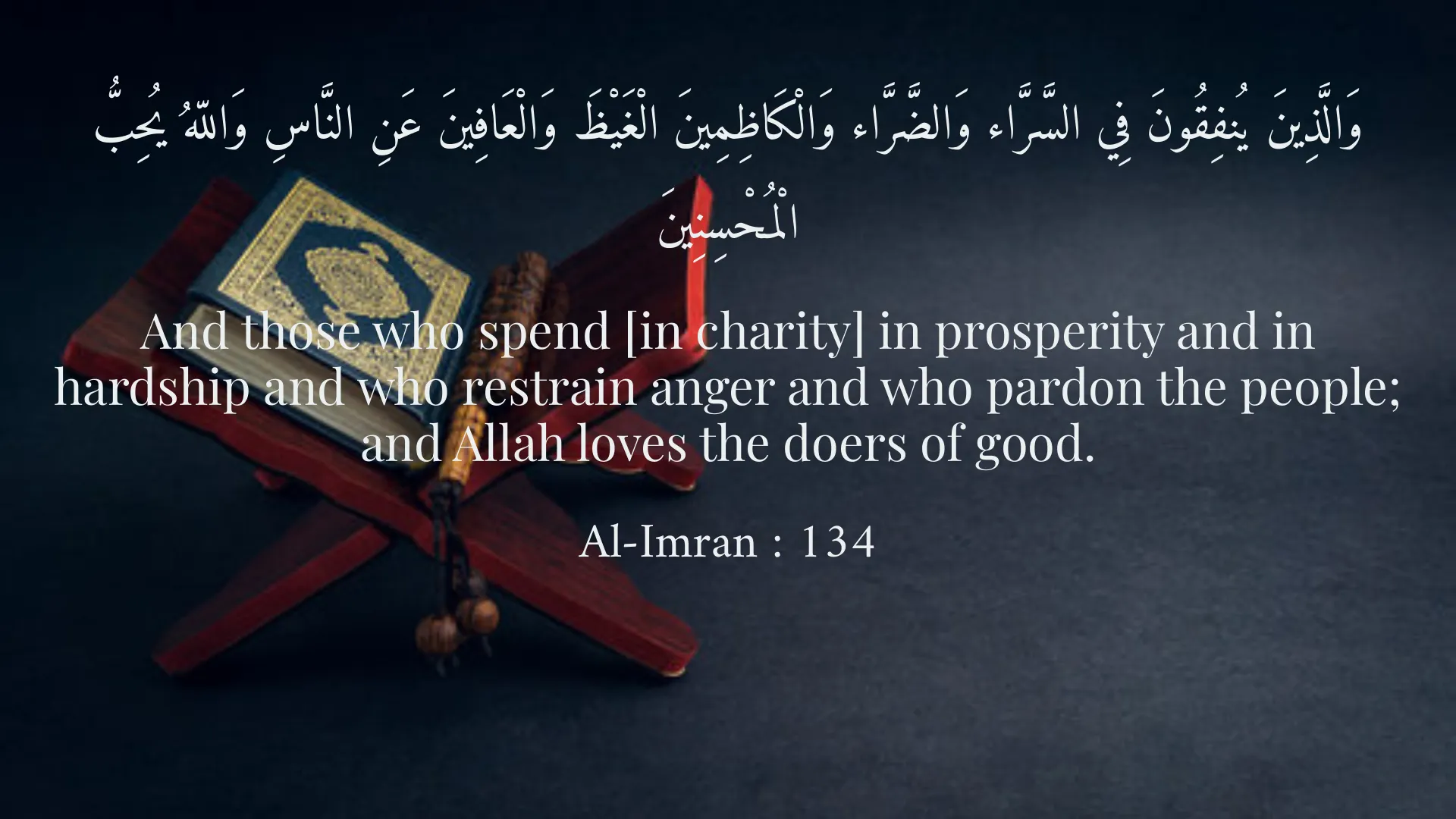
وَالَّذِينَ يُنفِقُونَ فِي السَّرَّاء وَالضَّرَّاء وَالْكَاظِمِينَ الْغَيْظَ وَالْعَافِينَ عَنِ النَّاسِ وَاللّهُ يُحِبُّ الْمُحْسِنِينَ
And those who spend [in charity] in prosperity and in hardship and who restrain anger and who pardon the people; and Allah loves the doers of good.
Al-Imran : 134
وَلْيَعْفُ وَلْيَصْفَحُوا أَلَا تُحِبُّونَ أَن يَغْفِرَ اللَّهُ لَكُمْ وَاللَّهُ غَفُورٌ رَّحِيمٌ
And let them pardon and overlook. Would you not like that Allah should forgive you? And Allah is Forgiving and Merciful.
An-Nur : 22
Short Story
Once in a village, there was a man named Farhad who suffered from severe pain due to an accident. He decided to forgive the person who had caused this pain. Over time, he felt that this act of forgiveness had lifted a heavy burden from his heart and rejuvenated his spirit. One day, a friend of his said, 'Farhad, forgiveness is a great art!' Farhad replied with a smile: 'Indeed, but this art requires only love and patience.'