Quranic Answer
Forgiveness is a cardinal virtue that is often regarded as a cornerstone of moral and emotional well-being. In religious contexts, such as in the Islamic faith, forgiveness is not merely a personal choice but a mandatory practice emphasized in sacred texts. The Quran, revered as the ultimate guide for Muslims, highlights the significance of forgiveness and encourages believers to foster a forgiving spirit. Engaging in forgiveness can be challenging, particularly given the fears and doubts that often accompany it, but its rewards are profound and far-reaching. One of the major tenets presented in the Quran is the need to steer clear of anger and resentment. This sentiment is encapsulated beautifully in Surah An-Nur, verse 22, where Allah instructs believers to extend their generosity and grace, stating, "And let not those of virtue among you swear not to give to their relatives and the needy and the immigrants in the cause of Allah. And let them pardon and overlook. Would you not like that Allah should forgive you? And Allah is Forgiving and Merciful." This verse serves as a reminder that forgiveness and goodness should be prioritized, and it paints a picture of the reciprocal nature of divine mercy. When we let go of our grudges, we not only lift the heavy burdens off our shoulders but also align ourselves with the ethical teachings of Islam, which promote harmony and understanding. The struggle to forgive stems largely from an innate fear of vulnerability. Many individuals fear that by forgiving, they might be opening themselves to repeat the same hurtful experiences. But it is critical to note that forgiveness does not equate to forgetting nor does it imply condoning negative behavior. Instead, forgiveness is an act of self-liberation, allowing individuals to free themselves from the emotional shackles that bind them to past grievances. When we forgive, we actively choose to let go of the negative feelings associated with the event or person who has caused us harm. A vital first step in the process of forgiveness is the understanding that it is not a linear journey; it is deeply personal and can take time. Forgiveness requires a conscious decision to release feelings of anger and resentment. Scientific research has shown that holding onto anger drains a person’s energy and can lead to physical ailments and a multitude of psychological issues. Research by the Stanford Forgiveness Project reveals that people who practice forgiveness report lower health problems and improved emotional well-being. This illustrates how forgiving oneself and others fosters a life richer in peace and happiness. Alongside this, it is essential to be honest with ourselves and recognize our feelings. Denying or suppressing our emotions can lead to further turmoil. Acknowledging that we have been hurt is a critical part of the healing process. It involves allowing ourselves to feel the full intensity of our pain, expressing it in healthy ways—be it through journaling, art, or conversation with trusted individuals—and then preparing to release it. The Ramadan season, for instance, often becomes a time of reflection for Muslims, where they evaluate their relationships and interactions with others and strive to mend those that have been broken. Moreover, one cannot discuss forgiveness without touching on the divine attributes of mercy and compassion. The Quran repeatedly encourages believers to emulate these qualities in their dealings with others. Surah Al-Mu'minun, verse 96, states, "Repel evil by that which is best." This directive emphasizes the importance of responding to wrongdoing with kindness, pointing out that true strength lies not in retaliation but in rising above provocation. Engaging in positive acts toward those who have harmed us can be transformative, both for ourselves and for them. By modeling God's compassion and mercy, we cultivate an atmosphere in which forgiveness flourishes. Forgiveness also plays a pivotal role in the broader context of interpersonal relationships and community dynamics. When individuals choose to forgive, they not only heal themselves but also pave the way for reconciliation and a spirit of unity within their communities. A 2011 study by Michael McCullough showed that interpersonal forgiveness positively impacts relationships, strengthening the bond between individuals. Communities that embrace forgiveness foster a sense of belonging and cohesion, reducing social tensions and encouraging collaboration. However, standing at the crossroads of forgiveness can often lead to anxiety about remaining hurt or further victimization. It is paramount to maintain healthy boundaries when engaging in forgiveness, protecting oneself from future harm while still cultivating a compassionate heart. This can involve re-evaluating the dynamics of relationships, determining when certain people are likely to bring more distress than delight into one's life, and recognizing that it is perfectly acceptable to distance oneself from toxic influences. In conclusion, forgiveness is a profound and essential aspect of personal growth that aligns closely with the teachings of the Quran. It encourages individuals to release their burdens of anger and resentment, embrace healing, and approach their relationships with compassion and grace. The act of forgiving is inherently tied to the divine attributes of mercy that Islam promotes. The call to forgive is both a spiritual and practical endeavor that uplifts the individual, fosters community, and reflects one's alignment with the essence of faith. By embracing forgiveness, we not only align ourselves with the teachings of Allah but also step into a more liberated and joyous existence devoid of the weight of past grievances.
Related Verses
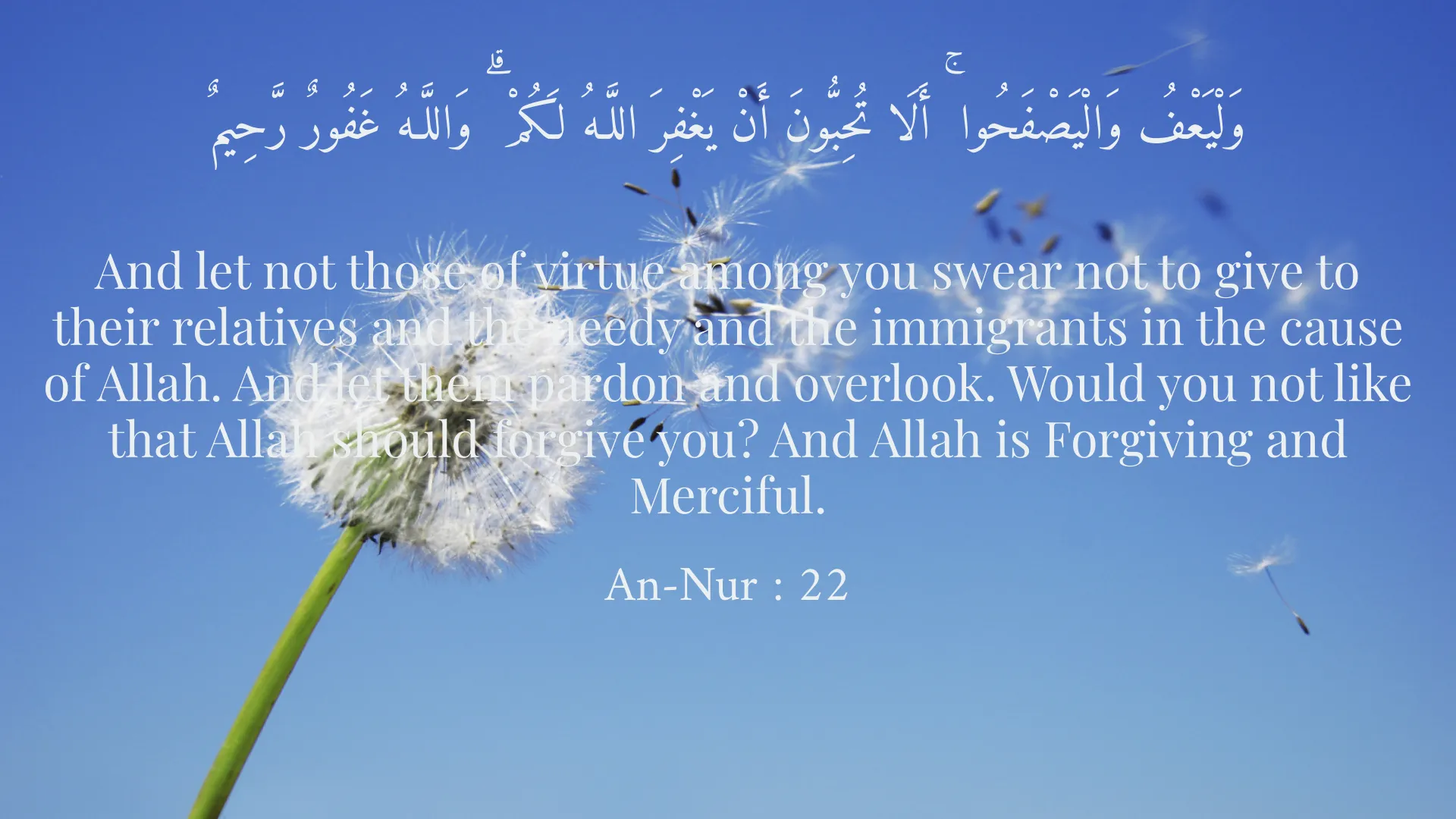
وَلْيَعْفُ وَالْيَصْفَحُوا ۚ أَلَا تُحِبُّونَ أَنْ يَغْفِرَ اللَّـهُ لَكُمْ ۗ وَاللَّـهُ غَفُورٌ رَّحِيمٌ
And let not those of virtue among you swear not to give to their relatives and the needy and the immigrants in the cause of Allah. And let them pardon and overlook. Would you not like that Allah should forgive you? And Allah is Forgiving and Merciful.
An-Nur : 22
فَادْفَعْ بِالَّتِي هِيَ أَحْسَنُ ۖ إِذَا الَّذِي بَيْنَكَ وَبَيْنَهُ عَداوةٌ كَأَنَّهُ وَلِيٌّ حَمِيمٌ
Repel evil by that which is best. Then indeed, the one between whom and you is enmity will be as though he was a devoted friend.
Al-Mu'minun : 96
Short Story
Once upon a time, a young man named Ehsan fell into a conflict with his friend Farhad. Both were upset with each other, and their relationship had become severely strained. Ehsan decided to turn to the Quran and read a verse about forgiveness. He realized that if he could let go of the grudge he held against Farhad, he would free himself from the emotional burden. The next day, he visited Farhad and forgave him with an open heart. This act not only improved their relationship but also gave Ehsan a feeling of lightness and peace.