Quranic Answer
Honesty is a fundamental value that permeates human life, influencing relationships, shaping societies, and upholding moral integrity. While different cultures and religions emphasize the significance of honesty, the Holy Quran provides profound guidance on this virtue. The intent of this article is to explore the concept of honesty as presented in the Quran, and how we can nurture it within ourselves and our communities. Honesty is not merely an abstract value; rather, it is the foundation of trust and respect among individuals. Throughout history, the significance of honesty has been recognized across various cultures and philosophies. However, when examined through the lens of the Holy Quran, we discover a deeper, holistic understanding of honesty that includes self-awareness, accountability, and community engagement. The first step towards cultivating honesty in our lives is self-awareness. In recognizing our flaws and moral shortcomings, we learn to adopt a more honest posture in our interactions with ourselves and others. Surah Al-Imran, verse 61 states: "But if anyone disputes in this matter about which you have received knowledge, say, 'Come! Let us call our sons and your sons, our women and your women, ourselves and yourselves. Then let us invoke the curse of Allah upon those who lie.'" This verse serves as a reminder that the authenticity of our statements stems from an examination of our intentions before we judge the honesty of others. By turning our gaze inward, we become better equipped to assess our own truthfulness, which is crucial in leading meaningful lives. The Quran emphasizes the importance of individual responsibility in maintaining honesty. Surah Al-Tawbah, verse 119 reads: "O you who have believed, fear Allah and be with those who are true." This directive highlights the connection between truthfulness and one’s faith. The teachings encourage believers to align themselves with the truth, developing a strong bond with both Allah and His Messenger. The relationship between faith and honesty is significant, as a believer's commitment to truth can foster a more profound association with their spirituality and moral obligations. Furthermore, the Quran outlines specific behaviors associated with honesty. In Surah Al-Mu'minun, verse 8, believers are commended for fulfilling their promises and upholding their commitments. This principle reinforces the societal dimension of honesty, emphasizing the necessity of trustworthiness in community interactions. Promises, whether made in personal relationships, professional settings, or communal responsibilities, are not mere words; rather, they form the bedrock of interpersonal trust. By cultivating a culture of honesty based on fulfilling commitments, societies can flourish. Surrounding ourselves with individuals who truly value honesty is also a key method for nurturing this virtue. When we engage with those who cherish the truth and embody its principles, we create an environment that encourages honesty and integrity. This consideration is not just about personal companionship but is intrinsically linked to the broader community. The interactions and relationships that we nurture reflect our personal values, and surrounding ourselves with honest individuals creates a ripple effect, allowing for the spread of honesty in larger circles. Moreover, honesty demands that we express our inner convictions through our actions. It is not enough to internally acknowledge the truth; we must vocalize it and act upon it. This outward display reinforces our internal commitment to honesty and invites others to engage in truthful dialogues. In situations where truth may be uncomfortable or inconvenient, having the courage to speak out can be daunting, yet it is a testament to our integrity. It is also essential to consider that honesty does not equate to harshness or rudeness. In fact, the Quran encourages a compassionate approach when dealing with others. Telling the truth should come from a place of love and kindness. The responsibility lies in delivering honesty in a manner that fosters understanding rather than conflict. In this light, one must navigate the challenges of honesty in ways that align with ethical considerations, promoting dialogue and building bridges rather than walls. Additionally, it is significant to recognize the transformative power of honesty not only for individual character development but also for community welfare. In a world often characterized by deceit and misinformation, fostering honesty can serve as a catalyst for positive change. Communities grounded in honesty can foster environments of safety and trust, enabling individuals to express themselves and build meaningful connections with one another. The continuous effort to instill honesty requires mindfulness and reflection. Regular self-assessment and accountability keep us anchored to our commitment to being honest. Practices such as journaling, meditation, and engaging in discussions about morality can help in this endeavor, providing pathways for honest introspection and growth. To conclude, honesty is an indispensable value that shapes both individual lives and collective societies. The teachings of the Holy Quran encourage us to engage in self-awareness, embrace truth, surround ourselves with honest individuals, and express our commitments through our actions. While the journey toward honesty may be replete with challenges, it is ultimately a pursuit that leads us closer to salvation, fulfillment, and harmony amongst ourselves and with our Creator. By making honesty a fundamental aspect of our existence, we enrich not only our own lives but also contribute to the welfare of our communities and the world at large. Through our commitment to truthfulness, we honor the divine guidance presented in the Quran and embody the essence of sincerity in our daily lives.
Related Verses
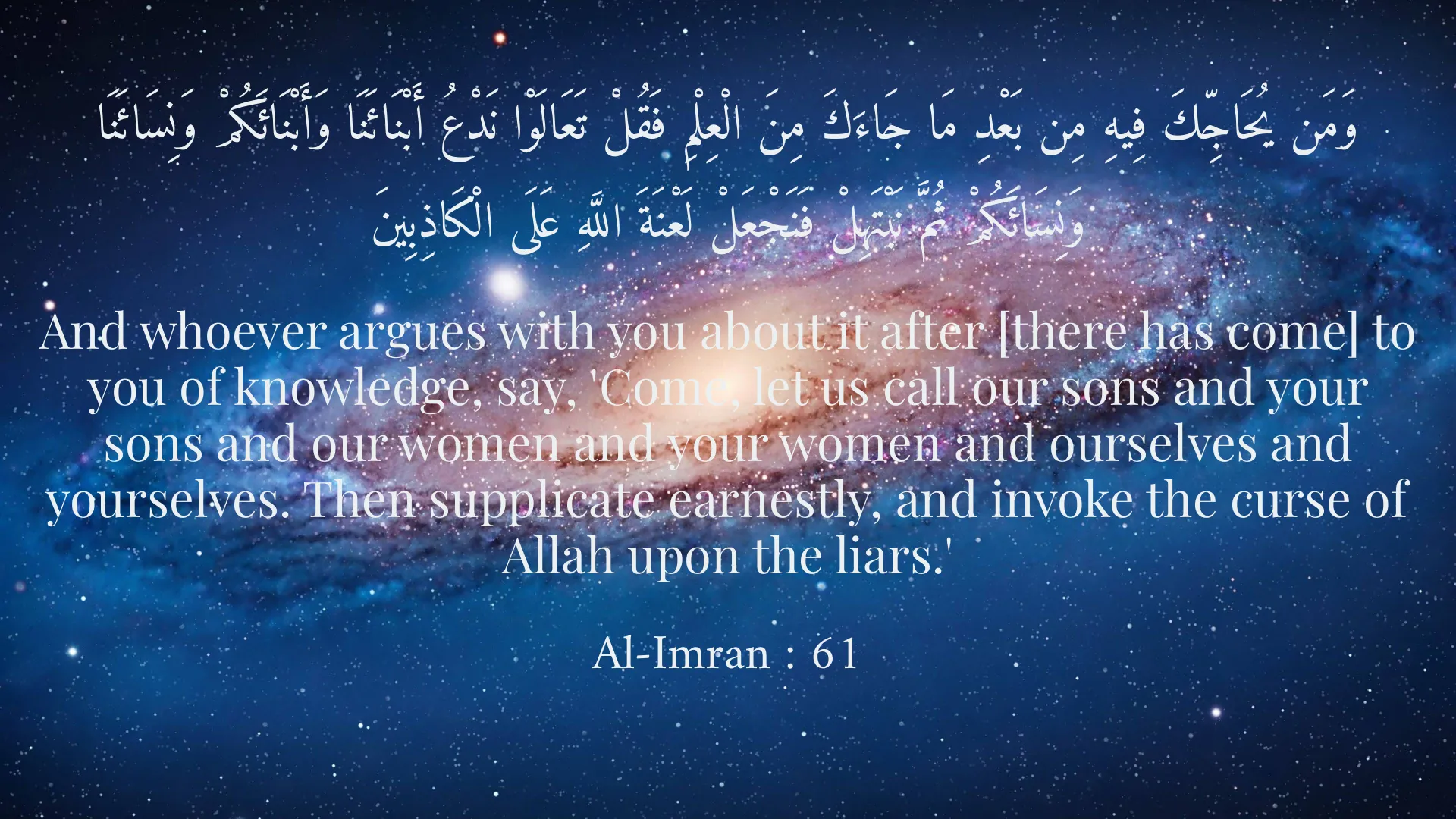
وَمَن يُحَاجِّكَ فِيهِ مِن بَعْدِ مَا جَاءَكَ مِنَ الْعِلْمِ فَقُلْ تَعَالَوْا نَدْعُ أَبْنَائَنَا وَأَبْنَائَكُمْ وَنِسَائَنَا وَنِسَائَكُمْ ثُمَّ نَبْتَهِلْ فَنَجْعَلْ لَعْنَةَ اللَّهِ عَلَى الْكَاذِبِينَ
And whoever argues with you about it after [there has come] to you of knowledge, say, 'Come, let us call our sons and your sons and our women and your women and ourselves and yourselves. Then supplicate earnestly, and invoke the curse of Allah upon the liars.'
Al-Imran : 61
يَا أَيُّهَا الَّذِينَ آمَنُوا اتَّقُوا اللَّهَ وَكُونُوا مَعَ الصَّادِقِينَ
O you who have believed, fear Allah and be with those who are true.
At-Tawbah : 119
والَّذِينَ هُمْ لِأَمَانَاتِهِمْ وَعَهْدِهِمْ رَاعُونَ
And they who are to their trusts and their covenant due.
Al-Mu'minun : 8
Short Story
Once upon a time, there was a man named Hasan who lived in a mountain village. Hasan valued honesty in his life and always spoke the truth. One day, he and his friends decided to hold a game where everyone had to share a little secret about themselves, and the others had to guess whether it was true or false. Hasan proclaimed, 'I never lie.' His friends believed him, and from that day on, wherever he went, his honesty made him famous among the people.