Quranic Answer
Maintaining honesty and truthfulness in a world where lies, deception, and self-interest sometimes cast a long shadow is one of the greatest moral and spiritual challenges for a believer. The Holy Quran, as the book of guidance, provides clear pathways and enduring principles for preserving this vital virtue. These guidelines not only help an individual resist the temptations of falsehood but also assist them on the path of spiritual growth and attaining divine pleasure. In Quranic teachings, honesty is not merely a moral trait; it is a pillar of faith and the foundation of a sound relationship with God and His creation. The first and most crucial step for upholding honesty is to strengthen one's connection with Allah and cultivate a deep sense of Taqwa (piety or God-consciousness). The Quran repeatedly calls believers to Taqwa and, alongside it, enjoins them to be with the truthful. Surah At-Tawbah, verse 119, states: “O you who have believed, fear Allah and be with the truthful.” This verse demonstrates that Taqwa, or being mindful of Allah and adhering to His commands, is closely intertwined with honesty. One who constantly perceives themselves in Allah’s presence and fears the consequences of disobeying Him will be less inclined to resort to lies and deceit. This Taqwa acts not only as a shield against external temptations but also keeps one's inner conscience awake, always guiding towards the path of truth. Associating with the truthful means choosing an environment and companions who value honesty and embody it themselves, as humans are subtly influenced by their surroundings. The second principle involves careful attention to speech and words. In Surah Al-Ahzab, verse 70, the Noble Quran states: “O you who have believed, fear Allah and speak words of appropriate gravity (or straightforward words).” The Arabic phrase “Qawlan Sadeedan” signifies speech that is truthful, correct, firm, and free from falsehood. This commandment not only encompasses avoiding outright lies but also extends to refraining from baseless statements, slander, backbiting, exaggeration, false promises, and even misleading jokes. In a world where misinformation spreads rapidly, responsible speech and ensuring the accuracy of what we utter become paramount. This verse teaches us that every word emanating from our mouths must align with truth and justice, even if it might seem to be against our immediate self-interest or that of our loved ones, for Allah is aware of all our actions and words, and nothing is hidden from Him. The third strategy is to understand the roots and consequences of lying. In Surah An-Nahl, verse 105, the Holy Quran explicitly states: “Only those invent falsehood who do not believe in the verses of Allah, and it is those who are the liars.” This verse clearly links lying to a lack of faith in Allah’s revelations. This connection indicates that honesty stems from a deep-seated belief and trust in God. One who has complete faith in Allah’s power, absolute knowledge, and justice understands that lying does not solve problems; rather, it creates more difficulties and ultimately leads to disgrace and divine punishment. Lying not only destroys an individual’s credibility among people but also sickens their soul and heart, distancing them from the truth. Conversely, honesty brings inner peace, self-confidence, and a high standing in this world and the hereafter. The fourth principle is patience and steadfastness on the path of truth. The world of falsehood might seem tempting in the short run; lying might lead to immediate gains, escape from responsibility, or apparent approval from others. However, the Quran invites believers to patience and perseverance against such temptations. Prophets throughout history stood firm against the lies and deception of their adversaries, and Allah always supported them. The reward for honesty and steadfastness in the path of truth manifests in this world as peace, credibility, and blessings, and in the hereafter as divine pleasure and immense recompense. Allah states: “Indeed, Allah is with the patient.” (Al-Baqarah: 153). This divine companionship is the greatest support for maintaining honesty against the onslaught of lies and deception. The fifth key point is reliance on Allah (Tawakkul). When an individual decides to always speak the truth, even if there are consequences, they must put their trust in Allah. The certainty that Allah is the best protector and helper of the truthful gives one courage not to deviate from the truth even in difficult moments. Tawakkul means that one fulfills their duty correctly and leaves the outcome to Allah, with the conviction that Allah will never abandon His truthful and trustworthy servants and will provide a way out and facilitate their affairs. Ultimately, preserving honesty in today’s world requires continuous vigilance, ongoing self-purification, and adherence to firm Quranic principles. By following these commands, one can not only protect themselves from the impurity of lies but also become an example of a truthful believer who adheres to divine values in all circumstances and strives towards a healthier, truth-based society.
Related Verses
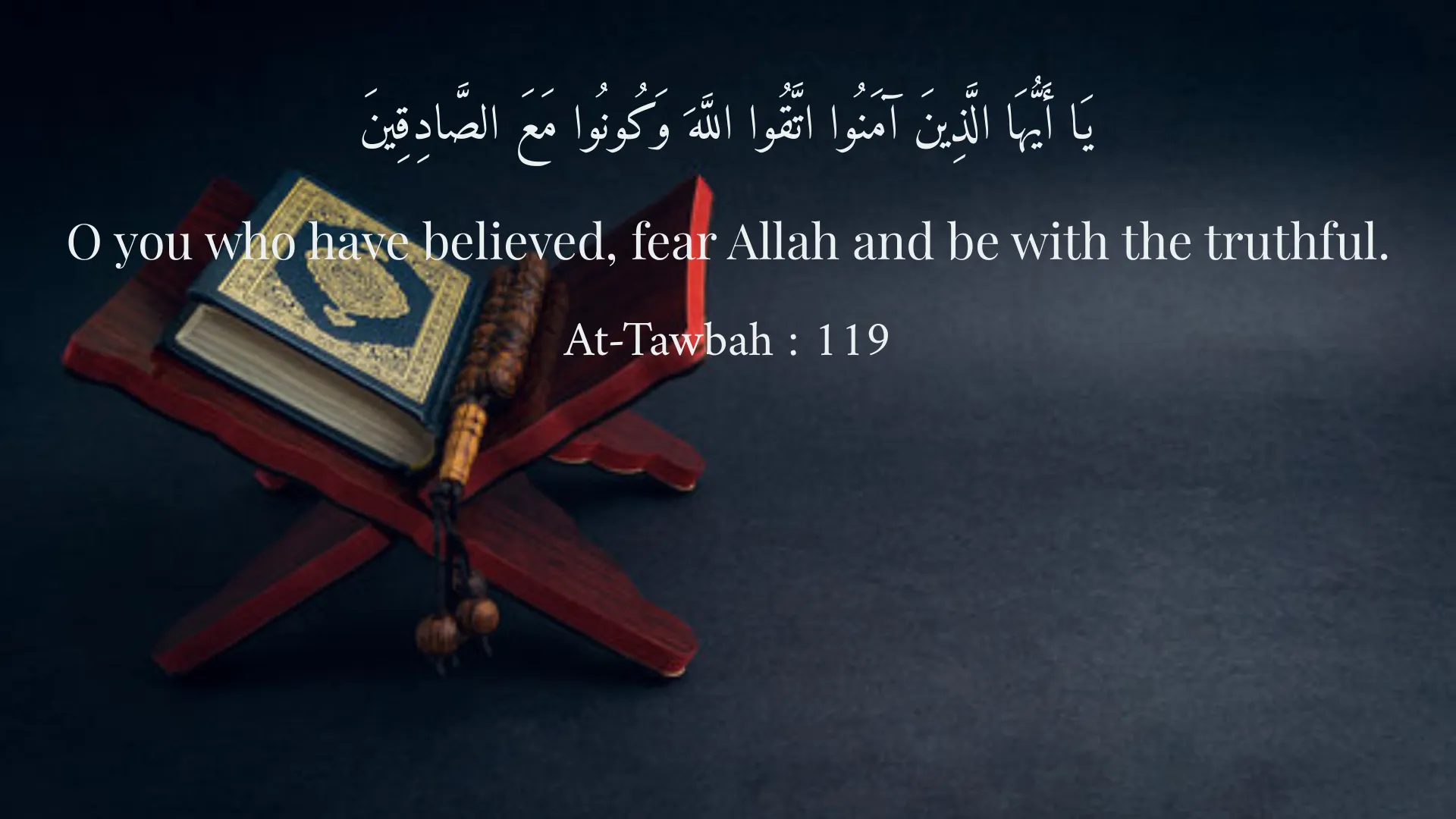
يَا أَيُّهَا الَّذِينَ آمَنُوا اتَّقُوا اللَّهَ وَكُونُوا مَعَ الصَّادِقِينَ
O you who have believed, fear Allah and be with the truthful.
At-Tawbah : 119
يَا أَيُّهَا الَّذِينَ آمَنُوا اتَّقُوا اللَّهَ وَقُولُوا قَوْلًا سَدِيدًا
O you who have believed, fear Allah and speak words of appropriate gravity.
Al-Ahzab : 70
إِنَّمَا يَفْتَرِي الْكَذِبَ الَّذِينَ لَا يُؤْمِنُونَ بِآيَاتِ اللَّهِ ۖ وَأُولَٰئِكَ هُمُ الْكَاذِبُونَ
Only those invent falsehood who do not believe in the verses of Allah, and it is those who are the liars.
An-Nahl : 105
Short Story
It is narrated that in ancient times, there lived a merchant in a certain city named 'Amanat' (Trustworthy). He was renowned among traders for his truthfulness and integrity, so much so that his name had become synonymous with his character. One day, a rare and valuable commodity came into his possession. Though it appeared flawless to the eye, Amanat, with his discerning insight and extensive experience, discovered a very minor defect in it. Had he concealed this flaw, he could have reaped a substantial profit, and no one would have ever been the wiser. His apprentices, whose hearts yearned for worldly gain, suggested he conceal this defect and earn more. But Amanat smiled and said: 'A small profit earned with honesty is better and more enduring than a large profit gained through deceit. Let our sustenance never be tainted with lies, for then blessings depart from it, and hearts are never truly satisfied by it.' Then, with a calm heart and a confident spirit, he truthfully disclosed the minor defect to the customer and, for that reason, slightly reduced the price. The customer, witnessing such unprecedented trustworthiness and honesty, not only completed the transaction with full confidence but the story of Amanat's integrity spread throughout the entire market. Years later, the same customer, who had come to deeply appreciate Amanat's character, partnered with him in his larger business ventures, saying: 'I bought the goods because of your truthfulness, and I won my heart because of your trustworthiness.' Thus, Amanat's honesty not only brought him no loss but opened doors of trust and lawful sustenance that he had never imagined. This is the tale of those who prefer lawful earnings over unlawful ones, for Allah increases blessing in their wealth and lifespan and elevates their standing in people's hearts.