Quranic Answer
In an era saturated with information, where the lines between truth and falsehood are often blurred by deceptive practices and pervasive propaganda, maintaining one's integrity and adherence to truthfulness (صدق) is a profound challenge. The Holy Quran, as a timeless guide for humanity, offers comprehensive principles and practical wisdom on how to navigate such environments, ensuring that believers uphold honesty as a cornerstone of their character and faith. The Quran emphasizes sidq (truthfulness) not merely as an absence of lying, but as a holistic state of being, encompassing honesty in speech, intentions, actions, and commitments. It is a fundamental virtue that builds trust, strengthens communities, and fosters a direct, pure relationship with Allah. The bedrock of maintaining honesty in a deceptive world lies in Taqwa (God-consciousness or piety). Taqwa means being constantly aware of Allah's presence, His omniscience, and His ultimate judgment. When an individual lives with Taqwa, every word uttered and every action performed is weighed against divine commands. This internal moral compass acts as a powerful shield against the allure of deception, even when faced with immediate worldly gains or pressures to conform. The Quran repeatedly calls believers to ittaqu Allah (fear Allah or be mindful of Allah), and in Surah At-Tawbah (9:119), it explicitly states: "O you who have believed, fear Allah and be with the truthful." This verse is a direct injunction, encouraging believers to seek the company of those who are truthful and to embody truthfulness themselves, thereby fortifying their resolve against external influences. The spiritual fortitude derived from Taqwa enables one to resist the temptations of lying, misrepresentation, or complicity in falsehoods, regardless of how widespread they may seem. Furthermore, the Quran directly addresses the issue of verifying information, which is crucial in an age of propaganda. In Surah Al-Hujurat (49:6), Allah commands: "O you who have believed, if there comes to you a disobedient person with information, investigate it; lest you harm a people out of ignorance and then regret what you have done." This verse lays down a fundamental principle of critical thinking and due diligence. It warns against blindly accepting and spreading information, especially from unreliable sources, and highlights the potential for severe harm caused by unverified news. In a world awash with misinformation and disinformation campaigns designed to mislead, this Quranic directive becomes an indispensable tool for discerning truth from falsehood. Believers are encouraged to verify, scrutinize, and seek clarity before forming opinions or acting upon information, thereby preventing themselves from becoming unwitting agents of deception or victims of propaganda. This proactive approach to information consumption is a vital step in preserving one's intellectual and moral integrity. The Quran also clarifies the grave spiritual consequences of engaging in falsehood. Surah An-Nahl (16:105) unequivocally states: "Only those invent falsehood who do not believe in the verses of Allah, and it is they who are the liars." This verse establishes a direct link between lying and a lack of faith in Allah's signs. It suggests that falsehood is not merely a social transgression but a manifestation of a deeper spiritual ailment – a deficiency in conviction and trust in divine truth. For a believer, understanding this profound connection reinforces the commitment to truthfulness, recognizing it as an integral part of their faith and identity. Embracing truthfulness is seen as a sign of true belief, while succumbing to lies indicates a deviation from the path of faith. Maintaining honesty in a deceptive environment also requires sabr (patience) and tawakkul (reliance on Allah). Upholding truth might sometimes lead to discomfort, isolation, or even adversity, especially when one is speaking truth to power or standing against popular falsehoods. In such moments, patience is paramount. The Quran frequently extols the virtues of sabireen (the patient ones), assuring them of Allah's support. Coupled with patience, tawakkul involves placing one's trust entirely in Allah. A person who trusts in Allah knows that being truthful, despite potential worldly repercussions, will ultimately lead to a better outcome in both this life and the hereafter. This deep spiritual reliance provides the courage and inner strength to remain steadfast, knowing that Allah is the ultimate protector and sustainer of truth. Furthermore, true honesty extends beyond mere words to encompass amanah (trustworthiness) and adalah (justice). A truthful person is also trustworthy in their dealings, fulfilling their promises, and just in their judgments. These qualities collectively create a robust moral framework that inoculates an individual against the corrupting influences of deception. In the face of widespread corruption or dishonesty, a believer’s commitment to amanah and adalah serves as a beacon of integrity, inspiring others and demonstrating the practical beauty of Islamic ethics. In conclusion, the Quran provides a clear and comprehensive roadmap for preserving honesty in a world rife with deception and propaganda. This roadmap is built upon the foundational principles of Taqwa (God-consciousness), Sidq (truthfulness in all its forms), Tatabayyan (verifying information), Sabr (patience), and Tawakkul (reliance on Allah). By internalizing these principles and living by them, a believer can not only safeguard their own moral and spiritual integrity but also become a source of truth and trustworthiness in their communities. The internal peace and divine blessings that accompany a life lived with honesty are far greater and more enduring than any fleeting worldly gain achieved through deceit. The Quran teaches that truth is an ultimate reality, a reflection of God’s own attributes, and aligning oneself with truth is aligning with the Divine.
Related Verses
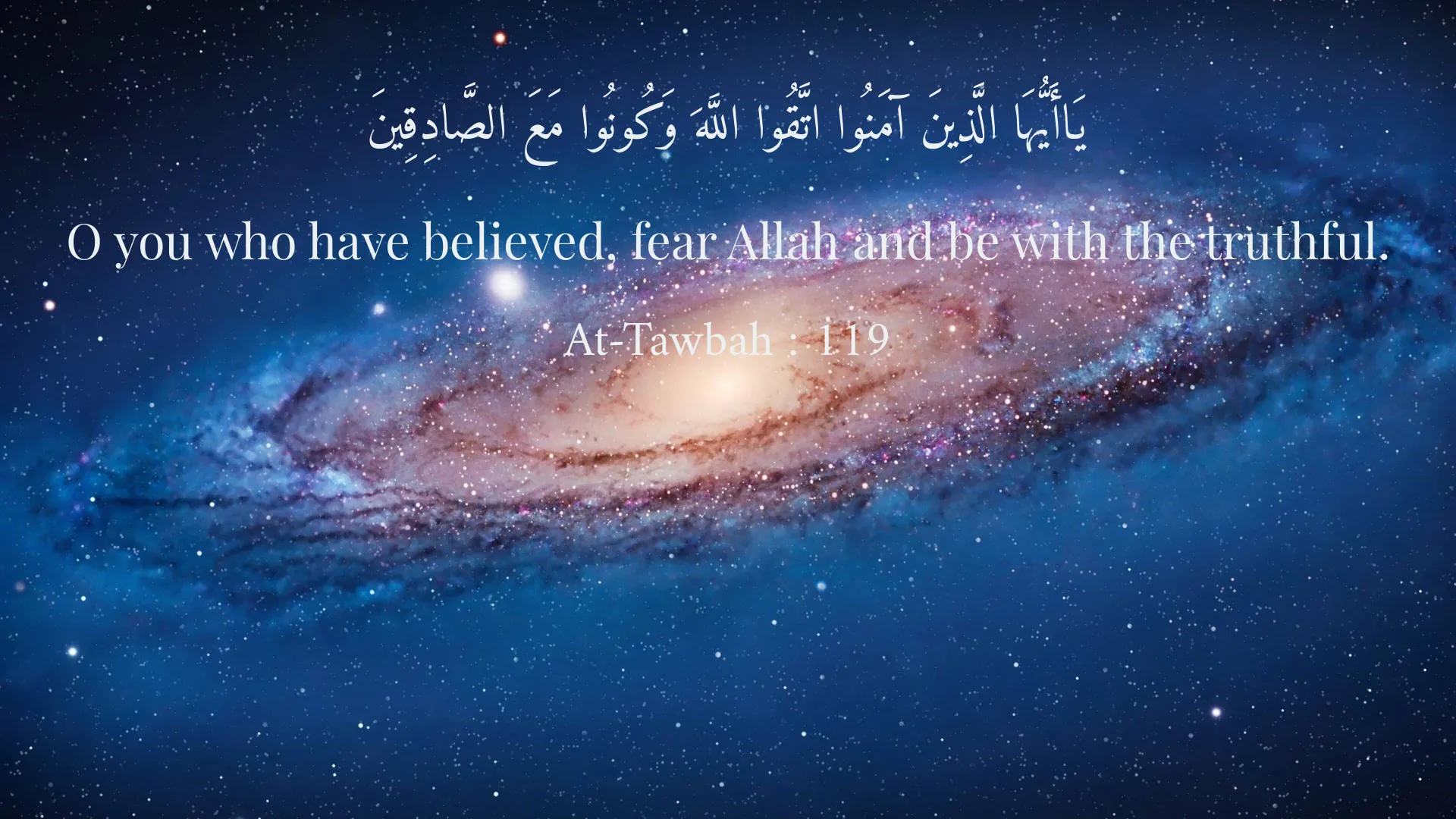
يَاأَيُّهَا الَّذِينَ آمَنُوا اتَّقُوا اللَّهَ وَكُونُوا مَعَ الصَّادِقِينَ
O you who have believed, fear Allah and be with the truthful.
At-Tawbah : 119
إِنَّمَا يَفْتَرِي الْكَذِبَ الَّذِينَ لَا يُؤْمِنُونَ بِآيَاتِ اللَّهِ ۖ وَأُولَٰئِكَ هُمُ الْكَاذِبُونَ
Only those invent falsehood who do not believe in the verses of Allah, and it is they who are the liars.
An-Nahl : 105
يَاأَيُّهَا الَّذِينَ آمَنُوا إِن جَاءَكُمْ فَاسِقٌ بِنَبَإٍ فَتَبَيَّنُوا أَن تُصِيبُوا قَوْمًا بِجَهَالَةٍ فَتُصْبِحُوا عَلَىٰ مَا فَعَلْتُمْ نَادِمِينَ
O you who have believed, if there comes to you a disobedient person with information, investigate it; lest you harm a people out of ignorance and then regret what you have done.
Al-Hujurat : 6
Short Story
One day, a just king, wishing to know the true state of his subjects, disguised himself and walked through the city. He came across an apothecary whose reputation for honesty and fairness was well-known to all. The king asked him, "O virtuous man, how is it that in this market full of competition and cunning, you still choose honesty, and your wealth is blessed?" The apothecary replied, "My lord, I never forget that an Observer from above constantly watches our deeds. If today I lie or deceive for a small worldly gain, what answer will I have tomorrow? Blessing lies in honesty, and peace in a pure conscience. The mere knowledge that I have a pure transaction with God is enough for me. People also trust me for this reason, and this itself is the best profit." The king was pleased with these words and realized that honesty has deep roots in faith and, at all times, even amidst deception and propaganda, it is the clear guide for sincere hearts.