Quranic Answer
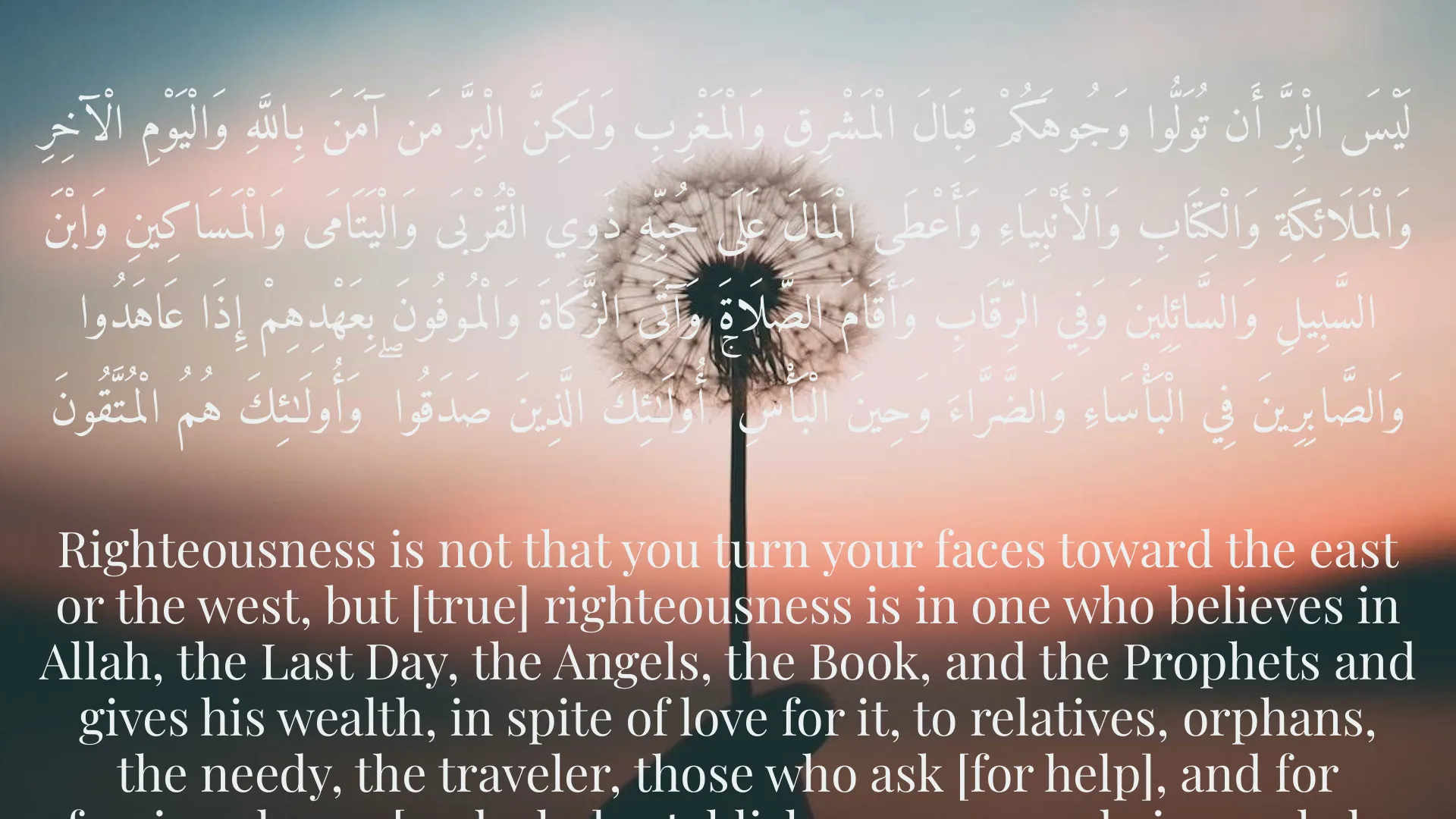
Honesty and truthfulness are fundamental virtues extolled in the Holy Quran, which serves as a moral compass for the believers. The Quran delineates a framework of conduct for individuals striving to embody righteousness in every aspect of their life. One of the prominent verses that highlight the significance of truthfulness is found in Surah Al-Baqarah, verse 177, where Allah states: "Righteousness is not that you turn your faces toward the east or the west, but [true] righteousness is in one who believes in Allah, the Last Day, the Angels, the Book, and the Prophets, and gives his wealth, in spite of love for it, to relatives, orphans, the needy, the traveler, those who ask [for help], and for freeing slaves; [and who] establishes prayer and gives zakah; [those who] fulfill their promise when they promise; and [those who] are patient in poverty and hardship and during battle. Those are the ones who have been true, and it is those who are the righteous." This verse fundamentally asserts that truthfulness and honesty should occupy a central place in the hearts and lives of believers, distinguishing them as people of integrity amidst societal challenges. In further emphasizing the concept of honesty, Surah Al-Ahzab, verse 70 reinforces the importance of speaking truth: "O you who have believed, fear Allah and speak words of appropriate justice." This exhortation serves as a reminder that lying and dishonesty impede spiritual growth and hinder one's relationship with Allah. The Quran urges believers to engage in honest discourse, portraying truthfulness as an essential component of faith. The pervasive nature of dishonesty often manifests in small lies, which many might consider insignificant or harmless. However, these seemingly minor untruths lay the groundwork for habitual lying, particularly among children and adolescents. It is essential to establish an environment that nurtures honesty from a young age, instilling in future generations the value of truthful communication. The repercussions of indulging in dishonesty can be detrimental; habitual liars often find themselves engulfed in a web of deceit, which becomes increasingly difficult to unravel over time. To cultivate a spirit of honesty, we must actively foster an environment that prioritizes truth in our daily interactions. This begins with grasping the importance of being truthful to ourselves and to others, ensuring that our actions and words align with our beliefs. Social pressures often prompt individuals to resort to dishonesty, especially when faced with adverse outcomes, such as fear of judgment or repercussions. It is crucial during these moments to pause and reflect on the situation; recognizing that honesty often presents itself as the simplest and most effective solution. Additionally, cultivating honesty requires continuous self-reflection. We must question the motivations behind our choices and actively choose integrity, regardless of the temptations to lie. In this light, Quranic guidance stands as a beacon, illuminating the path towards a life steeped in honesty and transparency, denouncing the allure of deception. Furthermore, fostering honest relationships generates a sense of trust and respect, creating an environment where individuals feel safe to articulate their truths, develop genuine connections, and prosper collectively. Honesty can also serve as a practical framework for making ethical decisions. In complex situations where lies may appear beneficial, honesty—rooted in sincerity and equity—encourages a broader perspective, enabling discernment not only for oneself but also for the collective well-being of the community. This understanding is crucial in nourishing social bonds and ensuring fairness escalates beyond mere self-interest. Moreover, the benefits of honesty transcend religious teachings and permeate aspects of general life. Whether in personal relationships, the workplace, or societal interactions, honesty leads to increased credibility and respect. People naturally gravitate towards those who consistently embody transparency, and in turn, honest relationships foster a sense of belonging and mutual understanding. Furthermore, embracing honesty creates a ripple effect that can inspire others. When individuals observe truthfulness in their peers, they often feel encouraged to cultivate the same values. This chain reaction can engender a culture of integrity, where honesty becomes the standard rather than the exception. The ultimate realization is that honesty fuels authentic relationships; it enhances communication, strengthens unity, and fosters a sense of community among individuals. In summary, the Quranic perspective on truthfulness and honesty delineates the essence of living a righteous life. The emphasis on these virtues underscores their centrality to sincere faith and piety. As highlighted in Surah Al-Baqarah and Surah Al-Ahzab, accountability and transparency reflect the hearts of believers who aspire to align themselves with divine principles. To mitigate the negative consequences of dishonesty, particularly among the younger generation, nurturing environments that encourage truthfulness must be established. Thus, as believers nudge each other towards paths of righteousness, it is profoundly vital to embrace honesty, narrowing the gap between our ideals and our realities. Through its practice, we can create lives filled with not only personal truth but collective upliftment. Ultimately, Quranic guidance is a timeless resource; when adhered to, it steers individuals away from deception and into a life that honors the principles of honesty and transparency, fostering spiritual growth and enhancing connections. In the end, honesty remains transcendental—a value intertwining faith, character, and the essence of being righteous in all matters.
Related Verses
لَيْسَ الْبِرَّ أَن تُوَلُّوا وَجُوهَكُمْ قِبَالَ الْمَشْرِقِ وَالْمَغْرِبِ وَلَكِنَّ الْبِرَّ مَن آمَنَ بِاللَّهِ وَالْيَوْمِ الْآخِرِ وَالْمَلَائِكَةِ وَالْكِتَابِ وَالْأَنْبِيَاءِ وَأَعْطَى الْمَالَ عَلَى حُبِّهِ ذَوِي الْقُرْبَى وَالْيَتَامَى وَالْمَسَاكِينِ وَابْنَ السَّبِيلِ وَالسَّائِلِينَ وَفِي الرِّقَابِ وَأَقَامَ الصَّلَاةَ وَآتَى الزَّكَاةَ وَالْمُوفُونَ بِعَهْدِهِمْ إِذَا عَاهَدُوا وَالصَّابِرِينَ فِي الْبَأْسَاءِ وَالضَّرَّاءَ وَحِينَ الْبَأْسِ ۚ أُولَـٰئِكَ الَّذِينَ صَدَقُوا ۖ وَأُولَـٰئِكَ هُمُ الْمُتَّقُونَ
Righteousness is not that you turn your faces toward the east or the west, but [true] righteousness is in one who believes in Allah, the Last Day, the Angels, the Book, and the Prophets and gives his wealth, in spite of love for it, to relatives, orphans, the needy, the traveler, those who ask [for help], and for freeing slaves; [and who] establishes prayer and gives zakah; [those who] fulfill their promise when they promise; and [those who] are patient in poverty and hardship and during battle. Those are the ones who have been true, and it is those who are the righteous.
Al-Baqarah : 177
يَا أَيُّهَا الَّذِينَ آمَنُوا اتَّقُوا اللَّهَ وَقُولُوا قَوْلًۭا سَدِيدًۭا
O you who have believed, fear Allah and speak words of appropriate justice.
Al-Ahzab : 70
Short Story
Once upon a time, in a small village, there was a man who had a habit of lying. Over time, this habit transformed into small lies. He realized that these lies were only leading him to more problems. Eventually, he decided to listen to the teachings of the Quran and tried to speak the truth. Gradually, his life improved, and he gained loyal friends. He developed a better understanding of himself and others, finding more peace and happiness in his life.