Quranic Answer
Hidden arrogance is a complex psychological phenomenon that often seeps into the human experience without overt signs. Unlike overt displays of pride, hidden arrogance is subtle, lurking beneath the surface of one’s personality. It can manifest in myriad ways, affecting interpersonal relationships and one's own journey towards spiritual and emotional growth. This article explores the concept of hidden arrogance, its manifestations, and insights derived from the Quran concerning humility and kindness. ### Understanding Hidden Arrogance: Hidden arrogance refers to a form of self-importance that is neither immediately apparent in a person’s behavior nor in their verbal communication. What makes this form of arrogance particularly insidious is that it can go unnoticed by the individual harboring it. Often, one may present themselves as humble and grounded, while internally, they might possess an inflated sense of their own worth. This internal dialogue can create a disconnect, leading to superficial relationships and a distorted self-image. ### The Quran's Perspective on Humility: The Holy Quran addresses the significance of humility and the avoidance of pride quite eloquently. In Surah An-Nisa, verse 36, Allah instructs believers to be kind and considerate to a variety of groups including parents, relatives, orphans, the needy, and neighbors. Such instructions emphasize the importance of humility and empathy towards others, and kindness is consistently depicted as a countermeasure to arrogance. This Quranic directive not only illustrates the importance of community bonds but also serves as a crucial reminder that true self-worth is derived from our treatment of others, rather than from any perceived superiority. ### Manifestations of Hidden Arrogance: Hidden arrogance can show up in several ways, often masquerading as a desire for validation or approval from others. Individuals may find themselves needing external endorsements and praise to feel worthy, showcasing a form of dependency that stems from hidden insecurity rather than true confidence. Furthermore, hidden arrogance can lead to a sense of superiority in social settings, where individuals might subconsciously compare themselves to others, creating an unhealthy competitive environment. #### The Danger of Self-Comparison: Another manifestation of hidden arrogance arises when people cultivate a critical inner monologue regarding their self-worth in relation to their peers. This is particularly emphasized in Surah Al-Imran, verse 188, where Allah cautions believers against equating their status and popularity with spiritual virtue. The temptation to think of oneself as better than others because of popularity or success can delude individuals into a false sense of greatness, thereby distancing them from the essential humility that is core to spiritual elevation. ### Recognizing Hidden Arrogance: To combat hidden arrogance, one must engage in a reflective practice that encourages self-awareness and emotional intelligence. Recognizing hidden arrogance requires an honest examination of one’s thoughts, feelings, and behavioral patterns. Regular self-reflection can help in understanding emotional states and highlight any reliance on external validation. This introspection can be guided by discussions with trusted friends or mentors, providing a different perspective on one's attitude and enabling an individual to uncover their hidden traits. ### The Role of Humility in Mitigating Arrogance: Ultimately, embracing humility and kindness towards others serves as a robust solution for mitigating hidden arrogance. Practicing gratitude and acknowledging the contributions of others can help in diminishing the need for self-importance. By actively engaging in acts of kindness, individuals distance themselves from feelings of superiority and move towards a more collective viewpoint where everyone’s contributions are recognized. ### Practical Steps towards Cultivating Humility: 1. Self-Reflection: Regularly engage in self-reflection to understand your motives and emotions. Journaling can also be a helpful tool in this process. 2. Seek Constructive Criticism: Rather than shying away from criticism, embrace it as an opportunity for growth. Learning to appreciate feedback can diminish defensiveness. 3. Practice Gratitude: Recognizing and expressing gratitude for the positive aspects of your life can shift focus from self to others, fostering a humble mindset. 4. Volunteer: Engaging in community service or acts of kindness can reinforce empathy and appreciation for the struggles of others, helping to dissolve feelings of superiority. ### Conclusion: In conclusion, hidden arrogance can be a significant barrier to personal and spiritual growth. The Quran offers profound insights into the importance of humility, underscoring that true value lies in our treatment of others rather than our self-perceived greatness. By actively pursuing humility through self-awareness, gratitude, and kindness, individuals can effectively address their hidden arrogance, fostering deeper relationships and a richer spiritual life. The journey towards humility is ongoing, requiring diligent effort but rewarding individuals with profound peace and connection to others. Addressing hidden arrogance is not merely a personal endeavor, but a societal necessity that encourages kindness, understanding, and unity within communities. Through collective consciousness, individuals can engage in this transformative work, ultimately leading to a more compassionate and humble world.
Related Verses
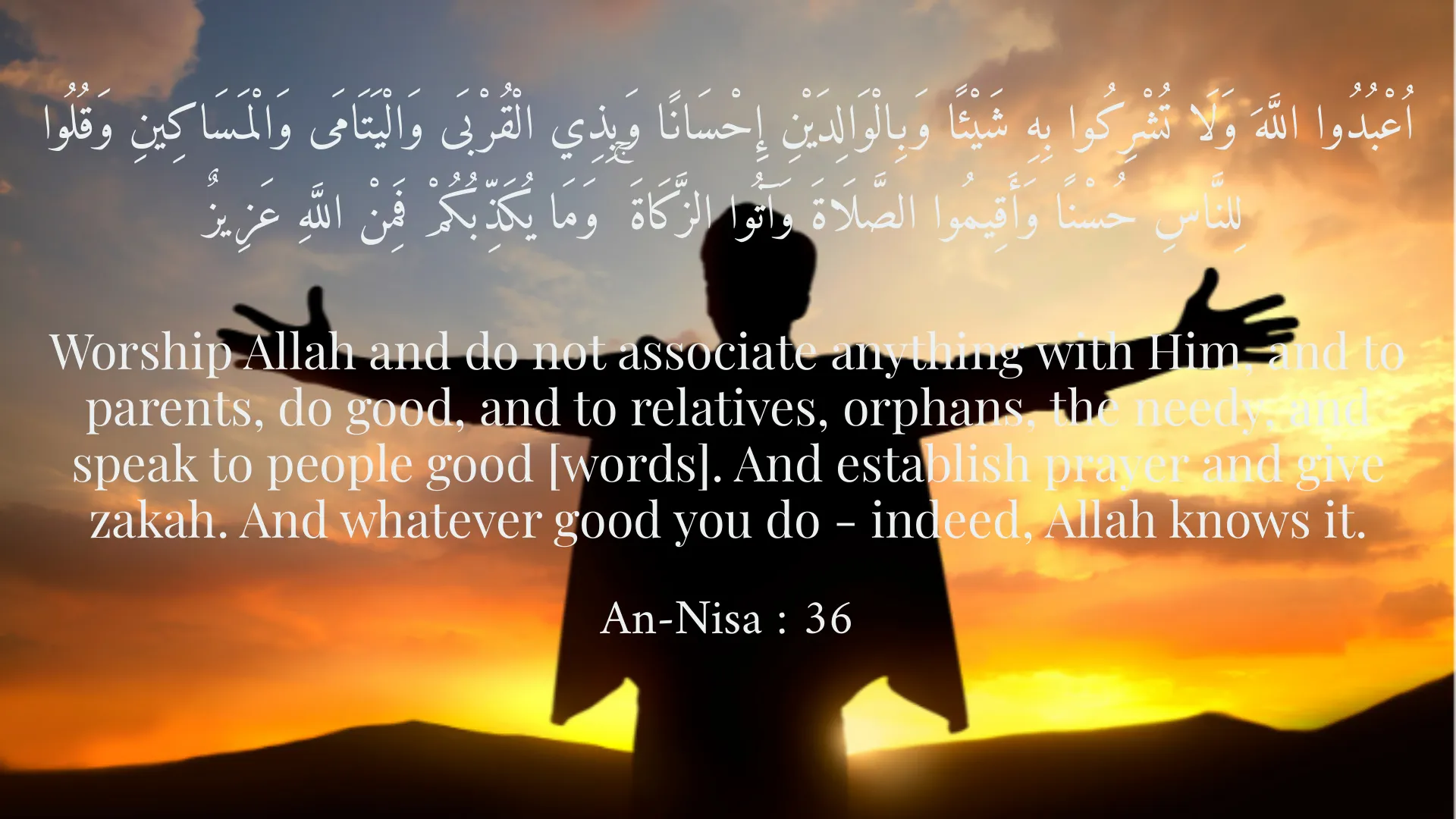
اُعْبُدُوا اللَّهَ وَلَا تُشْرِكُوا بِهِ شَيْئًا وَبِالْوَالِدَيْنِ إِحْسَانًا وَبِذِي الْقُرْبَى وَالْيَتَامَى وَالْمَسَاكِينِ وَقُلُوا لِلنَّاسِ حُسْنًا وَأَقِيمُوا الصَّلَاةَ وَآتُوا الزَّكَاةَ ۚ وَمَا يُكَذِّبُكُمْ فَمِنْ اللَّهِ عَزِيزٌ
Worship Allah and do not associate anything with Him, and to parents, do good, and to relatives, orphans, the needy, and speak to people good [words]. And establish prayer and give zakah. And whatever good you do - indeed, Allah knows it.
An-Nisa : 36
لَا يَحْسَبَنَّ الَّذِينَ يَبْخَلُونَ بِمَا آتَاهُمُ اللَّهُ مِن فَضْلِهِ ۖ هُوَ خَيْرًا لَّهُمْ ۖ بَلْ هُوَ شَرٌّ لَّهُمْ ۖ سَتُطَوَّقُ بِمَا بَخِلُوا بِهِ يَوْمَ الْقِيَامَةِ ۖ وَلِلَّهِ مِيرَاثُ السَّمَاوَاتِ وَالْأَرْضِ ۗ وَاللَّهُ خَبِيرٌ مِّا تَعْمَلُونَ
Never think that those who withhold what Allah has given them of His bounty is ever good for them; rather, it is worse for them. They will be tied with what they withheld on the Day of Resurrection. And to Allah belongs the heritage of the heavens and the earth. And Allah is All-Aware of what you do.
Al-Imran : 188
Short Story
One day, Adel felt a sense of superiority over others, and this feeling cast a shadow over his life. However, one day his teacher read a verse from the Quran in class that reminded him that Allah loves those who humble themselves for others. Adel pondered over it and realized that humility and kindness needed to flow through his life. From that day on, he strived to treat others with kindness and humility, witnessing positive changes in his life.