Quranic Answer
Title: The Importance of Managing Anger in the Light of Quranic Teachings Anger is a powerful human emotion that can often lead to destructive behavior if not managed correctly. In the Holy Quran, the significance of managing anger and wrath is an important topic addressed throughout various verses. These teachings provide a moral foundation for individuals, guiding them toward a more righteous path that emphasizes forgiveness, patience, and understanding. One of the key verses that highlight this theme is found in Surah Al-Imran, verse 134. Allah introduces the traits of the righteous by stating: 'And those who suppress anger and pardon others.' This verse serves as a reminder that controlling one’s anger and choosing to remain silent, especially during challenging circumstances, is a trait of faithful and righteous individuals. Here, Allah emphasizes that the ability to suppress anger is not merely a personal victory, but a characteristic that defines the righteous. It suggests that true strength lies not in succumbing to anger but in exercising restraint and understanding. Anger can often cloud our judgment and precipitate actions that we may later regret. Thus, remaining calm and collected is essential for making rational decisions. In practice, when we feel anger rising within us, recalling these profound verses from the Quran can empower us to navigate our emotions more effectively. The teachings prompt reassurance in times of distress, allowing us to choose a path of peace over conflict. Moreover, Surah Ash-Shura, verse 37 emphasizes this further by stating: 'And those who avoid dispute.' This verse underlines the necessity of not only controlling anger but also actively avoiding conflict. Disagreements and disputes can heighten emotions, potentially leading to confrontations that may not yield positive outcomes. By avoiding disputes, individuals can maintain harmony in their relationships and achieve a greater sense of peace overall. In everyday life, the tendency to react impulsively in anger has far-reaching consequences, from damaging relationships to causing misunderstandings. Therefore, it is vital to cultivate strategies for managing these intense feelings. One highly effective strategy is to create mental and physical space for oneself when anger arises. Instead of reacting immediately, stepping back from the situation can provide the necessary time to cool down and reflect. This practice helps individuals put things into perspective, allowing them to consider alternative viewpoints. Such contemplation can transform a potentially harmful reaction into a more thoughtful and composed response. Furthermore, employing the technique of deep breathing can significantly help calm the mind and body when anger emerges. Taking a moment to inhale deeply and exhale slowly can help center the individual, giving them more control over their emotional responses. Additionally, practicing mindfulness and focusing on the present moment can serve as powerful tools for recognizing one’s feelings of anger before they spiral out of control. Reflecting upon the consequences of words and actions can also strengthen one’s ability to manage anger. It becomes crucial to ask oneself questions such as: 'What are the potential repercussions of my response?' or 'Will this action improve the situation or exacerbate it?' This self-reflection allows for a greater understanding of the long-term effects of one’s choices. The Quranic verses support this understanding by guiding believers toward the greater good and promoting a society based on tolerance and patience. In conclusion, managing anger is not merely a matter of personal discipline; it is a moral and spiritual imperative as illustrated by the teachings of the Holy Quran. By nurturing the ability to suppress anger, forgive others, and avoid disputes, individuals align themselves with the essence of righteousness. As we face the challenges of life and the inevitable moments that provoke anger, returning to the wisdom of the Quran can serve as a source of strength and guidance. Through conscious effort and reflection, we can transform our relationship with anger, fostering environments of peace, respect, and understanding both within ourselves and in our communities. Let us embody the teachings of compassion and forgiveness, aspiring to be individuals who choose understanding over anger and harmony over conflict.
Related Verses
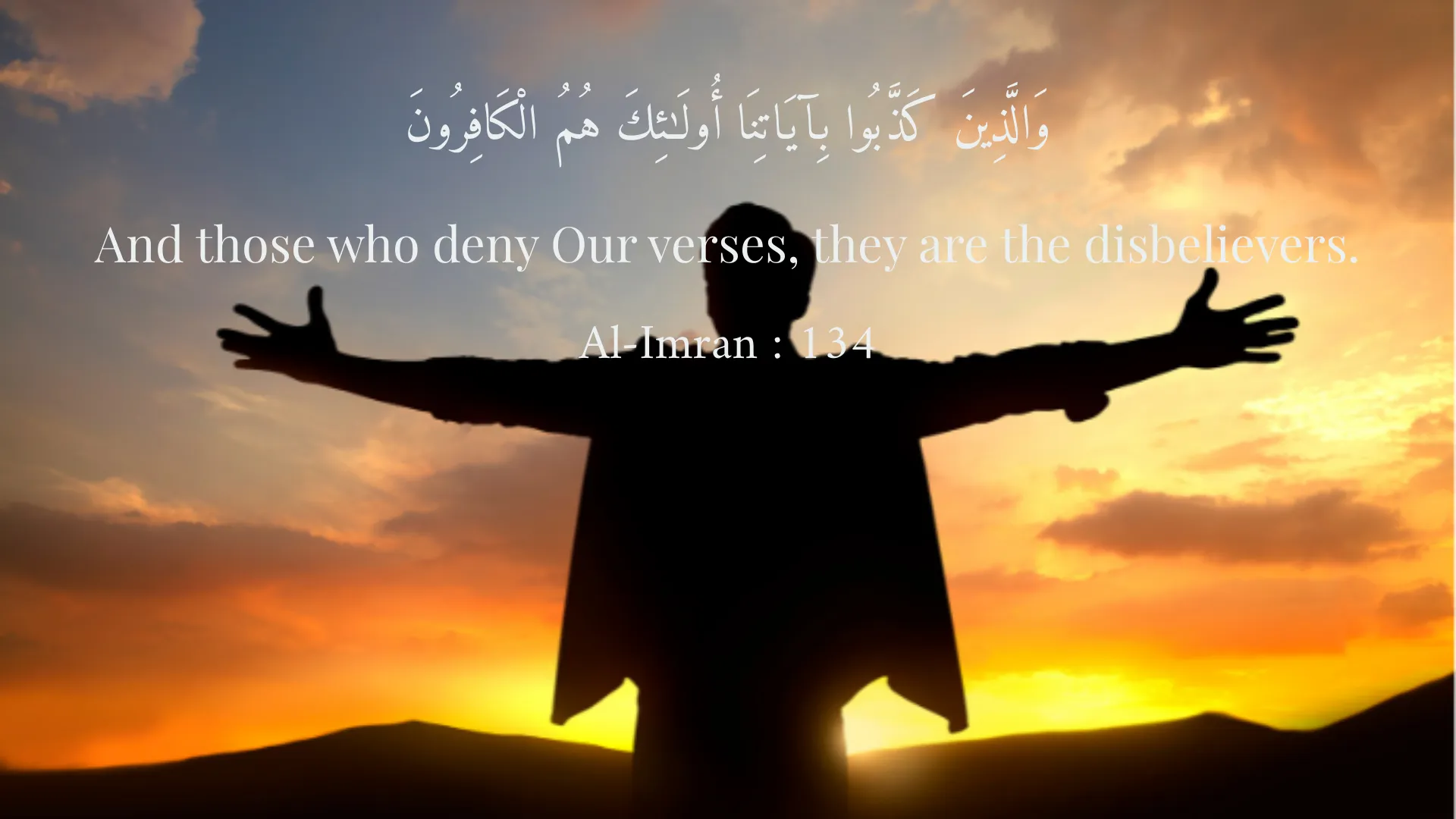
وَالَّذِينَ كَذَّبُوا بِآيَاتِنَا أُولَـٰئِكَ هُمُ الْكَافِرُونَ
And those who deny Our verses, they are the disbelievers.
Al-Imran : 134
وَالَّذِينَ يَجَتَنِبُونَ كَبَائِرَ الْإِثْمِ وَالْفَوَاحِشَ
And those who avoid great sins and lewdness,
Ash-Shura : 37
Short Story
One day, a man named Amir found himself in an argument with someone in the streets of the city. He was extremely angry and on the verge of saying harsh words. But suddenly, a Quranic verse came to his mind that said: 'And those who suppress anger...' This thought stopped him, and he opted for silence. After a moment of contemplation, he gently apologized to the other party and felt a sense of joy and peace from this act.