Quranic Answer
Satan, often referred to as Iblis in Islamic tradition, is mentioned throughout the Holy Quran as a significant adversary to humankind. His role is primarily defined as an enemy who seeks to lead people away from the path of righteousness. The Quran supplies various references illustrating Satan’s methodologies, the consequences of following his temptations, and the ways in which believers can fortify themselves against his duplicitous influence. In Surah Al-Baqarah, verse 168, Allah warns humanity directly, stating: 'O mankind! Eat from whatever is on earth [that is] lawful and good, and do not follow the footsteps of Satan; indeed, he is to you a manifest enemy.' This verse not only outlines dietary laws but also reflects a broader spiritual concept—one that underlines the importance of recognizing temptations that stray from the divine path. It is as if Allah draws a line between what is lawful and wholesome versus what is entangled in the schemes of Satan. Moreover, Allah reminds us of the deceptive nature of Satan’s temptations in Surah Al-Furqan, verse 29: 'He (Satan) promised me and deceived me, and his promise was nothing but a delusion.' This highlights the fundamental truth that any promises from Satan are hollow and ultimately lead to disappointment and despair. Believers are therefore called upon to scrutinize the nature of their aspirations and the sources that inspire these desires. Clinging to authentic guidance—namely, the teachings of Islam—becomes essential in a world filled with distractions and false promises. An important aspect of the believer's journey is the practice of remembrance (dhikr) of Allah, as stated in Surah Ar-Ra’d, verse 28: 'Unquestionably, by the remembrance of Allah hearts are assured.' This verse indicates that the act of remembering Allah can serve as a sanctuary against the chaos introduced by Satan's whispers. Engaging in dhikr can offer spiritual comfort and clarity, reinforcing one’s faith and solidifying the resolve against negative influences. It creates an internal refuge that supports a believer in the face of temptation. Prayer (Salah) is another critical tool in resisting temptation. Surah Al-Baqarah, verse 45 states: 'And seek help through patience and prayer. And indeed, Allah is with the patient.' This verse indicates that prayer fortifies the believer, empowering them to withstand trials and tribulations. Salah is not just a ritual, but a profound act of submission that cultivates patience, while simultaneously building a direct relationship with Allah. It grounds the believer in faith, reinforcing the community feeling among Muslims and creating a sense of collective resilience. Cultivating trust in God is indispensable in this context. It encourages individuals to place their reliance upon Allah’s wisdom rather than on fleeting temptations. By entrusting themselves to Allah, believers not only establish a protective buffer against Satan’s influence but also find peace in the acceptance of divine decree. This trust encourages a mindset that prioritizes spirituality over worldly desires, ultimately resulting in a more fulfilling and meaningful life. Equally important is the atmosphere one allows within their mental space. The Quran emphasizes that both speech and thoughts significantly impact this mental environment. Frequent recitation and contemplation of Quranic verses cultivate a healthy mental atmosphere conducive to righteousness. By surrounding oneself with words that glorify Allah, believers create an enlightening space that wards off wicked thoughts encouraged by Satan. The Quran is not merely a text; it functions as a transformative agent for both individuals and communities when integrated into daily life. Strategies for resisting temptation outlined in the Quran primarily include maintaining the practice of prayer, engaging in the remembrance of Allah, and actively seeking divine guidance in everyday life. Each individual is encouraged to adopt a systematic approach—identifying moments when they are most susceptible to temptation and reinforcing their spiritual practice during those times. Acknowledging one's vulnerabilities is essential for growth, as it leads to the development of greater spiritual resilience. Additionally, the fellowship of a community is highlighted throughout the Quran as a boon to personal development. In a supportive community, individuals can share their struggles, thus fostering a collective approach toward resisting temptations. Through discussions, encouragement, and shared prayer, members of the community reinforce one another in their quest for spiritual enlightenment. The collective remembrance of Allah strengthens group bonds and enhances individual determination against divisive influences. In moments of weakness, remembering the profound spiritual implications of one's actions can also prove vital. The notion of accountability, both in this world and the Hereafter, serves as a strong motivation to choose the righteous path. The teachings of Islam offer numerous reminders concerning the transient nature of worldly gains, often accompanied by consequences that overshadow fleeting pleasures brought forth by Satan. In conclusion, the Quran presents a coherent framework for believers to navigate through life while resisting the temptations propagated by Satan. This involves a holistic approach that encompasses prayer, remembrance, trust in God, and community support. Ultimately, cultivating a strong inner landscape that prioritizes spiritual growth and self-reflection not only enhances personal resilience against temptation but also strengthens the greater community. The words of Allah remind us that, while Satan may present an enticing path, it is through the remembrance of Allah and adherence to His guidance that true peace and assurance are found.
Related Verses
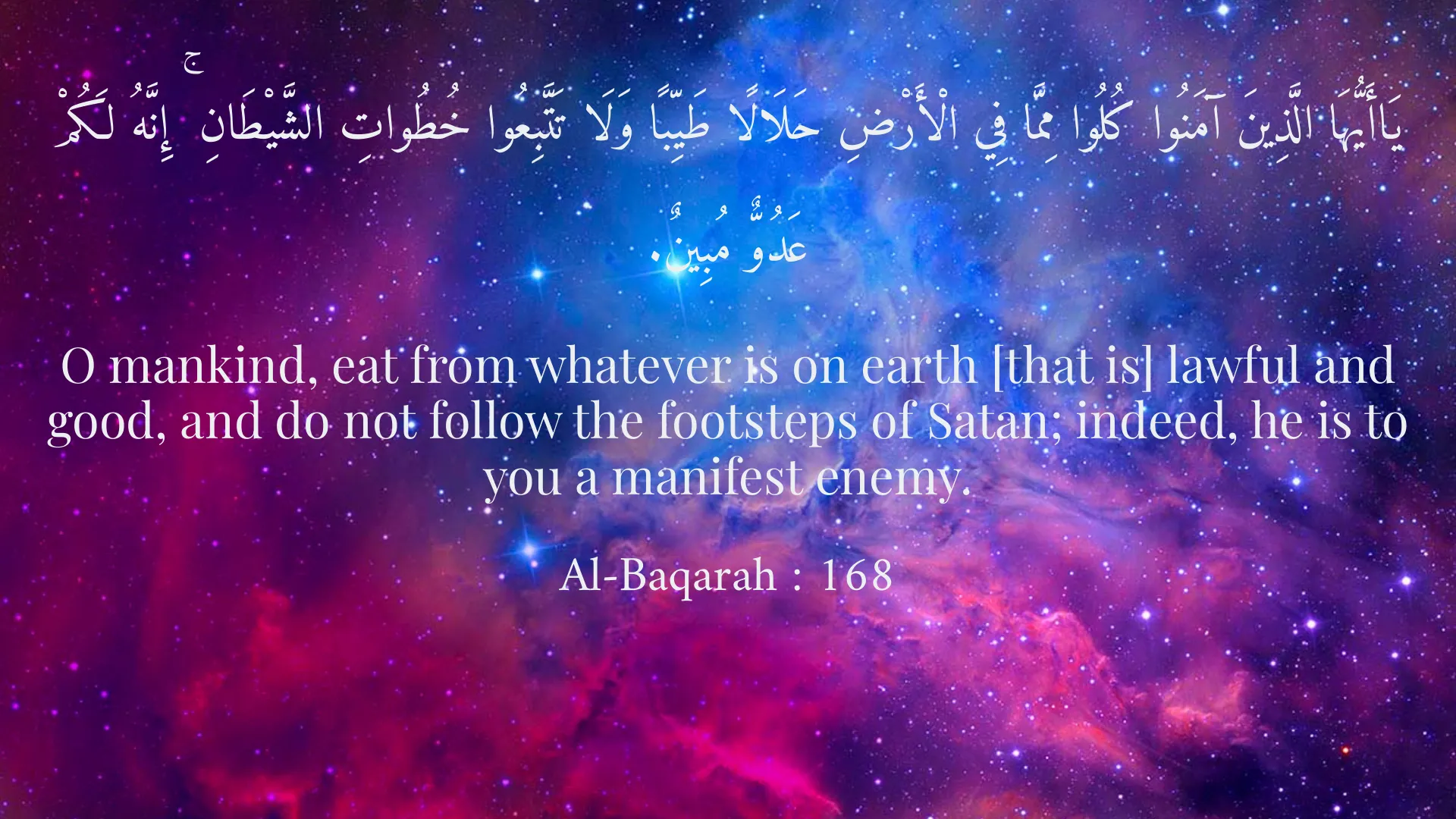
يَاأَيُّهَا الَّذِينَ آمَنُوا كُلُوا مِمَّا فِي الْأَرْضِ حَلَالًا طَيِّبًا وَلَا تَتَّبِعُوا خُطُواتِ الشَّيْطَانِ ۚ إِنَّهُ لَكُمْ عَدُوٌّ مُبِينٌ.
O mankind, eat from whatever is on earth [that is] lawful and good, and do not follow the footsteps of Satan; indeed, he is to you a manifest enemy.
Al-Baqarah : 168
وَقَالَ الشَّيْطَانُ لَمَّا قُضِيَ الْأَمْرُ إِنَّ اللَّهَ وَعَدَكُمْ وَعَدَ الْحَقِّ وَوَعَدَتُّكُمْ فَأَخْلَفْتُكُمْ ۖ وَمَا كَانَ لِيَعَلَيَّكُمْ مِّن سُلْطَانٍ إِلَّا أَنْ دَعَوْتُكُمْ فَاسْتَجَبْتُمْ لِي.
And Satan will say when the matter has been concluded, 'Indeed, Allah had promised you a promise of truth, and I promised you, but I betrayed you. And I had no authority over you except that I invited you, and you responded to me.'
Al-Furqan : 29
أَلَا بِذِكْرِ اللَّهِ تَطْمَئِنُّ الْقُلُوبُ.
Unquestionably, by the remembrance of Allah hearts are assured.
Ar-Ra'd : 28
Short Story
On a beautiful day, a young man named Hassan sat in a garden thinking about his life. Sometimes he fell prey to the temptations of Satan, which worried him. Hassan decided to pray and remember God. In every prayer, he asked God to protect him from temptations. As time passed, Hassan realized that through the remembrance of God and being steadfast in worship, he felt a greater sense of peace. He shared with his friends how prayer had helped him resist temptations and they joined him in his quest.