Quranic Answer
Hypocrisy is universally regarded as one of the worst traits a person can possess. It is a deception that not only misleads others but also distorts the hypocrite’s own perception of reality. In the context of religious and moral teachings, hypocrisy is severely denounced, with the Holy Quran serving as a vital reference for understanding its gravity. This article aims to expand on the importance of recognizing and combating hypocrisy in our lives, particularly through the lens of Islamic teachings. ### Defining Hypocrisy Hypocrisy can be defined as a discrepancy between what an individual professes to believe and what they actually practice. It signifies insincerity, deceit, and a lack of authenticity. Essentially, a hypocrite says one thing while believing or doing another. This trait not only undermines personal integrity but also negatively impacts social dynamics, creating distrust and animosity among individuals and communities. In the Holy Quran, hypocrisy is addressed explicitly, highlighting its severity and the consequences that come with it. The Quran provides guidance on how to avoid falling into this detrimental habit, urging followers to engage in self-examination, consistent prayer, and a commitment to honesty. ### Intentions Matter To stay away from hypocrisy, we must first pay attention to our intentions. In Surah Al-Baqarah, verses 8 to 10, Allah states, "And of mankind are some who say, 'We believe in Allah and the Last Day,' while in fact they do not believe." This verse illustrates the importance of self-awareness and honesty about one's faith. It is crucial to engage in deep self-reflection to determine whether our faith is genuine or merely superficial. Having the right intention is the foremost requirement in Islam. It is not enough to perform actions superficially; they must stem from a sincere belief and commitment to one’s faith. Acknowledging this discrepancy in our intentions can lead us to modify our actions to align with our professed beliefs. This approach fosters a more authentic relationship with Allah and allows us to live out our faith truthfully. ### The Power of Prayer and Repentance The second method to avoid hypocrisy is to consistently turn to Allah in prayer and repentance. The act of seeking forgiveness fosters humility, reminding us that we are all prone to mistakes. In our supplications, we should genuinely ask Allah to keep us away from undesirable traits, including hypocrisy. In Surah Al-Imran, verse 147, Allah instructs believers to repent from their sins. Repentance serves as a crucial mechanism for personal growth and spiritual enlightenment. It allows us to recognize our flaws, including signs of hypocrisy, and commit to moving away from them. Just as one backs away from a dangerous path, turning to Allah in repentance facilitates a clear departure from wrongdoing and hypocrisy. ### Commitment to Integrity The third point in preventing hypocrisy revolves around remaining faithful to our promises and commitments. Hypocrisy often arises from a lack of honesty in our words and actions. In Surah Al-Munafiqun, verse 1, Allah mentions that when hypocrites come to you, they say, 'We bear witness that you are the Messenger of Allah.' This highlights the importance of consistency between our outward expressions and inward beliefs. Trust is a cornerstone of any healthy relationship, whether personal, social, or religious. When we fail to uphold our commitments, we not only damage our credibility but also encourage a culture of dishonesty and deceit. As believers, we are called to model integrity through our actions. Adhering to our promises creates a foundation of trust that strengthens our relationships with others and reinforces our commitment to our faith. ### The Consequences of Hypocrisy The consequences of hypocrisy extend beyond personal suffering. On a broader societal level, hypocrisy breeds division, conflict, and mistrust. Communities plagued by insincerity and deception often become ineffective, weakening familial ties and communal bonds. This reality is why the Quran vehemently denounces hypocrisy, emphasizing that true belief must be reflected in both intention and practice. ### Cultivating an Environment of Sincerity To cultivate an environment of sincerity, both within ourselves and our communities, it is essential to engage in dialogues that emphasize honesty, openness, and accountability. Communities can facilitate these conversations by promoting regular discussions centered on moral and ethical behavior, based on Quranic principles. Such initiatives can empower individuals to hold themselves and one another accountable. Additionally, sharing personal experiences of struggles with hypocrisy can promote empathy and understanding within the community. By bridging the gap between professed beliefs and actions, individuals can find solace in shared experiences, dispelling feelings of isolation and inadequacy. ### Conclusion In conclusion, avoiding hypocrisy requires more than mere acknowledgment; it demands deep reflection on our faith and its implementation in our daily lives. The teachings of the Holy Quran serve as invaluable guidance against this grave trait, emphasizing the significance of genuine intentions, consistent prayer, and unwavering commitment to honesty. As believers, we must strive to embody these principles, fostering an authentic connection to our faith while nurturing a community built on trust and integrity. Ultimately, the battle against hypocrisy is not just an individual struggle; it is a collective journey towards a more sincere and honest society.
Related Verses
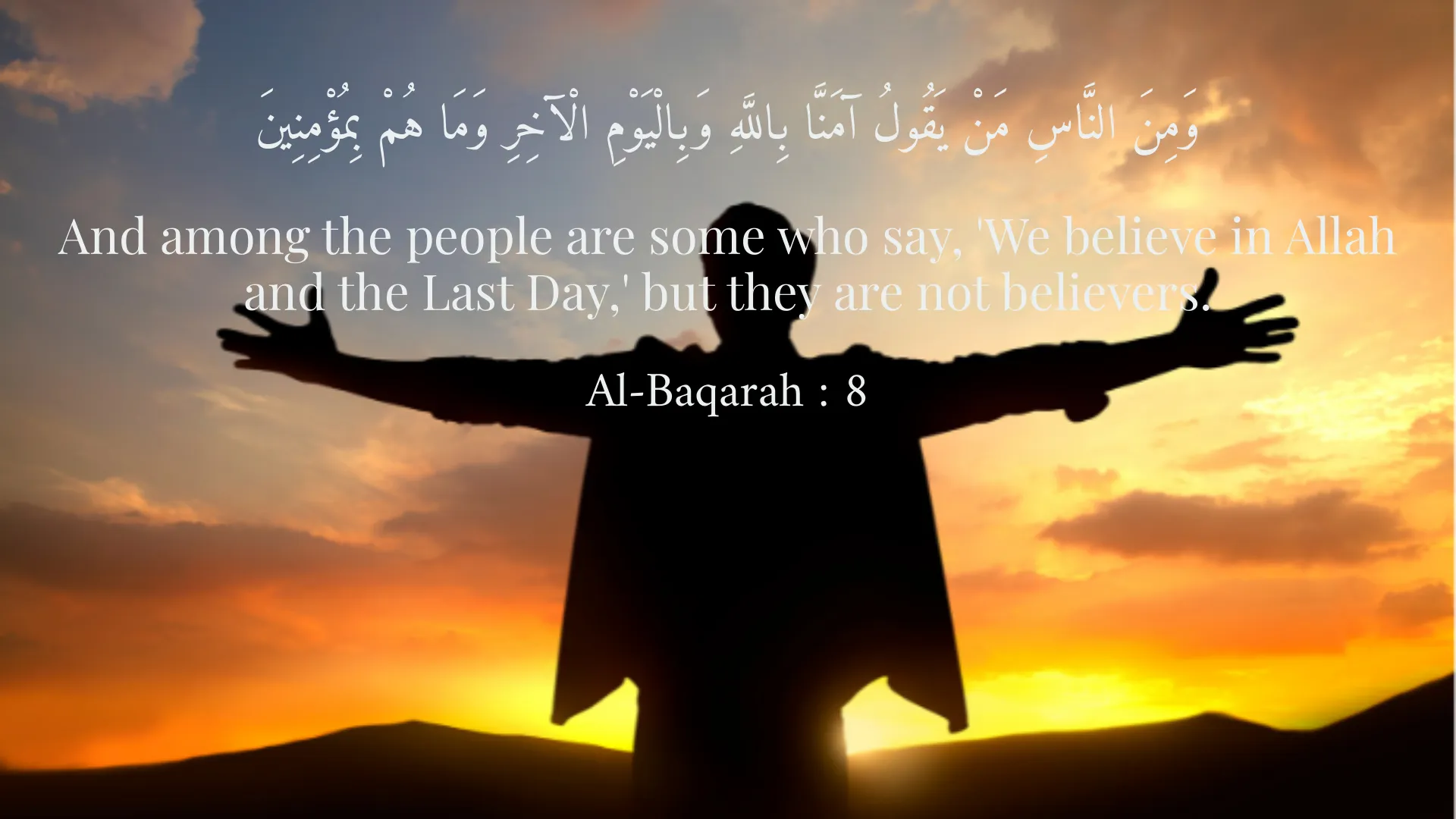
وَمِنَ النَّاسِ مَنْ يَقُولُ آمَنَّا بِاللَّهِ وَبِالْيَوْمِ الْآخِرِ وَمَا هُمْ بِمُؤْمِنِينَ
And among the people are some who say, 'We believe in Allah and the Last Day,' but they are not believers.
Al-Baqarah : 8
وَمَا كَانَ لَهُمْ أَنْ يُصِيبَ أَذَىً إِلَّا وَأَجَلُهُمْ مَّنْ قَبْلُ ۚ إِنَّ رَبَّكَ لَسَريعُ الْحِسابِ
And it was not for them to be harmed except for a decree which was already written; indeed, your Lord is swift in account.
Al-Imran : 147
إِذَا جَاءَكَ الْمُنَافِقُونَ قَالُوا نَشْهَدُ إِنَّكَ لَرَسُولُ اللَّهِ ۗ وَاللَّهُ يَعْلَمُ إِنَّكَ لَرَسُولُهُ ۖ وَاللَّهُ يَشْهَدُ إِنَّ الْمُنَافِقِينَ لَكَاذِبُونَ
When the hypocrites come to you, they say, 'We bear witness that you are the Messenger of Allah.' And Allah knows that you are indeed His Messenger, and Allah bears witness that the hypocrites are liars.
Al-Munafiqun : 1
Short Story
One day, a man named Hassan went to the market. At the market, he encountered a hypocritical person who outwardly displayed faith but spoke ill of others behind their backs. Hassan was astonished by this behavior and remembered the Quranic verses discussing hypocrisy. He decided to live with honesty and to stay away from hypocrisy. After some time, he noticed that his relationships with others improved and he felt a greater sense of peace.