Quranic Answer
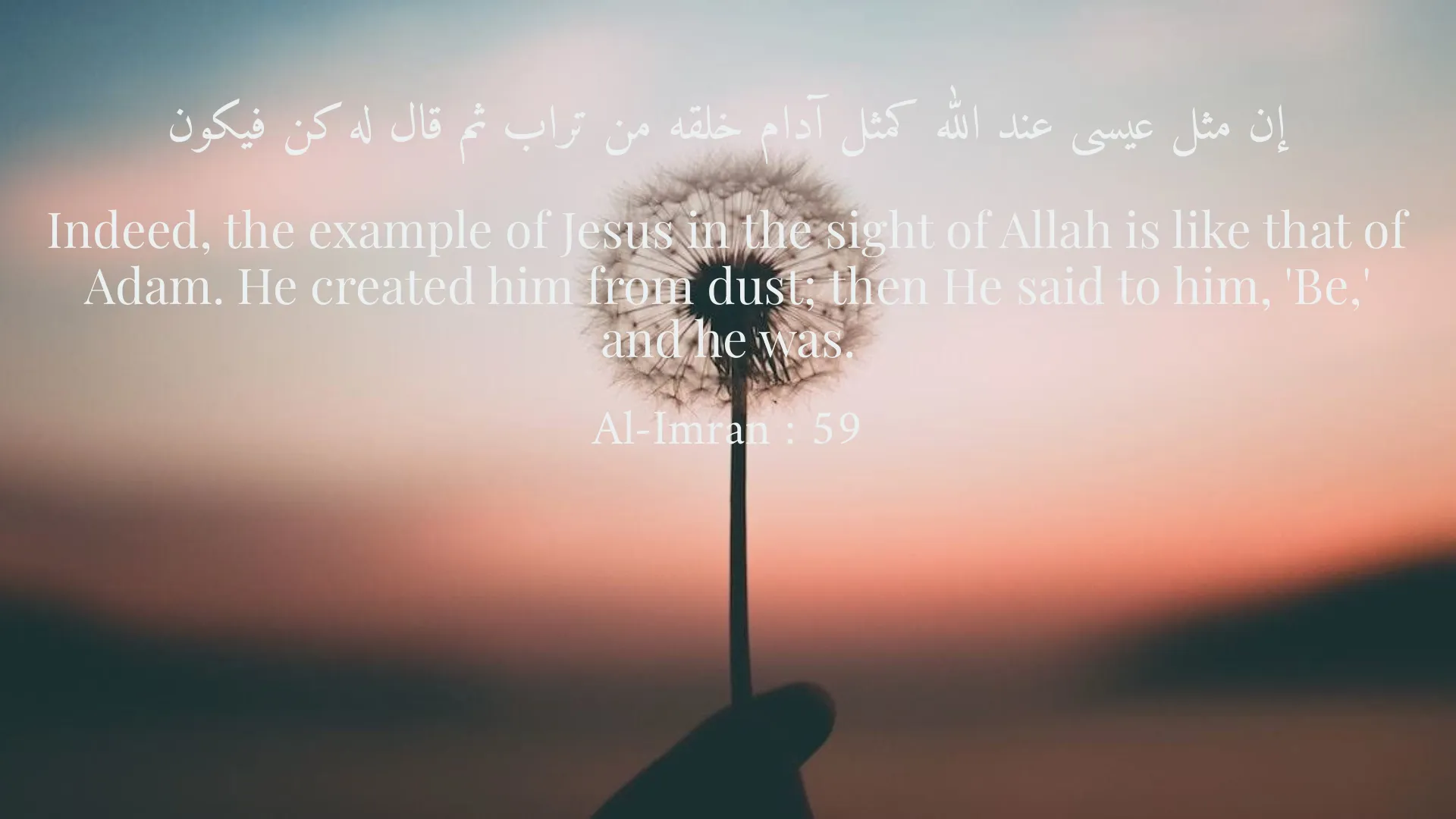
The creation of man is a profound subject that transcends mere scientific inquiry, delving into the realms of philosophy, theology, and spirituality. Among the various religious texts, the Holy Quran presents a unique and comprehensive perspective on the creation of humanity. This article seeks to explore the Quranic narrative surrounding the creation of man, particularly focusing on the verses in Surah Al-Imran and their profound implications. At the heart of the Quranic narrative is the verse from Surah Al-Imran, which states, "Indeed, the example of Jesus in the sight of Allah is like that of Adam. He created him from dust; then He said to him, 'Be,' and he was" (Al-Imran: 59). This powerful pronouncement not only establishes the divine authority of God in the act of creation but also draws a parallel between two pivotal figures in Islamic theology: Adam and Jesus. Both are seen as significant in the lineage of humanity, but their creation originates from the same source — divine will, expressed through the command 'Be.' The verse highlights several key concepts in the Islamic narrative of creation. Firstly, it emphasizes that humanity's origin lies in the most humble material — dust. This notion of being created from clay or dust underscores a fundamental humility inherent to human nature. It serves as a reminder of our earthly beginnings and our inherent limitations. This theme is further reiterated in Surah Al-Hijr, where Allah states, "And when your Lord said to the angels, 'I am creating a human being from clay, from molded sludge'" (Al-Hijr: 28). Here, the description of man being made from 'molded sludge' reflects not only the material aspect of creation but also symbolizes the complexity and intricacy involved in forming life itself. The Quranic narrative of creation is not merely a straightforward account of man's physical formation. Instead, it embodies deeper meanings tied to existence, purpose, and divine intention. The creation of Adam is unique in that it marks the inception of humanity with a special role on Earth. In Surah Sad, Allah states, "When your Lord said to the angels, 'I am creating a human being from clay'" (Sad: 72). This engagement with the angels signifies the spiritual and intellectual dimensions of human beings, setting them apart from other forms of creation. Furthermore, the dialogue between Allah and the angels in these verses signifies the unique status granted to humankind within the hierarchy of creation. The angels, being spirit beings, do not possess free will and live wholly in obedience to divine commands. In contrast, humans, having been endowed with the gift of free will, are granted the capacity for moral choice. This complicates the Quranic narrative of creation, illustrating that to be human is to wrestle with the duality of choice, consequence, and accountability. Thus, humanity’s creation is infused with purpose — to worship Allah and to strive towards righteousness. The creation narrative in the Quran also emphasizes the importance of the spirit that Allah breathed into Adam. According to Islamic belief, the soul is what animates the body, transforming a mere physical structure into a living being with consciousness and awareness. The infusion of the soul by Allah signifies every individual's unique identity and intrinsic value. It elevates humanity beyond the physical realm, indicating a significant spiritual purpose: to connect with the divine and to fulfill a greater role within the universe. The Quranic perspective invites believers to reflect upon their existence, recognizing that being human comes with profound responsibilities. This notion is echoed in various other parts of the Quran, where the importance of moral and ethical conduct, worship, and the stewardship of Earth is emphasized. Humanity's mission, as articulated throughout the Quran, is to be vicegerents on Earth — to uphold justice, maintain harmony, and foster an environment conducive to both personal and communal growth. Reflecting on the creation of man also brings forth discussions on the interconnectedness of humanity. The Quran does not present man as an isolated entity; instead, it stresses the bonds of kinship, community, and collective responsibility. The idea that all humans are descendants of a common ancestor, Adam, establishes a foundation for unity and fraternity among diverse peoples and cultures. In recognizing that we all share the same creator and origin, the Quran promotes an ethos of respect, tolerance, and understanding. Moreover, the creation narrative invites contemplation on the transient nature of human life. The cycle of creation signifies that life is not merely an endpoint; rather, it reflects a continuous journey of personal, spiritual, and intellectual growth. The Quran, through its myriad stories of prophets and individuals, encourages believers to view life as a test, an opportunity to seek knowledge, embrace virtue, cultivate relationships, and ultimately draw closer to their Creator. The creation of man encapsulates an essential journey of self-discovery and understanding of one’s role in a grander cosmic plan. Through the verses of the Quran, believers are called to engage with their origins meaningfully, recognizing that their existence serves not only individual aspirations but also contributes to humanity's collective narrative of seeking truth and striving for virtue. In conclusion, the creation of man in the Quran unveils a rich tapestry of themes — from humility and purpose to identity and interconnectedness. It urges believers to acknowledge their potential and responsibilities, reminding them of their unique status within the divine framework of creation. As we continue to reflect upon these profound verses, we are inspired to engage with our shared humanity and to navigate the complexities of life with reverence, awareness, and a steadfast commitment to goodness. This narrative serves as a foundation for ethical living and a source of inspiration in the quest for spiritual fulfillment, eventually shaping a harmonious place for all in the intertwined fabric of existence.
Related Verses
إن مثل عیسی عند الله کمثل آدام خلقه من تراب ثم قال له کن فیکون
Indeed, the example of Jesus in the sight of Allah is like that of Adam. He created him from dust; then He said to him, 'Be,' and he was.
Al-Imran : 59
و اذ قال ربک للملائکه انی خالق من انسانی من صلصل من حمإ مسنون
And when your Lord said to the angels, 'I am creating a human being from clay, from molded sludge.'
Al-Hijr : 28
اذ قال ربک للملائکة انی خالق بشرا من صلصل
When your Lord said to the angels, 'I am creating a human being from clay.'
Sad : 72
Short Story
Once upon a time, in a small village, there lived a man named Hassan. Hassan was well aware of how humans were created, and because of this, he devoted himself to supporting his fellow humans. He would always tell the children the story of the creation of man and speak of the divine power that created man from clay. Hassan would say, 'God has granted us a soul, and we have been created with wisdom. Every human being is valuable, and we must help each other.' The children loved listening to his stories, and these teachings settled in their hearts.