Quranic Answer
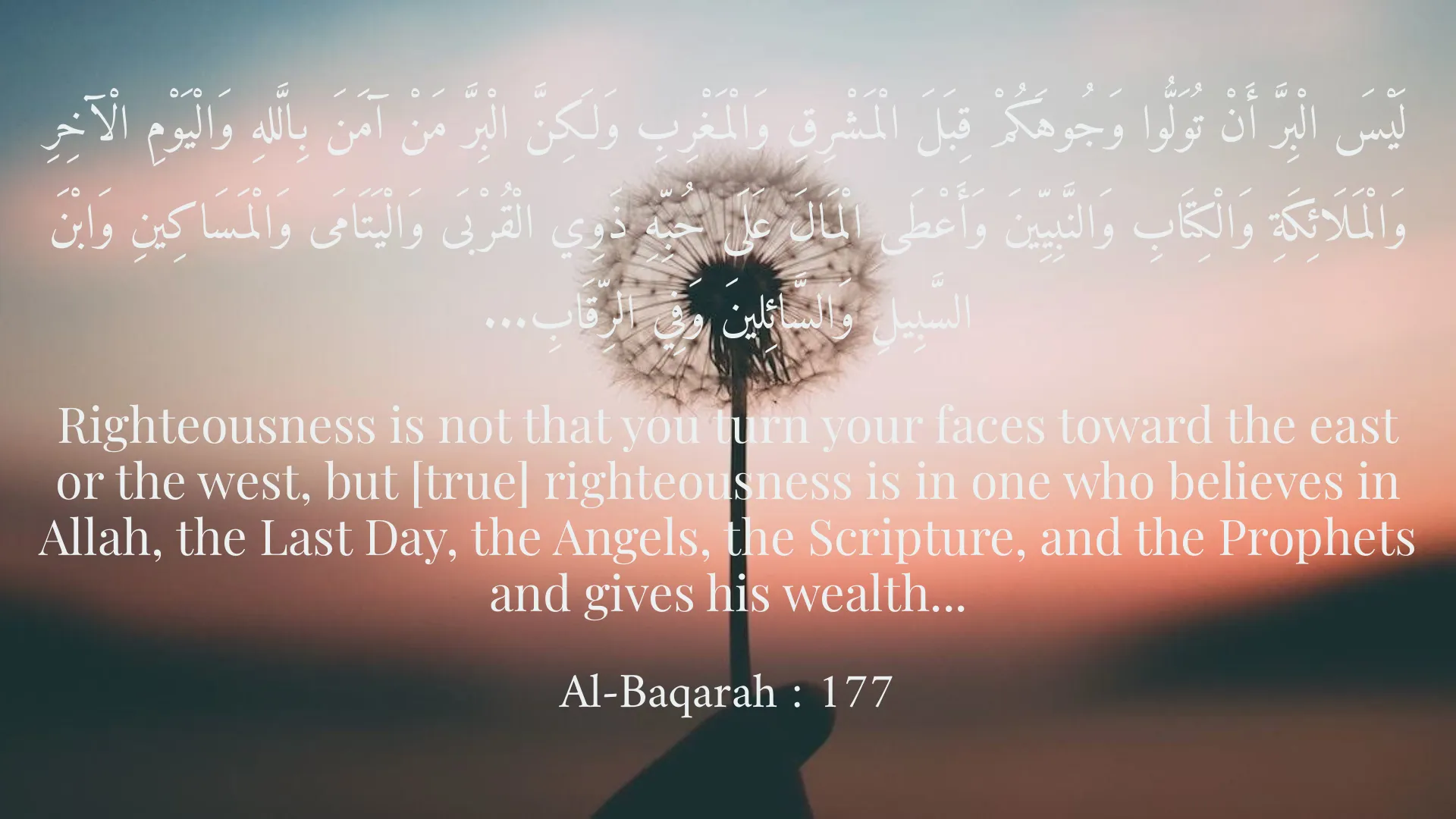
In the Holy Quran, both avoiding sin and performing good deeds are emphasized as fundamental principles in the life of a believer. These principles are not mere suggestions, but rather essential components of the Islamic faith and moral framework that guide the behavior of Muslims in their daily lives. The Quran presents a holistic view of righteousness, where faith and action are interconnected, urging believers to embody their beliefs through their behavior. One significant verse that encapsulates these principles is found in Surah Al-Baqarah, verse 177, where Allah declares: "Righteousness is not that you turn your faces toward the east or the west, but [true] righteousness is in one who believes in Allah, the Last Day, the Angels, the Scripture, and the Prophets and gives his wealth, in spite of love for it, to relatives, orphans, the needy, the traveler, those who ask [for help], and for freeing slaves..." This verse serves as a profound reminder that mere acts of devotion, such as facing a particular direction in prayer, do not constitute true righteousness. Instead, it emphasizes a comprehensive understanding of faith that entails belief in divine tenets coupled with altruistic actions. To unpack this verse further, it becomes evident that belief in Allah and the Last Day forms the foundation of a believer's life. This belief provides purpose and direction, influencing all choices and actions. Moreover, Allah highlights the importance of charity, indicating that a true believer should not only hold faith but also act generously towards those in need. The mention of "relatives, orphans, the needy, the traveler, those who ask [for help]" illustrates the importance of community and the social responsibility that comes with faith. Islam stresses that wealth should not merely be hoarded but shared, embodying the spirit of compassion and connection to others. This altruism reflects the profound understanding that the wellbeing of the community is intertwined with individual faith. Moreover, in Surah Al-Imran, verse 133, Allah further emphasizes this principle: "And hasten to forgiveness from your Lord and a garden as wide as the heavens and earth, prepared for the righteous." The call to "hasten to forgiveness" implies an urgency in seeking forgiveness, highlighting the importance of repenting for sins, as well as actively engaging in good deeds. This sense of urgency is a reminder that spiritual growth requires consistent effort and that righteousness is not a passive state but an active pursuit. Believers are encouraged to work diligently to attain both forgiveness for their faults and the rewards of Paradise, signifying that both aspects are vital to achieving spiritual fulfillment. The Quran also provides reassurance to believers regarding their efforts in avoiding sin and performing good deeds. The promise, "He will relieve your burdens," illustrates Allah's mercy and compassion towards His servants. This assurance encourages Muslims to confidently pursue the path of righteousness, knowing that their efforts and struggles will not go unnoticed. By encouraging believers to seek forgiveness for their sins and continue to perform acts of charity irrespective of their personal difficulties, Islam promotes a culture of resilience and positivity. The interconnectedness of avoiding sin and performing good deeds can be likened to two sides of the same coin. It creates a balanced spiritual life that adheres to the principles of Islam. Avoiding sin is foundational; it clears the path for good deeds to flourish. Without an emphasis on avoiding sinful actions, good deeds may lose their value or, worse, become tainted by insincerity. This duality of faith and action is not exclusive to individual believers but extends to communities and societies as a whole. When individuals prioritize their spiritual obligations and engage in acts of kindness, the collective moral fabric of society strengthens. The positive impacts of charitable actions can transform communities, alleviating suffering and fostering an environment of care and support. The Quran frequently stresses that wealth and resources are not merely personal possessions but should be viewed through the lens of social responsibility. Therefore, charitable acts are depicted as a means to purify one’s wealth and soul, reinforcing the belief that material success should coincide with spiritual maturity. In the context of modern society, the importance of these principles has never been greater. With the challenges faced globally, such as poverty, inequality, and social injustices, the call for believers to avoid sin and engage in charitable acts resonates deeply. The teachings of the Quran offer guidance not only for the spiritual realm but also practical steps toward creating a just and compassionate society. Living out these principles entails a commitment to justice, empathy, and advocacy for the marginalized. In conclusion, the teachings of the Holy Quran regarding the relationship between avoiding sin and performing good deeds serve as essential frameworks for the lives of Muslims. Righteousness is viewed as a comprehensive state of being and action, intertwining faith and charity as intertwined paths towards spiritual enrichment. The Quran's messages urge believers to perform good while refraining from sin, creating a profound impact on their personal growth and community well-being. Embracing these concepts fosters an environment of mercy, compassion, and collective responsibility that breeds a spiritually and morally enriched society. In a world demanding collective action and moral clarity, the commitment to avoid sin and engage in good deeds remains paramount for believers, guiding them toward a purposeful and fulfilling life.
Related Verses
لَيْسَ الْبِرَّ أَنْ تُوَلُّوا وَجُوهَكُمْ قِبَلَ الْمَشْرِقِ وَالْمَغْرِبِ وَلَكِنَّ الْبِرَّ مَنْ آمَنَ بِالَّلهِ وَالْيَوْمِ الْآخِرِ وَالْمَلَائِكَةِ وَالْكِتَابِ وَالنَّبِيِّينَ وَأَعْطَى الْمَالَ عَلَى حُبِّهِ ذَوِي الْقُرْبَى وَالْيَتَامَى وَالْمَسَاكِينِ وَابْنَ السَّبِيلِ وَالسَّائِلينَ وَفِي الرِّقَابِ...
Righteousness is not that you turn your faces toward the east or the west, but [true] righteousness is in one who believes in Allah, the Last Day, the Angels, the Scripture, and the Prophets and gives his wealth...
Al-Baqarah : 177
اِسْتَبِقُوا إِلَى مَغْفِرَةٍ مِّن رَّبِّكُمْ وَجَنَّةٍ عَرْضُهَا كَعَرْضِ السَّمَاوَاتِ وَالْأَرْضِ أُعِدَّتْ لِلْمُتَّقِينَ
And hasten to forgiveness from your Lord and a garden as wide as the heavens and the earth, prepared for the righteous.
Al-Imran : 133
Short Story
Once upon a time, there was a young man named Ali who avoided sin but didn't think about doing good acts. One day, while walking, he encountered a group of orphaned children in desperate need of help. Without hesitation, Ali decided to aid them, and from that day on, he realized that avoiding sin and doing good deeds go hand in hand and both must be part of his life.