Quranic Answer
Backbiting, known as 'ghibah' in Arabic, is considered one of the gravest sins in Islam. It is a behavior that is both morally abhorrent and socially destructive, impacting individuals and communities alike. The Holy Quran, the foundational text of Islam, explicitly instructs believers to avoid backbiting, highlighting its severe moral implications and the divine punishment associated with it. A significant reference can be found in Surah Al-Hujurat, verse 12, which urges believers to stay away from much suspicion and prohibits backbiting, stating that believers should not speak ill of one another without proper justification. This article delves into the various aspects of backbiting, its significance in Islam, and the detrimental effects it can have on personal relationships and societal harmony. ### Understanding Backbiting Backbiting is defined as the act of mentioning someone’s faults or shortcomings in such a manner that it would cause them distress or embarrassment if they were to hear it. This form of speech is classified as malicious gossip, and it is strongly condemned in the Islamic faith. The Quran explicitly states in Surah Al-Hujurat, verse 12: "O you who have believed, avoid much [suspicion]. Indeed, some suspicion is sin. And do not spy or backbite one another. Would one of you like to eat the flesh of his brother while he is dead? You would detest it. And fear Allah; indeed, Allah is Accepting of Repentance and Merciful." This vivid imagery of eating the dead flesh of a fellow Muslim symbolizes the gruesome nature of backbiting and its moral repugnance. The analogy serves to emphasize the grievousness of the sin, illustrating how destructive and hateful this behavior is] ### The Islamic Teachings on Backbiting Islamic teachings on backbiting are further reinforced through varied narrations from the Hadith literature, where the Prophet Muhammad (peace be upon him) condemned such behavior in the strongest terms. The Prophet noted that backbiters are those who are devoid of empathy and are willing to undermine the dignity of others for the sake of entertainment or malice. One narration clarifies, "Beware of suspicion, for suspicion is the most false of speech. And do not spy on one another, and do not compete with one another, and do not hate one another, and do not turn your backs on one another, and do not undercut each other. And be, O servants of Allah, brothers." ### The Consequences of Backbiting The consequences of backbiting are severe and multilayered. Not only does it cause deep hurt to the individual being spoken about, but it also harms the reputations of both the speaker and the subject. It fosters an environment of mistrust and animosity within a community, undermining social cohesion and harmony. In Surah An-Nur, verse 19, Allah warns, "Indeed, those who love to spread falsehood among the believers will have a painful punishment in this world and the Hereafter." This verse implies that those who engage in backbiting and spreading rumors about others will face severe penalties, both spiritually and materially, underscoring the urgent need for social responsibility and sincere conduct. ### Backbiting and its Social Implications The detrimental effects of backbiting extend beyond the individual level; they significantly alter the fabric of society. In a community where backbiting is rampant, trust is eroded, and relationships become strained. People may feel disinclined to cooperate or engage with one another, fearing that their words or actions may be twisted or misrepresented. This, in turn, creates a cycle of suspicion and hostility, making it increasingly difficult for individuals to come together in unity and camaraderie. Instead of fostering compassion and understanding, communities that tolerate or engage in backbiting generate environments marked by divisiveness and conflict. Moreover, backbiting can perpetuate misunderstandings and allow negative perceptions to flourish – leading to unfounded enmity between individuals or groups. Therefore, it is crucial for Muslims to cultivate an atmosphere where positive speech is encouraged and harmful gossip is condemned. The Quran encourages believers to engage in practices that promote kindness, understanding, and mutual respect. ### The Role of Repentance and Redemption For Muslims, the path to repentance and redemption is open; however, it requires self-awareness and genuine remorse for one's actions. Engaging in acts of sincere tawbah (repentance) involves recognizing the wrongness of backbiting, seeking forgiveness from Allah, and, importantly, from those who have been wronged. Additionally, the individual must strive to refrain from such behavior in the future and work towards building a healthier, more supportive community. ### Promoting Positive Communication To counteract the negative effects of backbiting, Muslims are encouraged to engage in positivity and constructive communication. Building strong, supportive relationships within the community can help replace harmful gossip with uplifting dialogue. Practicing active listening and providing constructive feedback that is kind and empathetic can foster a spirit of understanding among individuals. Raising awareness about the detrimental effects of backbiting, facilitating open discussions on its consequences, and promoting teachings from the Quran and Hadith regarding the importance of kind speech can help establish a culture of respect and support. ### Conclusion In conclusion, backbiting is a grave sin in Islam that bears severe moral and social consequences. The teachings of the Holy Quran and the Sunnah provide clear guidance on the importance of avoiding backbiting and fostering a community rooted in empathy, kindness, and mutual support. By refraining from harmful speech and engaging in positive communication, individuals can contribute to a healthier, more harmonious society, where trust and mutual respect prevail. This commitment not only enhances personal relationships but also strengthens the community as a whole, reflecting the ethical teachings of Islam and the enduring values of compassion and understanding.
Related Verses
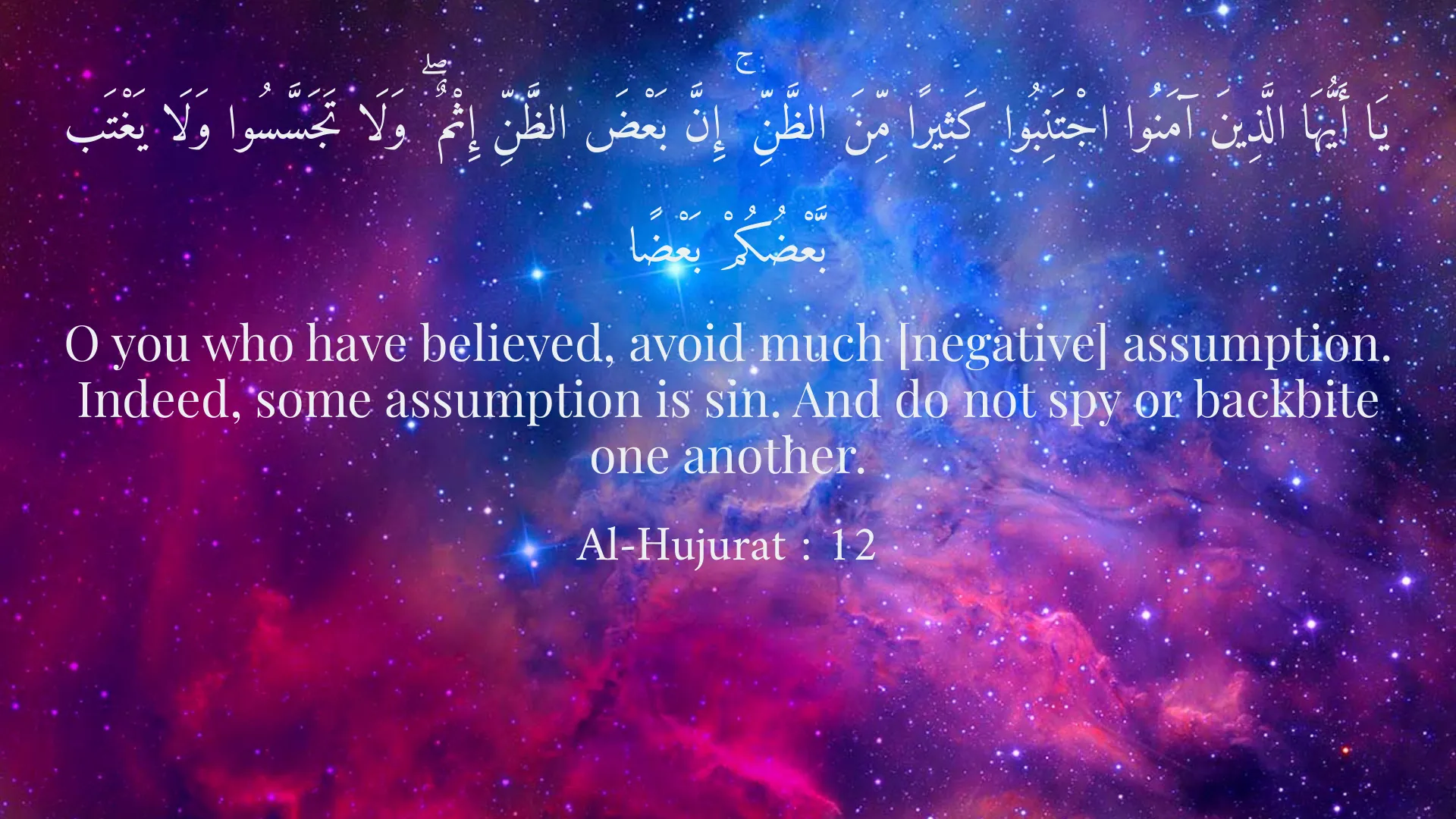
يَا أَيُّهَا الَّذِينَ آمَنُوا اجْتَنِبُوا كَثِيرًا مِّنَ الظَّنِّ ۚ إِنَّ بَعْضَ الظَّنِّ إِثْمٌ ۖ وَلَا تَجَسَّسُوا وَلَا يَغْتَب بَّعْضُكُمْ بَعْضًا
O you who have believed, avoid much [negative] assumption. Indeed, some assumption is sin. And do not spy or backbite one another.
Al-Hujurat : 12
إِنَّ الَّذِينَ يُحِبُّونَ أَن تَشِيْعَ الفَاحِشَةُ فِي الَّذِينَ آمَنُوا لَهُمْ عَذَابٌ أَلِيمٌ فِي الدُّنْيَا وَالْآخِرَةِ
Indeed, those who love to spread falsehood among the believers will have a painful punishment in this world and the Hereafter.
An-Nur : 19
Short Story
Once upon a time, in a small village, there was a man named Hasan who paid great attention to what others said. He enjoyed backbiting and thought it was harmless. One day, one of his friends, Majid, told him, 'Hasan, do you know that backbiting is a major sin?' Hasan initially answered him mockingly, but when he heard more about the punishment and consequences of backbiting in the Quran, he began to reflect. He decided that instead of backbiting, he would focus on the virtues of others, and from that day on, his life was filled with peace and contentment.