Quranic Answer
Dreams have intrigued humanity for centuries, serving as a bridge between the conscious and subconscious realms. In various cultures and religions, dreams are considered as significant phenomena, often viewed as omens, messages, or insights into the human psyche. Among these perspectives, the stance of Islam, particularly as reflected in the Quran, offers a compelling and nuanced understanding of dreams. In the Quran, dreams are acknowledged as a sign from God, yet their interpretations are not as straightforward as one might think. The Quran emphasizes that while dreams can serve as indicators or guidance, they should not be unequivocally regarded as absolute signs from the Almighty. The complexity of dreams lies in their ability to encapsulate a spectrum of meanings that vary based on the individual’s experiences, emotions, and context. A key instance in the Quran that highlights the significance of dreams is found in the story of Prophet Joseph (Yusuf, peace be upon him). In Surah Yusuf, God granted Joseph the power to interpret dreams, leading him to foresee pivotal events in his life, including his rise to power in Egypt and the eventual reunion with his family. This narrative illustrates how God utilized dreams to communicate significant information to Joseph, shaping his destiny and offering guidance during tumultuous times. However, the story of Joseph also serves as a reminder that dreams do not universally convey direct messages from God to all individuals. Instead, they represent a profound capacity for inspiration and reflection, drawing upon a mixture of divine influence, personal context, and emotional landscapes. This is imperative to understand, as it emphasizes the idea that dreams are inherently subjective; they mirror the inner states and psychological conditions of the dreamer. The Quran further elaborates on the concept of knowledge of the unseen in Surah Al-An'am, verse 59, where it is mentioned: "And with Him are the keys of the unseen; none knows them except Him. And there is no leaf that falls but that He knows it, and no grain within the darkness of the earth, and no moist or dry thing but that it is [written] in a clear record." This verse encapsulates the Islamic belief that God possesses complete and unparalleled knowledge of all things, including the mysteries surrounding dreams. It indicates that while God has the keys to understanding the unseen, humans must exercise discernment and wisdom when interpreting their dreams. The notion that dreams can serve as a window into the internal thoughts and emotional conditions of individuals cannot be overstated. Many psychologists and scholars suggest that dreams often act as a reflection of our subconscious mind, representing unexamined feelings, desires, and experiences. In light of this understanding, dreams may be thought of as a therapeutic tool, allowing individuals to explore their inner selves, confront fears, or inspire creativity. From an Islamic viewpoint, dreams can be pivotal in helping believers realize their potential and divine purpose. Despite their potential significance, the act of interpreting dreams necessitates considerable skill and knowledge. The interpretations of dreams can vary significantly based on cultural context, personal beliefs, and psychological backgrounds. This brings to light the importance of seeking guidance when grappling with dream interpretations, particularly within an Islamic framework. The sayings and teachings of the Ahlulbayt— the family of the Prophet Muhammad (peace be upon him)— provide valuable insights and context that can aid individuals in understanding and interpreting their dreams appropriately. Islamic scholars have historically placed a high value on dream interpretation as a significant facet of spiritual guidance and self-understanding. The tradition holds that individuals should consider the messages and symbols within their dreams while reflecting upon their current circumstances and feelings. This holistic approach ensures that interpretations remain unique to the dreamer, avoiding the pitfalls of rigid or inaccurate interpretations. Another significant aspect of dreams in the Islamic tradition is the classification of dreams into three categories: valid dreams, which are true and meaningful; meaningless dreams, which stem from daily thoughts and experiences; and nightmares, which may indicate distress or anxiety. This typology aids believers in discerning the nature of their dreams and encourages introspection regarding their spiritual and psychological states. In conclusion, the topic of dreams in the Quran encapsulates a rich tapestry of interpretation, guidance, and insight. While dreams can provide spiritual and personal revelations, they remain complex phenomena that require careful consideration and reflection. As the Quran emphasizes, knowledge of the unseen is ultimately known only to God, and individuals should approach their dreams thoughtfully and with an open heart. The teachings of the Ahlulbayt can serve as a guiding light in this journey, allowing believers to navigate their dreams with wisdom and understanding, transforming them into opportunities for personal growth and deeper spiritual connection. Through this multilayered lens, dreams are not merely night visions; they become profound encounters with the self and a potential roadmap for one’s life path.
Related Verses
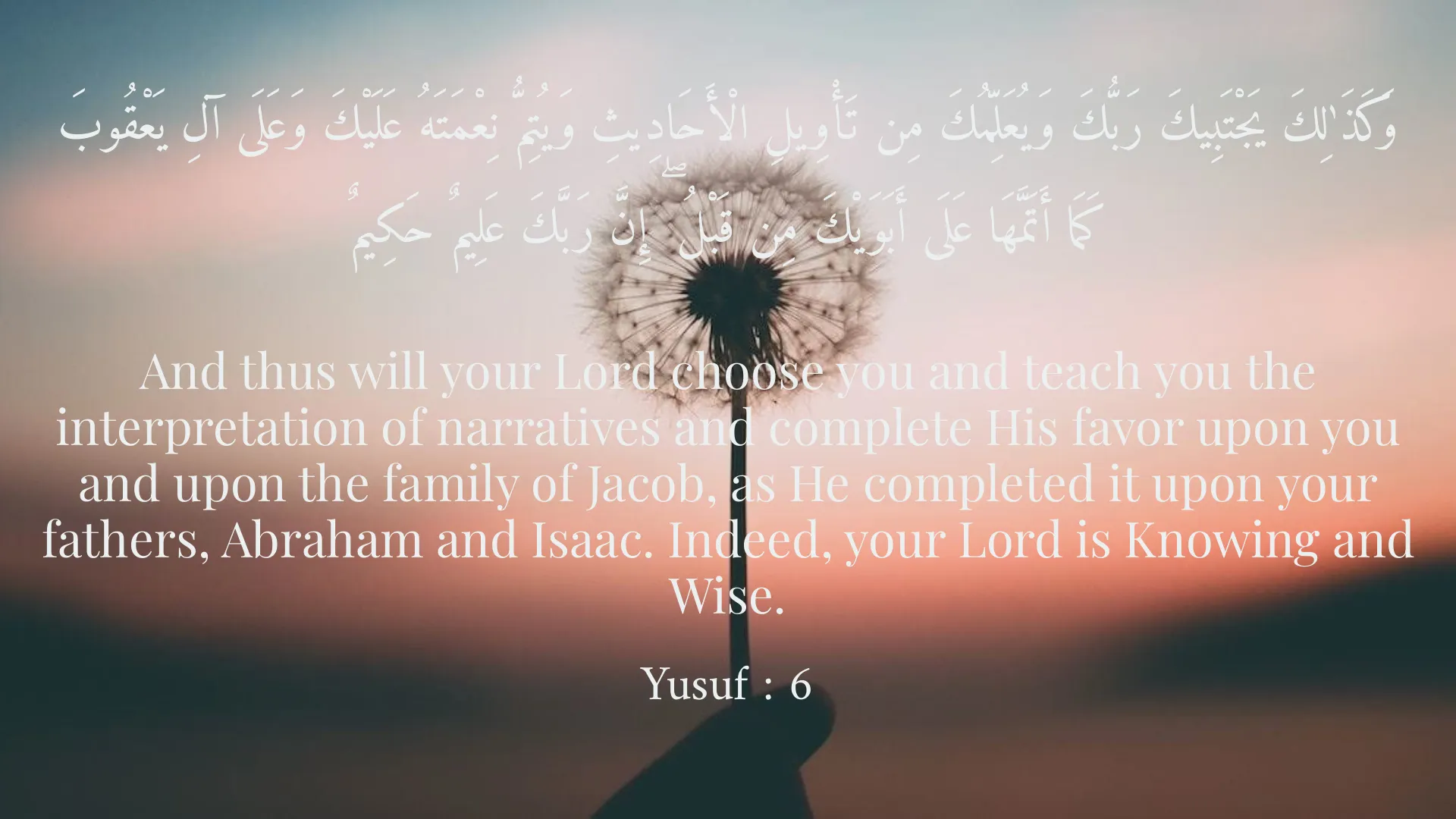
وَكَذَٰلِكَ يَجْتَبِيكَ رَبُّكَ وَيُعَلِّمُكَ مِن تَأْوِيلِ الْأَحَادِيثِ وَيُتِمُّ نِعْمَتَهُ عَلَيْكَ وَعَلَى آلِ يَعْقُوبَ كَمَا أَتَمَّهَا عَلَى أَبَوَيْكَ مِن قَبْلُ ۖ إِنَّ رَبَّكَ عَلِيمٌ حَكِيمٌ
And thus will your Lord choose you and teach you the interpretation of narratives and complete His favor upon you and upon the family of Jacob, as He completed it upon your fathers, Abraham and Isaac. Indeed, your Lord is Knowing and Wise.
Yusuf : 6
وَعِندَهُ مَفَاتِيحُ الْغَيْبِ لَا يَعْلَمُهَا إِلَّا هُوَ ۖ وَمَا تَسْقُطُ مِن وَرَقَةٍ إِلَّا يَعْلَمُهَا ۖ وَلَا حَبَّةٍ فِي ظُلُمَاتِ الْأَرْضِ وَلَا رَطْبٍ وَلَا يَابِسٍ إِلَّا فِي كِتَابٍ مُبِينٍ
And with Him are the keys of the unseen; none knows them except Him. And there is no leaf that falls but that He knows it, and no grain within the darkness of the earth, and no moist or dry thing but that it is [written] in a clear record.
Al-An'am : 59
Short Story
One day, Mehdi, a thoughtful young man, dreamt that he was walking through a garden filled with colorful flowers. He felt that this journey into the garden was a message from God. Upon waking up, he decided to get more acquainted with his spirituality and enhance his relationships with those around him. Mehdi ultimately realized that this dream was a sign to keep God in mind and fill his life with love and kindness.