Quranic Answer
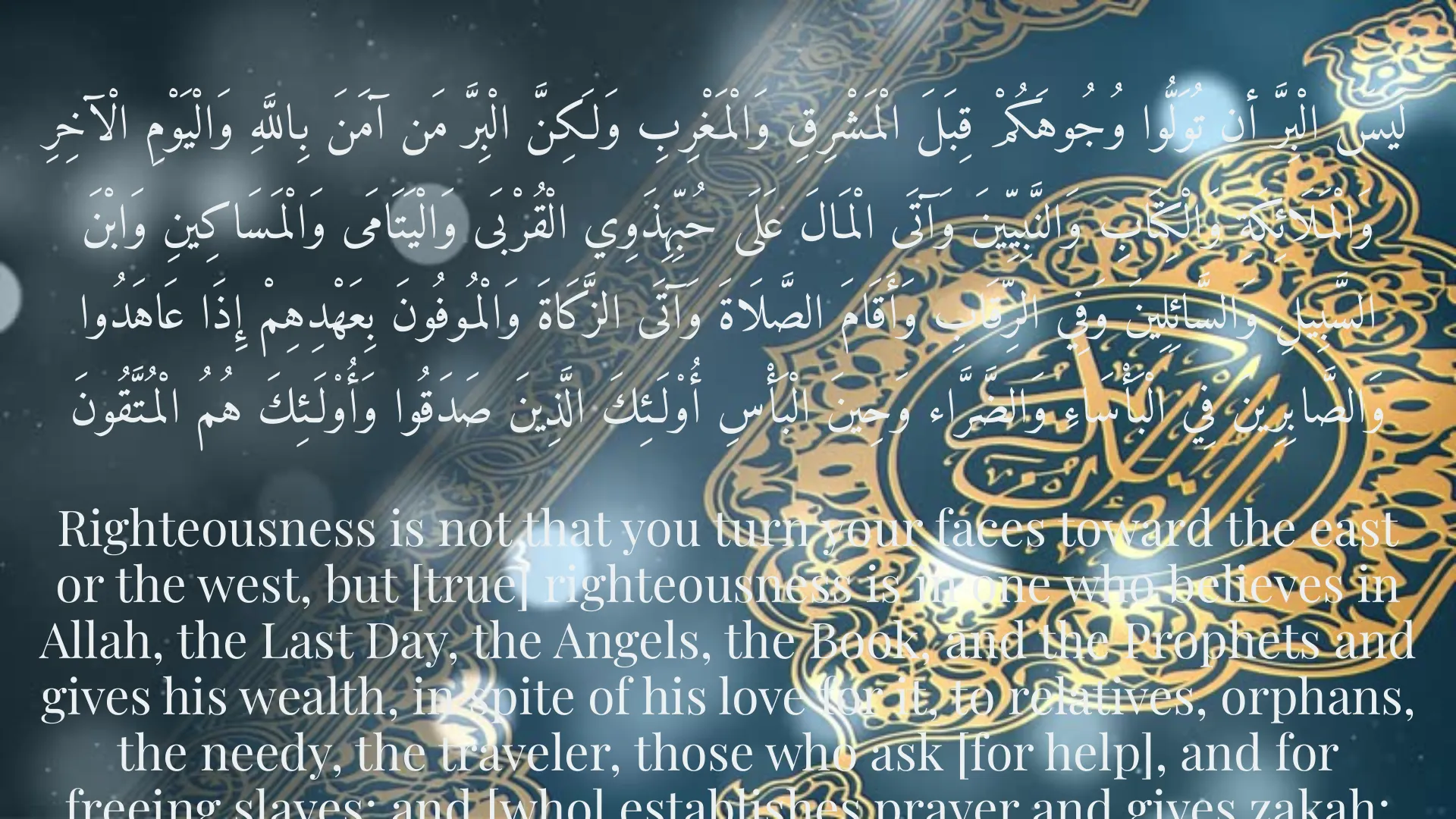
The concept of kindness and goodness is fundamentally intertwined with the ethos of Islam, as articulated in the Holy Quran. It promotes a comprehensive understanding of these values, which extends beyond mere superficial acts to encapsulate a deeper sense of faith, responsibility, and wisdom. In an age where superficial kindness is often celebrated, the teachings of the Quran remind us that true goodness is rooted in sincerity, understanding, and a profound connection to one's Creator, community, and conscience. In Surah Al-Baqarah, verse 177, Allah states, 'Righteousness is not in turning your faces toward the east or the west, but [true] righteousness is in one who believes in Allah, the Last Day, the Angels, the Book, and the Prophets and gives his wealth, in spite of love for it, to relatives, orphans, the needy, the traveler, those who ask [for help], and for freeing slaves; [and who] establishes prayer and gives zakat; [those who fulfill their] promise when they promise; and [those who are] patient in poverty and hardship and during battle. Those are the ones who have been true, and it is those who are the righteous.' This profound verse emphasizes the multifaceted nature of goodness in Islam, suggesting that acts of charity and kindness are not simply obligatory but are deeply interwoven with one's faith and belief system. The acts of worship and supporting the community form an integral part of a believer's righteousness. One significant aspect of this verse is its call to action for believers to extend kindness not only towards their close relatives but also to the marginalized and vulnerable sectors of society. This broad interpretation invites each individual to embody a sense of social responsibility. In this way, kindness transcends personal relationships and reaches into the collective welfare of society at large. However, the Quran also makes it clear that kindness should not be blindly administered. There is a caution against naivety, emphasizing that being kind does not mean succumbing to exploitation or manipulation by others. In Surah Al-Imran, verse 104, believers are urged to 'Let there arise from you a nation inviting to all that is good and enjoining what is right and forbidding what is wrong.' This verse highlights the importance of discernment and guidance in promoting kindness. While working towards goodness, believers must remain vigilant and wise with their time, resources, and kindness. This duality of kindness and wisdom is what sets Islamic teachings apart—encouraging believers not merely to act, but to act with intention and understanding. The Islamic perspective on kindness therefore insists that it be approached not only with an open heart but also with a discerning mind. As individuals apply kindness, evaluating the circumstances of those they intend to help becomes crucial. Storming into situations without understanding the context or the underlying motivations can lead to unanticipated consequences, both for the helper and the recipient. Wisdom in kindness involves employing intellect and empathy, providing help when appropriate while protecting oneself from potential exploitation. Engaging in relationships with clear boundaries is essential to avoid the traps of naivety. For instance, while lending financial assistance to those in need can be an act of kindness, ensuring that the assistance is not misused or that the recipient is genuinely in need requires a certain level of judgement. This layer of wisdom equips individuals to sustain their kindness authentically and avoid situations that could lead to regret or vulnerability. Islam teaches that kindness must be rooted deeply within ethical and moral frameworks. Thinking critically about the outcomes of one’s kindness can create an atmosphere of safety, allowing generosity to thrive without fear of disadvantage or betrayal. As believers, one's acts of kindness become even more pivotal—they transform not just the lives of the receivers but also mold the character of the giver. Through the practice of kindness, believers are constantly reminded of their role as stewards within the community, encouraged to contribute positively while fostering an environment where mutual support and respect conquer division and mistrust. Furthermore, the Quran stresses that the ultimate goal of practicing kindness is not merely the avoidance of negative consequences but is instead aligned with a higher purpose: achieving personal growth and perfection in morality. In embodying kindness paired with intelligence and intuition, an individual transcends a passive role and becomes an active participant in facilitating a more compassionate society. To conclude, kindness in Islam is a profound and multi-layered concept that demands both benevolence and wisdom. The verses in the Holy Quran serve as a guiding light, directing believers to practice kindness thoughtfully—balancing idealism with practicality. This mindful approach fosters a culture of acceptance, love, and support that nurtures individual contributors and consolidates collective growth. True kindness is, therefore, a pathway not only to personal virtue but serves as a bridge facilitating human development and shared harmony in the tapestry of life. The teachings of the Quran invite us to elevate our kindness to an art form, strategically veering away from naivety and instead blossoming into a life of fulfillment prescribed by divine wisdom.
Related Verses
لَيسَ الْبِرَّ أن تُوَلُّوا وُجُوهَكُمْ قِبَلَ الْمَشْرِقِ وَالْمَغْرِبِ وَلَكِنَّ الْبِرَّ مَن آمَنَ بِاللَّهِ وَالْيَوْمِ الْآخِرِ وَالْمَلَائِكَةِ وَالْكِتَابِ وَالنَّبِيِّينَ وَآتَى الْمَالَ عَلَى حُبِّهِذَوِي الْقُرْبَى وَالْيَتَامَى وَالْمَسَاكِينِ وَابْنَ السَّبِيلِ وَالسَّائِلِينَ وَفِي الرِّقَابِ وَأَقَامَ الصَّلَاةَ وَآتَى الزَّكَاةَ وَالْمُوفُونَ بِعَهْدِهِمْ إِذَا عَاهَدُوا وَالصَّابِرِينَ فِي الْبَأْسَاءِ وَالضَّرَّاء وَحِينَ الْبَأْسِ أُو۟لَـئِكَ الَّذِينَ صَدَقُوا وَأُو۟لَـئِكَ هُمُ الْمُتَّقُونَ
Righteousness is not that you turn your faces toward the east or the west, but [true] righteousness is in one who believes in Allah, the Last Day, the Angels, the Book, and the Prophets and gives his wealth, in spite of his love for it, to relatives, orphans, the needy, the traveler, those who ask [for help], and for freeing slaves; and [who] establishes prayer and gives zakah; [those who fulfill their promise when they promise]; and [those who are] patient in poverty and hardship and during battle. Those are the ones who have been true, and it is those who are the righteous.
Al-Baqarah : 177
وَلْتَكُن مِّنكُم أُمَّةٌ يَأْمُرُونَ بِالْمَعْرُوفِ وَيَنْهَوْنَ عَنِ الْمُنْكَرِ ۖ وَأُو۟لَـئِكَ هُمُ الْمُفْلِحُونَ
And let there be [arising] from you a nation inviting to all that is good and enjoining what is right and forbidding what is wrong, and those will be the successful.
Al-Imran : 104
Short Story
One day, a person traveled a long distance intending to help his neighbor. However, he realized that his neighbor took advantage of his goodwill and exploited his kindness. This incident not only made him distance himself from his neighbor but also led him to conclude that kindness should be accompanied by reason and a proper understanding of people's situations.