Quranic Answer
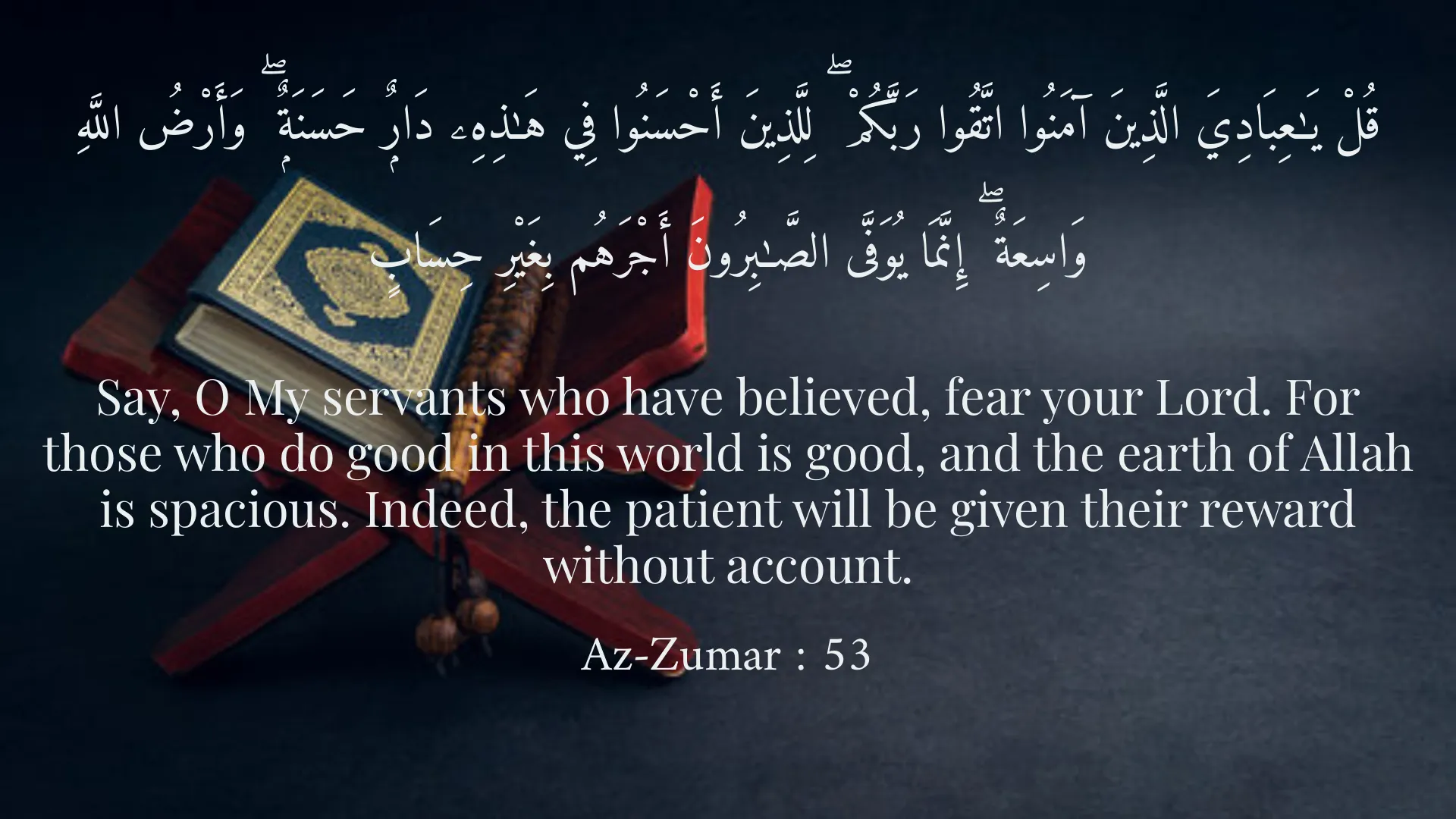
Feeling hopeless is one of the natural emotions that humans experience throughout their lives. It is a sentiment that transcends cultural, social, and religious boundaries, affecting people globally. Hopelessness can stem from various factors, including personal struggles, societal pressures, or existential crises. However, for believers, the Holy Quran serves as a guiding light, reminding them not to succumb to despair and instead foster hope in the mercy and forgiveness of Allah. The scripture offers a wealth of advice and reassurance that can help navigate the turbulent waters of life, delivering a message that resonates deeply with those in need of encouragement. In particular, Surah Az-Zumar, verse 53 captures this sentiment beautifully. The verse states, 'Say, O My servants who have believed, fear your Lord. For those who do good in this world is good, and the earth of Allah is spacious. Indeed, the patient will be given their reward without account.' This profound passage serves as a reminder that the trials and tribulations faced in this world are temporary, and there is a divine promise of goodness for those who remain steadfast. The exhortation not to despair is a crucial theme found throughout Islamic teachings. Despairing of Allah's mercy is viewed as a grave misstep in one's spiritual journey, and it is emphasized that this negative emotion can lead individuals further away from righteousness. When one begins to lose hope, they may become disheartened, leading to apathy in their efforts for self-improvement or a reduced desire to seek forgiveness. It is vital to recognize that hopelessness can become a breeding ground for sin, as it engenders an attitude of resignation and despair, ultimately hindering one's path to repentance and spiritual growth. In moments of hardship, we are encouraged to maintain positive expectations of Allah's mercy. The act of trusting in Allah's plans and timing is essential for spiritual resilience. Life, with all its ups and downs, is a test of faith and patience. Allah has created this world and everything in it, and only He knows what lies ahead. The Quran reminds us that remaining patient in trying times will yield rewards beyond measure, as stated in the same verse of Surah Az-Zumar. This assurance can serve as a powerful remedy for hopelessness. It stands as a beacon of hope and provides psychological strength, allowing believers to continue striving for goodness even in the face of adversity. Moreover, life itself is a continuous cycle of challenges and opportunities for growth. To view these challenges through the lens of despair is to overlook the inherent beauty in resilience and the chance to overcome adversity. Allah has endowed humans with the capability to endure difficulties, learn from them, and emerge stronger. The wisdom behind trials often becomes clearer as we progress on our spiritual paths, illustrating that moments of weakness can lead to significant personal and spiritual development. Understanding that life is ultimately in the hands of Allah enables individuals to yield unnecessary burdens and relinquish feelings of hopelessness. By adopting an attitude of trust in divine wisdom, one can navigate through life’s difficulties with greater ease. The belief that Allah is the sole source of help and guidance fondly nurtures a profound sense of security among believers. It allows them to feel that they are never alone in their struggles and that Allah is always by their side, ready to support those who seek Him sincerely. It is important to emphasize that feeling hopeless is not inherently a sin. The human experience is a rich tapestry of emotions, and feeling low or lost is part of our intricate nature. However, what separates the path of the faithful from that of the despairing is the response to these feelings. Despairing of Allah's mercy is where the danger lies. The first step towards redemption is often acknowledging one’s shortcomings and making a genuine effort to seek repentance. Through consistent prayer, mindfulness, and striving for self-betterment, one can forge a path back to hope and divine mercy. Engaging in acts of goodness, helping others, and maintaining a strong connection with the community fosters an environment that allows hope to flourish. When individuals actively participate in uplifting their surroundings, they find that their own sense of purpose and belonging strengthens. Acts of kindness and compassion serve as a reminder that humanity is interconnected and that together, we can overcome the burden of despair. Additionally, community support can create a positive feedback loop, helping individuals lift one another out of hopelessness. In conclusion, feelings of hopelessness are natural and common, but they do not have to define one’s existence. Instead, believers are reminded through the teachings of the Quran to never despair of Allah's infinite mercy and forgiveness. The journey through life is filled with ups and downs, but with faith, patience, and a reliance on divine guidance, individuals can rise from the depths of despair to achieve fulfillment and joy. Thus, embodying hope in Allah’s grace not only mitigates the weight of hopelessness but also serves as a guiding principle in the pursuit of a meaningful and righteous life.
Related Verses
قُلْ يَـٰعِبَادِيَ الَّذِينَ آمَنُوا اتَّقُوا رَبَّكُمْ ۖ لِلَّذِينَ أَحْسَنُوا فِي هَـٰذِهِۦ دَارٌۭ حَسَنَةٌۭ ۖ وَأَرْضُ اللَّهِ وَاسِعَةٌ ۖ إِنَّمَا يُوَفَّى الصَّـٰبِرُونَ أَجْرَهُم بِغَيْرِ حِسَابٍ
Say, O My servants who have believed, fear your Lord. For those who do good in this world is good, and the earth of Allah is spacious. Indeed, the patient will be given their reward without account.
Az-Zumar : 53
قُل لَّن يُصِيبَنَا إِلَّا مَا كَتَبَ اللَّهُ لَنَا ۖ هُوَ مَوْلَانَا ۖ وَعَلَى اللَّهِ فَلْيَتَوَكَّلِ الْمُؤْمِنُونَ
Say, 'Never will we be struck except by what Allah has decreed for us; He is our protector.' And upon Allah let the believers rely.
At-Tawbah : 51
إِنَّمَا يُوَفَّى الصَّـٰبِرُونَ أَجْرَهُم بِغَيْرِ حِسَابٍ
Indeed, the patient will be given their reward without account.
Az-Zumar : 10
Short Story
On a hot summer day, a young man named Sohrab felt a sense of hopelessness in his heart. He turned to the Quran and came across a verse that spoke of Allah's mercy. After reading that verse, Sohrab decided never to despair of Allah's mercy and to strive harder to draw closer to Him. He continued his life with hope and effort, ultimately achieving great successes. Now, whenever Sohrab feels despair, he turns to the verses of the Quran and rises again.